Text Size:   A+ A- A   •   Text Only
Find     

100 most dangerous invaders to keep out
Micro-organisms
Common name Scientific name Risk assessment
Alder root rot Phytophthora alni subp.  
Bacterial blight of grape Xylophilus ampelinus  
Blackberry yellow vein disease, blackberry yellow vein-associated virus (BYVaV) and blackberry virus Y (BVY)    
​chalara dieback of ash Chalara fraxinea
Chronic wasting disease CWD prion  
Elm yellows Elm yellows phytoplasma  
Hazelnut bacteria canker Pseudomonas avellanae  
Infectious salmon anemia virus ISAV  
Oak wilt Ceratocystis fagacearum  
Phytophthora taxon C Phytophthora kernoviae  
Plum pox Plum pox potyvirus (PPV)  
Poplar canker Xanthomonas populi  
Potato cyst nematodes Globodera pallida and G.pallida  
Potato wart Synchytrium endobioticum  
Sheep Pen Hill Virus, blueberry scorch virus - New Jersey strain
(BISV-NJ)
 
Southern wilt, bacteria wilt
Ralstonia solanacearum Race 3 Biovar 2
 
Viral hemorrhagic septicemia virus (VHSV)

Novirhabdovirus spp.
 
Whirling disease
Myxobolus cerabrallis**
 
Willow watermark disease
Brenneria salicis


Aquatic plants
Common name Scientific name Risk assessment
Algae, toxic (golden, toxic cyanobacteria)
Prymnesium parvum, Cylindrospermopsis raciborskii
 
​African Water ​Lagarosiphon major
Asian kelp
Undaria pinnatifida
Risk assessment
Caulerpa seaweed
Caulerpa taxifolia        
 
Common reed
Phragmites australis (non-native haplotype)
 
Cordgrasses
Spartina alterniflora* , S. densiflora , S. anglica, S. patens**
Risk assessment
Dead man's fingers
Codium fragile tomentosoides
 
European water chestnut
Trapa natans
 
Flowering rush
Butomus umbellatus
 
Giant salvinia
Salvinia molesta
 
Hydrilla
Hydrilla verticillata
 
Rock snot
Didymosphenia geminate
Risk assessment
Yellow floating heart
Nymphoides peltata**
 

Land plants
Common name Scientific name Risk assessment
African Rue
Peganum harmala**
 
Yellow tuft Alyssums
Alyssum corisicum, A. murale
Camelthorn
Alhagi pseudalhagi
 
European Coltsfoot 
Tussilago farfara**
 
Giant hogweed
Heracleum mantegazzianum**
risk assessment
Goatsrue
Galega officinalis
 
Goatgrasses (barbed, ovate)
Aegilops triuncialis , A. ovata
 
Hawkweeds (king-devil, meadow, mouse-ear, orange, yellow)
Hieracium piloselloides , H. pratense **, H. pilosella , H. aurantiacum **, H. floribundum
 
Japanese dodder
Cuscuta japonica
 
Kudzu
Pueraria lobata**
 
Matgrass
Nardus stricta**
 
Oblong spurge
Euphorbia oblongata
 
Paterson's curse
Echium plantagineum**
 
​purple nutsedge Cyperus rotundus
Silverleaf nightshade
Solanum elaegnifolium
 
Squarrose knapweed
Centaurea virgata**
 
Starthistles (Iberian, purple)
Centaurea iberica **, C. calcitrapa **
 
Syrian bean-caper
Zygophyllum fabago

 
Thistles (plumless, smooth distaff, woolly distaff, taurian)
Carduus alanthoides **, Carthamus baeticus , Carthamus lanatus **, Onopordum tauricum


White bryonia
Bryonia alba


Aquatic invertebrates
Common name Scientific name Risk assessment
brackish- water Asian clam
Potamocorbula amurensis
 
Asian tapeworm
Bothriocephalus acheilognath
 
Japanese shore crab
Hemigrapsus sanguineus
 
Leidy's comb jelly
Mnemiopsis leidyi
 
Mitten crabs
Eriocheir spp.*
 
New Zealand seaslug
Philine auriformis**
 
Northern Paciific sea star (virile crayfish),  (marbled crayfish or "marmorkrebs")
Orconestes virliis, Procambarus sp.
 
Sea squirt
Didemnum sp. **, Ciona savignyi, Styela clava*
 
Veined rapa whelk
Rapana venosa
 
Waterflea (fishhook, spiny)
Cercopagis pengoi, Bythotrephes cederstroemi
 
Zebra mussel, guagga mussel
Dreissena polymorpha, Dreissena rostriformis bugensis


Land invertebrates
Common name Scientific name Risk assessment
Africanized honey bee
Apis mellifera scutellata
 
Argentine ant
Linepithema humile*
 
Asian longhorned beetle
Anoplophora glabripennis, A. chinensis
 
Bean plataspid
Megacopta cribraria
 
Brown spruce longhorned beetles
Tetropium fuscumm, T. castaneum*
 
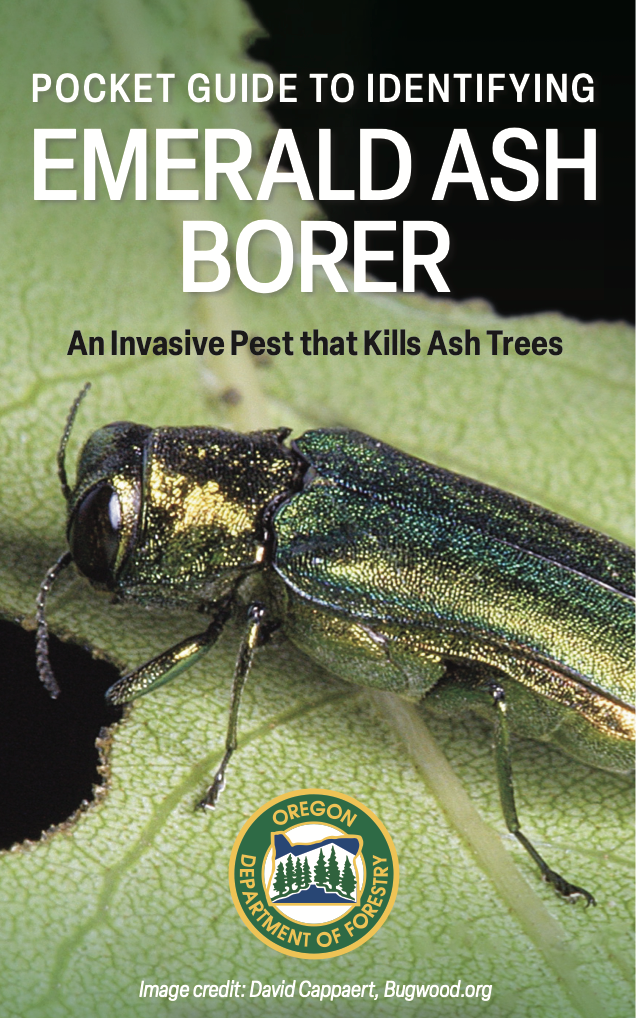
Emerald ash borer
Agrilus planipennis
 
European chafer
Rhizotrogus majalis
 
European corn borer
Ostrinia nubilalis
 
European woodwasps
Sirex noctilio, Tremex fusicornis*
 
exotic ambrosia beetle
Platypus mutates, P. guercivorus, Xyleborus glabratus, Xylosandrus crassiosculus*, etc
 
Gypsy moths (European, Asian, pink, nun moth)
Lymantria dispar*, L. mathura*, L. monacha
 
Imported fire ants (red, black)
Solenopsis invicta*, S. richteri
 
Japanese beetle
Popillia japonica*
 
Japanese wax scale
Ceroplastes japonicus
 
Khapra beetle
Trogoderma granarium
 
Light brown apple moth
Epiphyas postvittana
 
Mexican bean beetle
Epilachna varivestis
 
Old world bollworm
Helicoverpa armigera
 
Oriental beetle
Anomala orientalis
 
Plum curculio
Conotrachelus nenuphar
 
Siberian moths
Dendrolimus pini, D.sibiricus, D. superans
 
Silver Y moth
Autographa gamma
 
Spruce bark beetle
Ips typographus
 
Swede midge
Contarinia nasturtii
 
terrestrial snails- (giant Africian, heath, vineyard and White garden snail snails
Achatina fulca, Cernuella virgataTheba pisana, Cernuella virgata, Xerolenta obvia
 
​wax scales ​Ceroplastes destructor, C.japonicus

Fish
Common name Scientific name Risk assessment
round goby, Shimofuri goby
Neogobius melanostomas, Tridentiger bifasciatus
 
Asian carp (bighead, silver), black carp
Hypophthalmichthys nobilis, H. molitrix, Mylopharyngodon piceus
 
Atlantic salmon
Salmo salar ***
 
Golden shiner
Notemigonus crysoleucas
 
Muskellunge, northern pike,
Esox spp.*
 
Ruffe
Gymnocephalus cernuus
 
Snakeheads
Channa spp.
 
Threadfin shad (yellow tails, shad and
shad minnow)
Dorosoma petenense
 

Birds
Common name Scientific name Risk assessment
Mute swan  Cygnus olor **
 

Mammals
Common name Scientific name Risk assessment
Feral swine
Sus scrofa**
 

Reptiles
Common name Scientific name Risk assessment
Eastern snapping turtle  Chelydra serpentine serpentine  

Printable version of 100 Worst List
* Detected previously in Oregon, but eradicated or did not establish.
** Currently under eradication or restricted to a small area in Oregon.
 
100 Most Dangerous Invaders To Keep Out of Oregon in 2013 (pdf format)

Changes that were made

Changes that were made to the 100 Worst List from 2012 to 2013:

Micro-organisms

  • Add “chalara dieback of ash”, chalara fraxinea [Note: It is causing great damage in UK and Europe, is moved via nursery stock, ODA is considering a quarantine…and we don’t want it here…makes EAB look like a piker.]

·       Correct the name of a virus: Sheep Pen Hill Virus, blueberry scorch virus – New Jersey strain (BISV-NJ)

·       Add “white-nose syndrome”, Geomyces destructans

Aquatic Plants

·       After the scientific name of common reed, add in parenthesis “non-native haplotype”

·       Correct the species name of rock snot from “geminate” to “geminata”

Land Plants

·       Change “Alyssum sp.” To “Yellow-tuft alyssums”, and change the species names to “Alyssum corsicum and A. murale”

·       Change coltsfoot to “European coltsfoot”

·       Change “goat’s rue” to “goatsrue”

·       In the hawkweed category, list king-devil, orange, and yellow devil) and list the species as Hieracium piloselloides, H. aurantiacum, and H. X. floribundum.

Aquatic Invertebrates

·       Change Asian clam to “brackish-water Asian clam”

·       Add “Northern Pacific sea star”, Asterias amurensis

·       Remove mitten crabs

·       Change the crayfish species to virile and marbled

·       Lump the tunicates and call them “sea squirts”, Didemnum sp., Ciona savignyi, and Styela clava

Land Invertebrates

·       Change “brown spruce longhorn beetles” to “brown spruce longhorned beetles”

·       List the species of corn borers as “Ostrinia furnacalis, O. nubilalis

·       Change woodwasps to “Exotic woodwasps” and add “Tremex fuscicornis” as a species. [Note: Apparently a developing pest (tree killer) elsewhere in the world where introduced.  A very broad host range of broadleaved trees.  A species for which we are at constant risk for introduction via SWPM, as has been demonstrated several times recently.]

·       Change “ambrosia beetle” to “exotic ambrosia beetles” and list the species as “Platypus mutates, P. guercivorus, Xyleborus glabratus, Xylosandrus crassiusculus, etc.”

·       Change Siberian moth to “Siberian moths” and list the species as “Dendrolimus pini, D. sibiricus, D. superans”

·       List the terrestrial snails as (giant African, heath, vineyard, white garden snails), and list the species as “Achatina fulica, Cernuella virgate, Theba pisana, Xerolenta obvia, etc.”

·       List the wax scales species as “Ceroplastes destructor, C. japonicas”

Reptiles

Change the species name of the eastern snapping turtle from “serpentina” to “serpentine”

-----------------------------------------------------------------------------------------------------------


Changes that were made to the 100 Worst List from 2011 to 2012
Micro-organisms
  • Remove ramorum canker and blight (SOD is here to stay and we've switched to a defensive, slow-the-spread strategy).  
 
Land Invertebrates

  • Add Bean plataspid-it is spreading rapidly and causing significant damage to legumes in the SE.
Other changes:
  • Two asterisks were added to Didemnum because this species exists in Winchester and Coos Bays in Oregon.
  • One asterisk was added to club tunicate because it was previously detected in Oregon, but was eradicated or did not establish.
 
Changes that were made to the 100 Worst List from 2010 to 2011
Land Plants
The following were removed from the list:
  • Skeletonleaf bursage was removed from the list because the Oregon State Weed Board removed it from its "A" list and placed it on a watch list. It is present in the bordering county of Nez Perce, Idaho, but there is no eminent threat to Oregon.
  • Texas blueweed was removed from the list because the Oregon State Weed Board removed it from its "A" List and placed it on a watch list. It is present in Yakima County, WA (under control). Washington is one year from eradicating this plant, and there is no eminent threat to Oregon.
The following was added to the list:
  • Alyssum species because of their ability to outcompete native forbs and plants.
Aquatic Plants
  • Asian kelp (Undaria pinnatifida) was added to the list because of its threat to Oregon waters (based on proximity to Oregon - it is in several bays in California) and its ability to outcompete native algae and other important species.
Aquatic Invertebrates
The following were added to the list:
  • Two crayfish species were added to the list to replace the invasive crayfish that have become established in the state.
The following were removed from the list:
  • The red swamp crayfish and rusty crayfish now have established populations in Oregon, and have been removed from the list.
Changes that were made to the 100 Worst List from 2009 to 2010

Aquatic Plants
Two species were combined to create an algae category:
  • Golden alage and toxic cyanobacteria were combined under algae, toxic.

One species was added to the list:
  • Common reed was added to the list.

Land Plants
One species was added to the list:
  • Japanese dodder was added to the list.

Aquatic Invertebrates
Two species were combined to create one waterflea category:
  • Spiny waterflea and fishhook waterflea were combined under waterflea.
 
 
Changes that were made in the 100 Worst List from 2008 to 2009
Micro-organisms
The following were removed from the list:
  • Cherry leaf roll nepovirus (CLRV)is found in Oregon, although on an alternate host. It has failed to move to cherries. Also, like pear trellis rust, the damage it is capable of causing is significantly less than the new species we added to the list
  • Pear trellis rust (Gymnosporangium fuscum) is established in WA and is a manageable disease. Also, it is not fatal to its host, unlike the others.
 
The spelling was corrected:
  • Sudden oak death Phytophthora ramorum** (corrected spelling)
There was a name change for:
  • Sheep pen hill virus blueberry hill carlavirus - New Jersey strain (BBScV-NJ) carlavirus (BBScV-NJ) (corrected name change)
 
The following were added to the list:
  • Blackberry yellow vein disease, blackberry yellow vein-associated virus (BYVaV) and blackberry virus Y (BVY) (this disease is caused by the two viruses acting synergistically) (Nancy K. Osterbauer, ODA)
  • Bacterial blight of grape Xylophilus ampelinus
 
Aquatic Plants
The following was added to the list:
  • Flowering rush, Butomus umbellatus-Montana is asserting that this plant could eventually spread through much of the Columbia Basin. It's not far from the northeast and southeast Oregon borders
 
Land Plants
The following were removed from the list:
  • Mile-a-minute weed (Polygonum perfoliatum)* This species is not listed in either Oregon or Washington.
  • Portugese broom (Cytisus striatus)** (Note: *Note this would be a removal because it "got away," and therefore would count against our benchmark.) This plant is a "B" rated plant in Oregon. Though Portuguese broom is a high priority for protection of our forest lands in the state, programs implementing control projects have moved from eradication mode into containment mode with this plant.
 
The following were added to the list:
  • White bryoniaBryonia alba-White bryonia is a vigorous herbaceous perennial vine resembling kudzu in appearance and growth habit. Infestations will overgrow and smother small trees and shrubs forming dense mats which shade out all the vegetation it grows upon. If established in areas with no structure to climb, it will form a dense mat covering the ground. Vines emerge each spring from a large fleshy parsnip-shaped tuber and grow rapidly, sometimes to 30 feet. Populations are documented from south-east Washington State, Idaho, Utah and Montana. Should white byronia become established in Eastern Oregon it poses a huge threat for forest and range land, not to mention ecosystems of the Hells Canyon/Snake River area.
  • Goat's rue, Galega officinalis-Goat's rue, Galega officinalis.L. is a USDA federally listed noxious weed. A member of the legume family, it was introduced into Utah in 1891 as a potential forage crop. Escaping cultivation, it now occupies in excess of 60 square miles in Cache, County, Utah. Within this area, goat's rue infests cropland, fence lines, pastures, roadsides, waterways, and wet, marshy areas (Evans and Ashcroft 1982). The plant's stems and leaves contain a poisonous alkaloid, galegin, which renders the plant unpalatable to livestock, and toxic in large quantities. It is particularly lethal to sheep. Because of these issues, goat's rue invasion can reduce forage availability and quality.
  • Oblong spurge, Euphorbia oblongata-Oblong spurge is a weedy escaped ornamental species of Euphorbia known from only one site in Salem, Oregon. Suspected to have been introduced from California in contaminated flax or machinery that was used at the State Penitentiary flax mill in the early part of the 1900's, it has slowly expanded its territory on the penitentiary property. Growing up to 3' tall, this species is capable of forming dense stands in more arid climates and could be expected to be a troublesome weed to control should it spread and establish in eastern Oregon.
 
Aquatic Invertebrates
The following were removed from the list:
  • Unnamed estuarine snail (Coos Bay), Assiminea sp. (Increasingly widespread establishment is one of our criteria for bumping a species off the 100 worst list. The small brackish water snail we saw on the rip-rap of the Yaquina river, capable of carrying the human liver flukes parasite is Assiminea parasitological.
The following was added to the list (with other nonnative crayfish):
  • Red swamp crayfish (Louisiana crayfish), Procambarus clarkia- Native to south central United States, this species has been found in California, Idaho, Oregon and Washington. Noted for its burrowing activity which could damage dams, levees, and water control structures. Introduced into Oregon as a bait species and releases from classroom science experiments.
 
Land Invertebrates
The following were removed from the list:
  • Pine shoot beetle (Tomicus piniperda) PSB does not appear to present a threat to forest ecosystems, primarily being a threat to Christmas tree plantations. Granted, the latter commodity is important, but pines are being phased out as Christmas trees in favor of other species which are not hosts known to support PSB reproduction.
  • Sawyers (Monochamus urussovi*, M. alternatus)* (I think there is too little information to support the two Monochamus spp. as major threats to our forests).
 
The following were added to the list with the other terrestrial snail:
  • Vineyard snail, Cernuella virgata and heath snail, Xerolenta obvia-These two snails have the potential to be pests of many more commodities (cereals, forage crops, grapes, orchards, etc.) and would greatly increase molluscicide use. They are certainly much more difficult to control or eradicate than PSB and probably more so than Monochamus species. The technologies for detection and delimitation are also much less effective (try "primitive"). At least one of these species can also vector human and animal parasites and both can vector plant diseases.
 
Fish
The following was grouped with other non-native carp:
  • Black carp (Mylopharyngodon piceus) (Move black carp with Asian carp to group like species).
 
The following were added to the list:
  • Threadfin shad (yellow tails, shad and shad minnow), Dorosoma petenense- Native to the south-central United States and introduced into parts of the northern United States. Arizona and California as a forge and baitfish for warm water fish species such as largemouth bass, crappie and walleye. Feeds on zooplankton, and breeds quickly.
  • Golden shiner, Noteigonus crysoleucas- Native to eastern United States. Introduced as a baitfish, ornamental and forage fish. Impact to Oregon is through competition with native fish for food and habitat. Lays up to 200, 000 eggs and may spawn more than once during a breeding season.

Criteria for placement on the OISC 100 Worst List
To be placed on the list, species must be non-native to Oregon and absent from the State or limited to a small, contained range within the state. Note: by statutory definition (ORS 561.685) humans, domestic livestock and nonharmful exotic organisms are not invasive species. Diseases of humans and domestic animals are also not included in the purview of the Council.
  • Species prohibited by regulation are eligible including species listed as weeds on the state "A" list; pest species for which the state maintains an external quarantine or is protected by a federal quarantine; and species prohibited by the wildlife integrity rules.
  • Species which meet at least three of the following additional criteria are also eligible:
    • Has a history of invasiveness in the Pacific Northwest or similar Ecoregions 
    • Likely to cause ecological harm to native species or their habitats in Oregon 
    • Likely to cause significant economic loss in Oregon
    • Capable of harming the health of humans or beneficial plants and animals in Oregon 
    • Reasonably susceptible to intentional or inadvertent introduction into Oregon
    • Capacity to spread via natural reproduction in Oregon
    • Difficult to eradicate based on past global history

Criteria for removing species from the OISC 100 Worst list
  • Has become established in Oregon beyond a small, contained range; or
  • Lower priority than another eligible species not currently on the list