|
Firewood campaign launches July 15
|
|
|
|
|
|
Article Content
 |
| Press Release |
|
For release: July 13, 2010
“BUY IT WHERE YOU BURN IT” Campaign launches
July 15, 2010
SALEM, OregonThe next time you’re planning a camping trip, the states of Washington, Idaho, and Oregon want you to think about protecting your favorite outdoor haunts by not moving firewood. The “Buy it Where You Burn It Campaign” encourages people to obtain their firewood in a place as close as possible to the place where it will be burned.
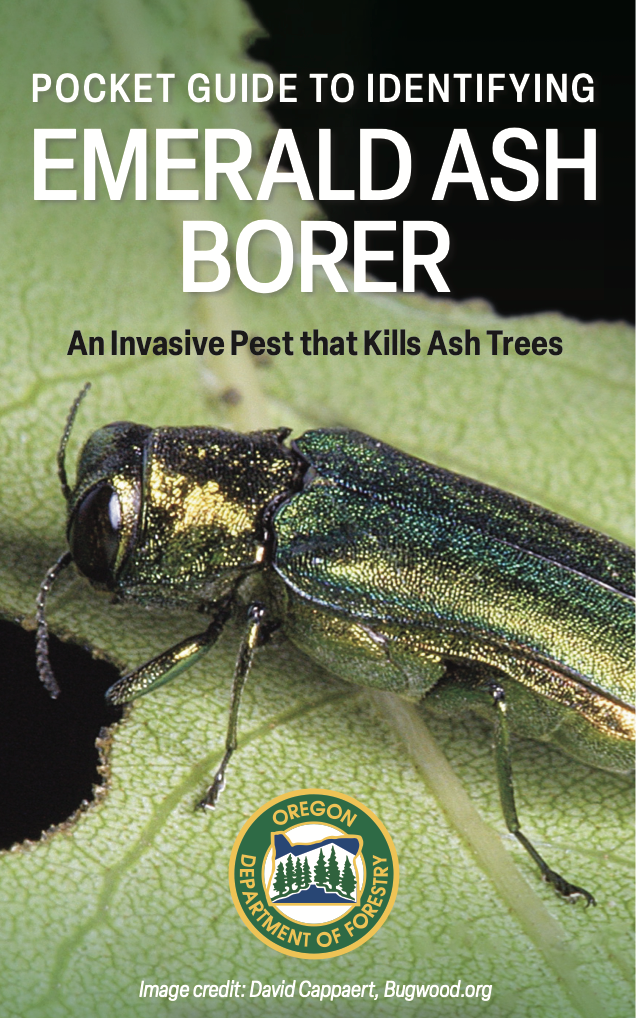
Firewood is a high-risk vector for wood-boring insects, such as emerald ash borer and Asian longhorned beetle, two species responsible for widespread defoliation of forests in Midwest and Eastern states. Washington, Oregon, and Idaho teamed up to spread the word about the potential dangers of transporting firewood carrying live invasive insects and diseases using grant funding from the 2010 Farm Bill. The campaign launches in full force July 15.
The tri-state $481,000 campaign includes billboards and radio spots, firewood exchange programs, biodegradable flying discs and playing cards with “Don’t Move Firewood” messages, and pre- and post-awareness surveys conducted by Oregon State University to determine the effectiveness of outreach.
The Oregon Invasive Species Council (OISC) led the development of a grant to launch an outreach and education campaign with Washington and Idaho to inform the public about the many insect and fungal invasive species and diseases that can be spread by moving untreated firewood.
“Just about anyone that goes camping or spends time outdoors enjoys a campfire,” said OISC Chair Sam Chan. “But we need the public’s assistance to buy and burn firewood locally, not transport firewood beyond local distances, or use heat-treated firewood. Otherwise, the potential exists to introduce species like the emerald ash borer and wood boring insects that have decimated forests in the eastern United States and threaten millions of forested acres in the West. We recognize that invasive species don’t acknowledge state lines, therefore, we asked Idaho and Washington to partner with us in this campaign to protect the Pacific Northwest.”
People have traditionally moved firewood to favorite camp spots and even new homes without recognizing the threat posed by firewood as a pathway for the movement of invasive species.
What are individual states doing to lessen the threat caused by insects and diseases in firewood? Some states have placed restrictions on out-of-state firewood unless it has been heat treated, while other states discourage people from moving firewood within the statebuy local and burn local. Outreach programs have been launched in most states, and a national website, http://www.dontmovefirewood.org/, provides excellent information on not moving firewood.
Outreach and education actions are important components to reduce the threat of firewood, but legislation is equally important.
“Firewood as a vector of invasive species is an issue that highlights the importance of public outreach as well as legislation,” Chan said. “Only though information and education efforts coupled with well thought-out laws can we face the threat of firewood head-on.”
Numerous federal entities, including plant boards, departments of agriculture, and others support a comprehensive national firewood policy, and the U.S. Department of Agriculture Animal and Plant Health Inspection Service (APHIS) formed the National Firewood Task Force to develop recommendations for firewood regulations, best management practices, and outreach.
Despite the vast amount of forest land in the United States, our country imports a significant amount of firewood/fuelwood. According to a recent study by the U.S. Department of Agriculture Forest Service, from 1996–2007, the United States imported $83 million of firewood from 27 countries in Africa, Asia, the Caribbean, Central America, Europe, North America, and South America. On average, 76% of the annual firewood imports originated in Canada. Imported firewood enters the United States through 27 states.
The goal of the Council is to get people thinking about the risks to Oregon when people move firewood.
“Hopefully, when people plan their next trip, whether it be camping, hunting, fishing, or moving their residence, they’ll make the right choice for Oregon and leave their firewood behind, and then buy and burn local or heat treated firewood,” said Chan. “This is one invasive species issue where literally everyone can make a difference.”
|
|
 |
| OISC contact |
|
For more information contact:
Lisa A. DeBruyckere, lisad@createstrat.com
Telephone (503) 704-2884
|
|
|
|
|
|
|
|
|