March 2026
Disclosed limited agency is a legal arrangement that requires special agreements and limits what an agent can share with either party. It applies any time a real estate business represents both a buyer and a seller, or two or more buyers competing for the same property, within the same transaction.
Most licensees know that a single agent representing both parties is acting as a disclosed limited agent. But that obligation extends up the supervision chain. The pattern is consistent:
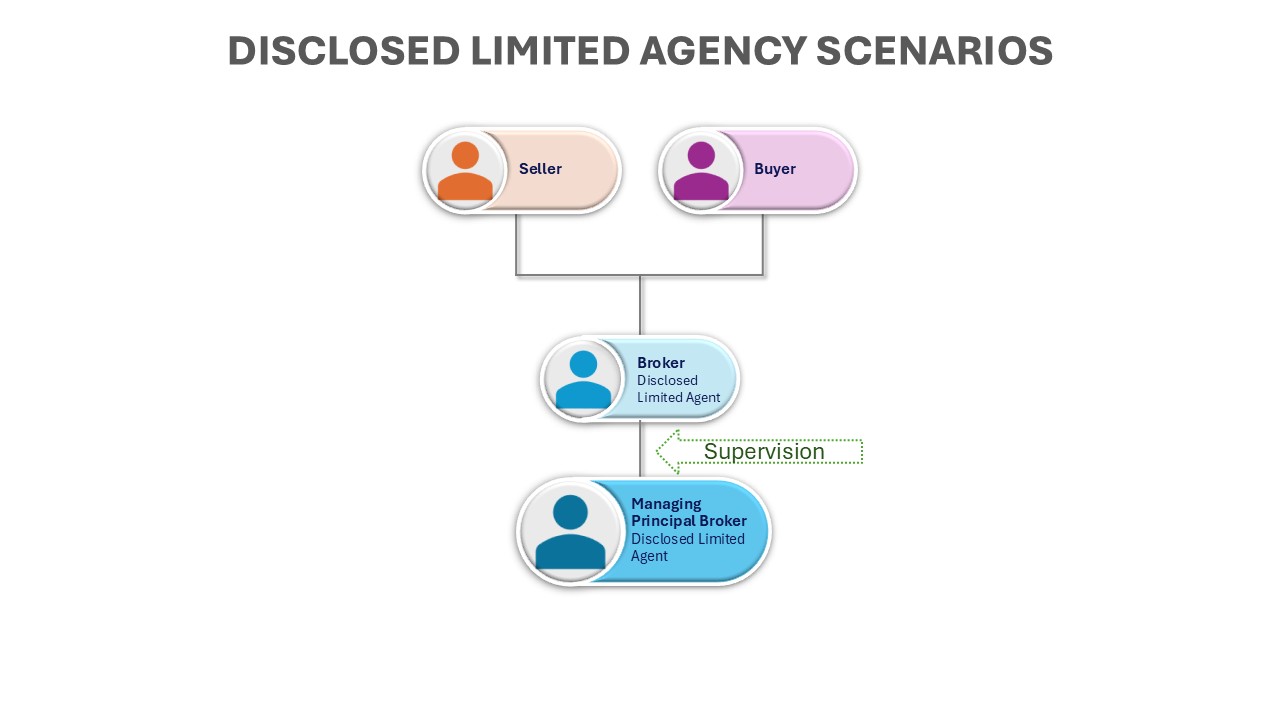
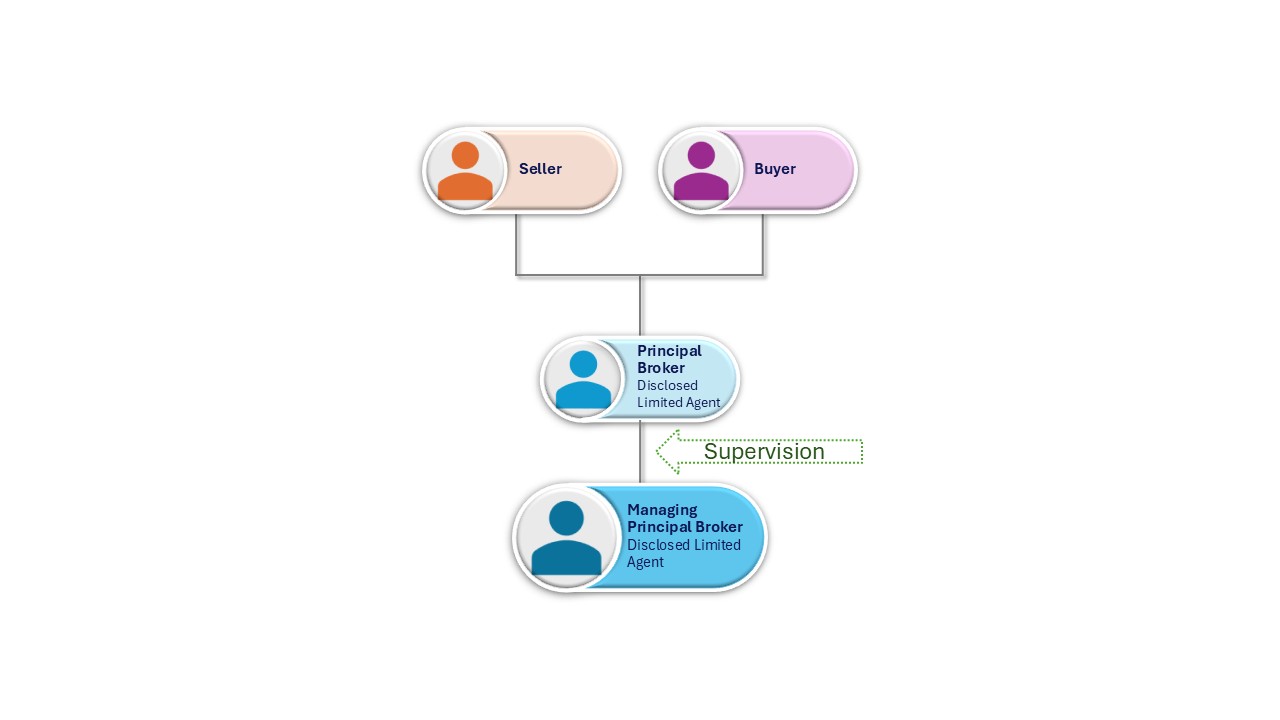
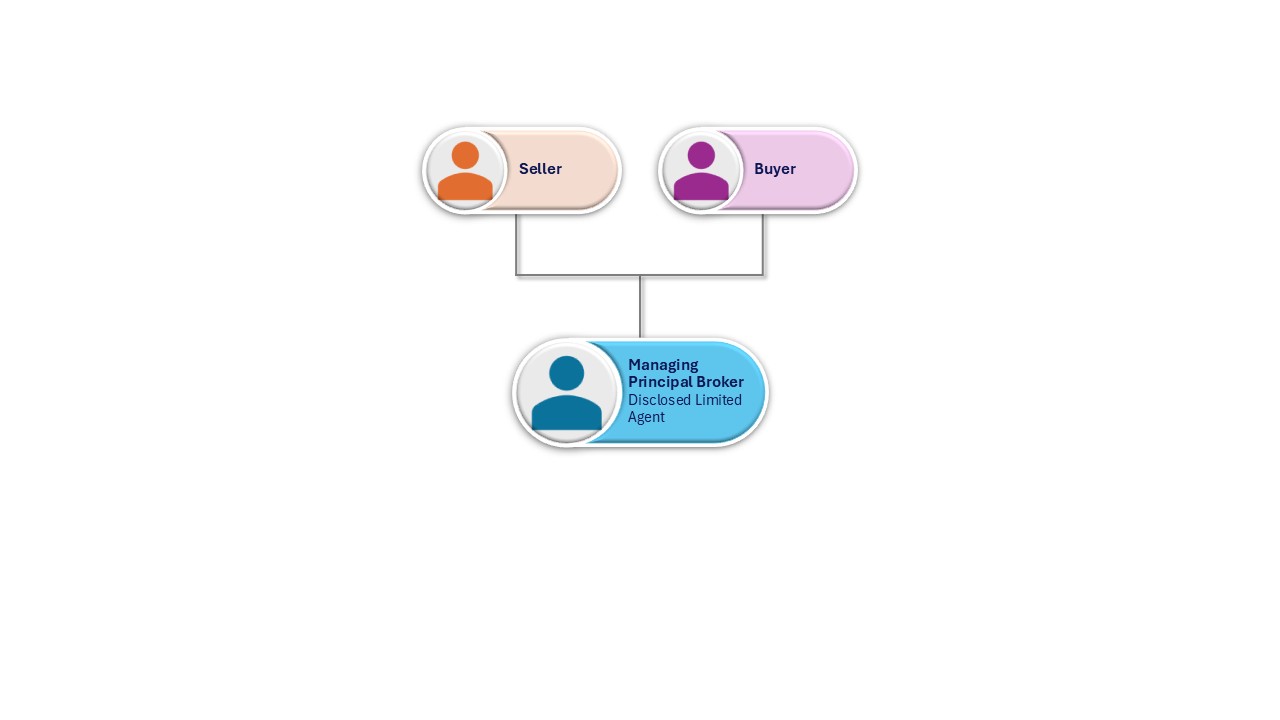
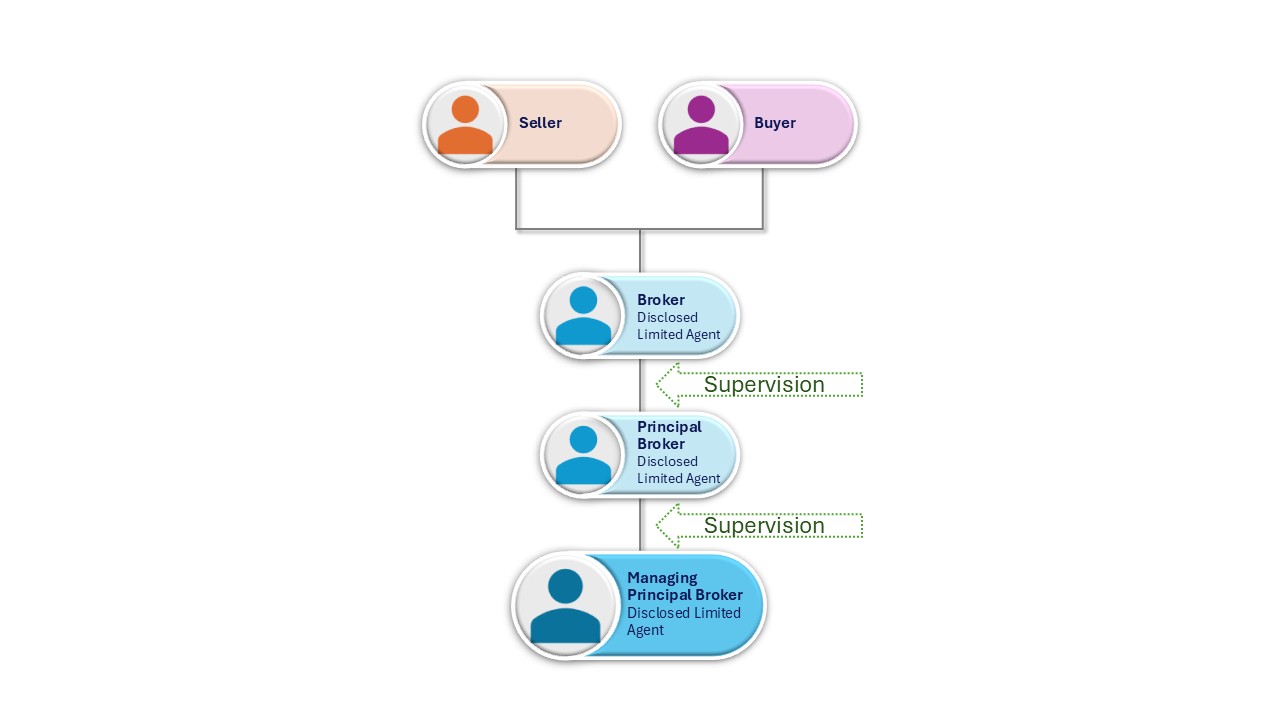
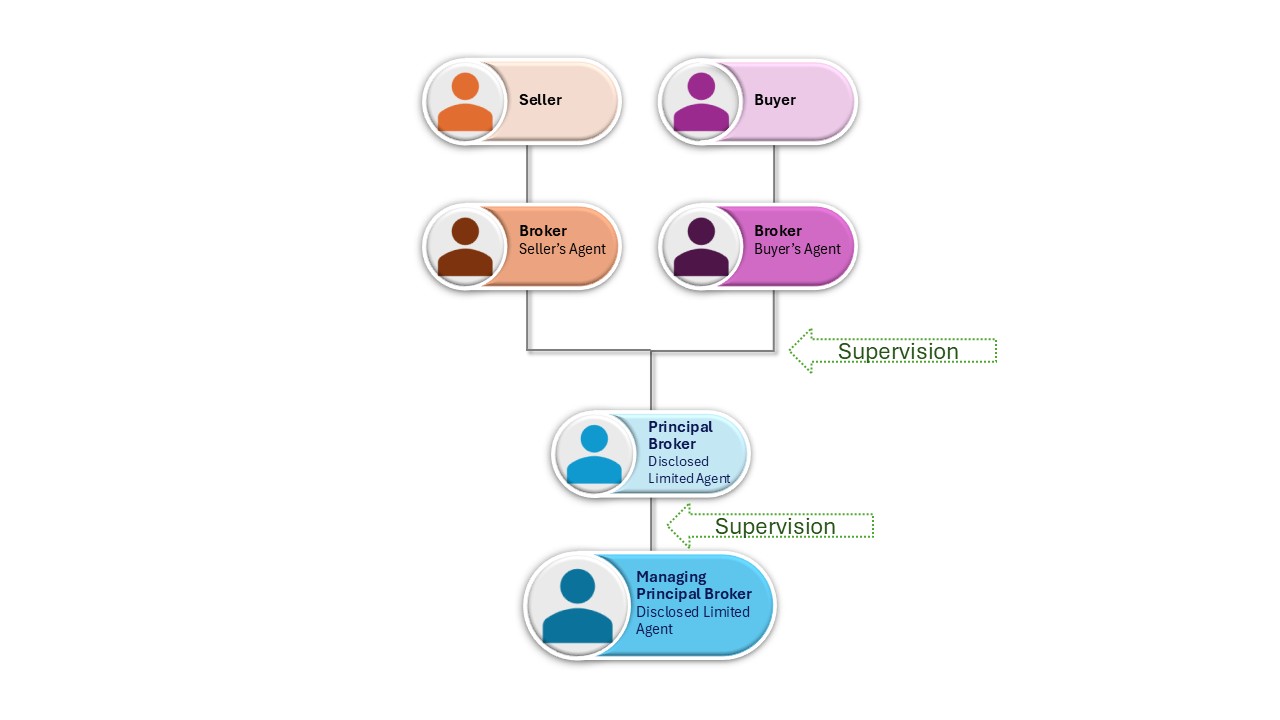
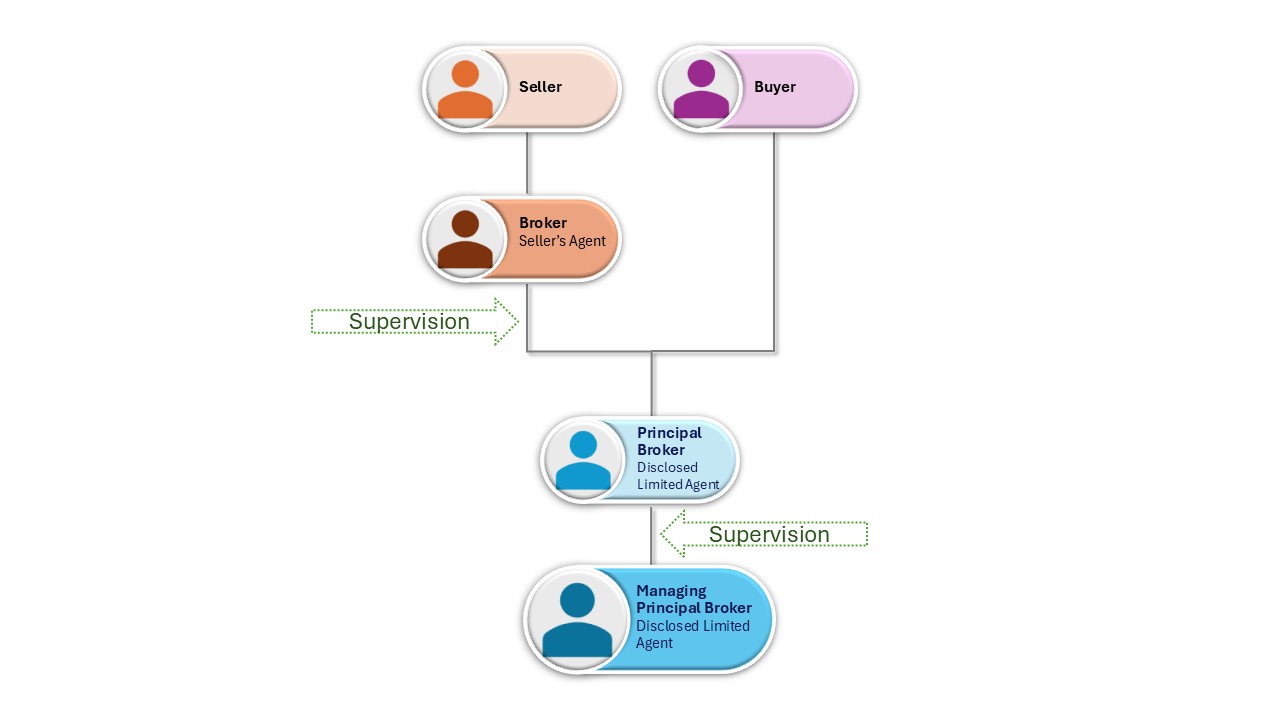
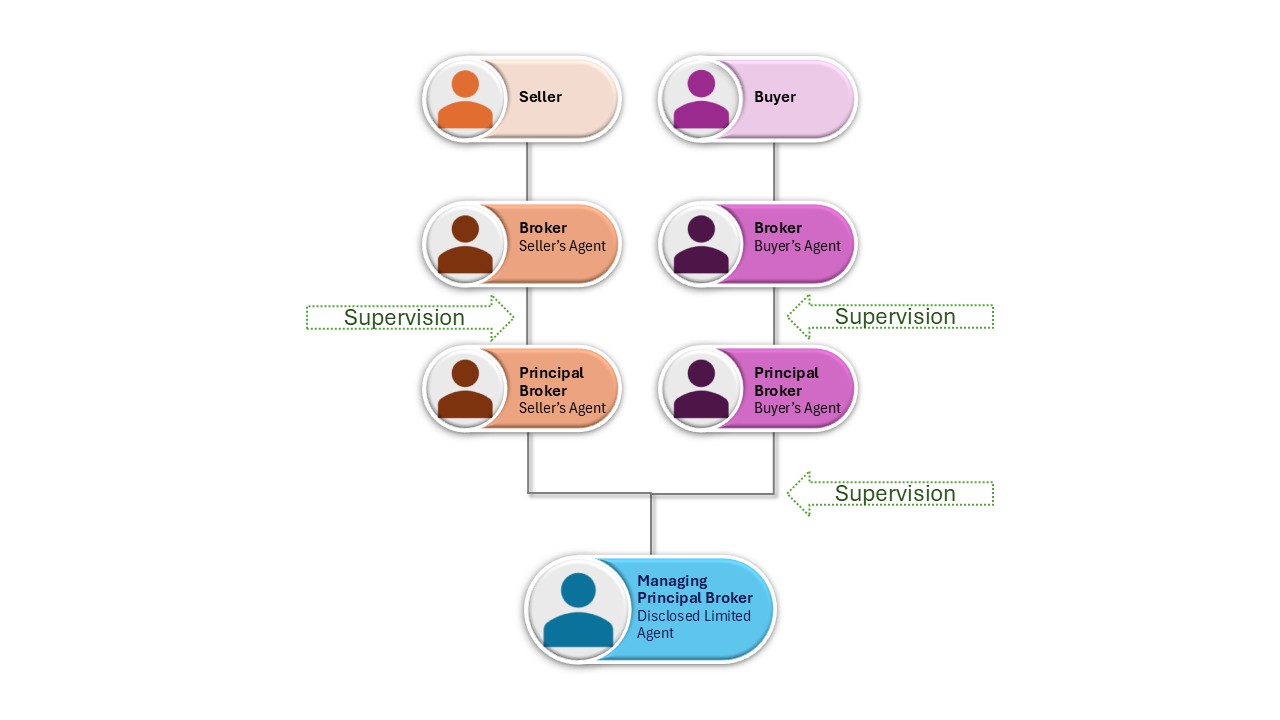
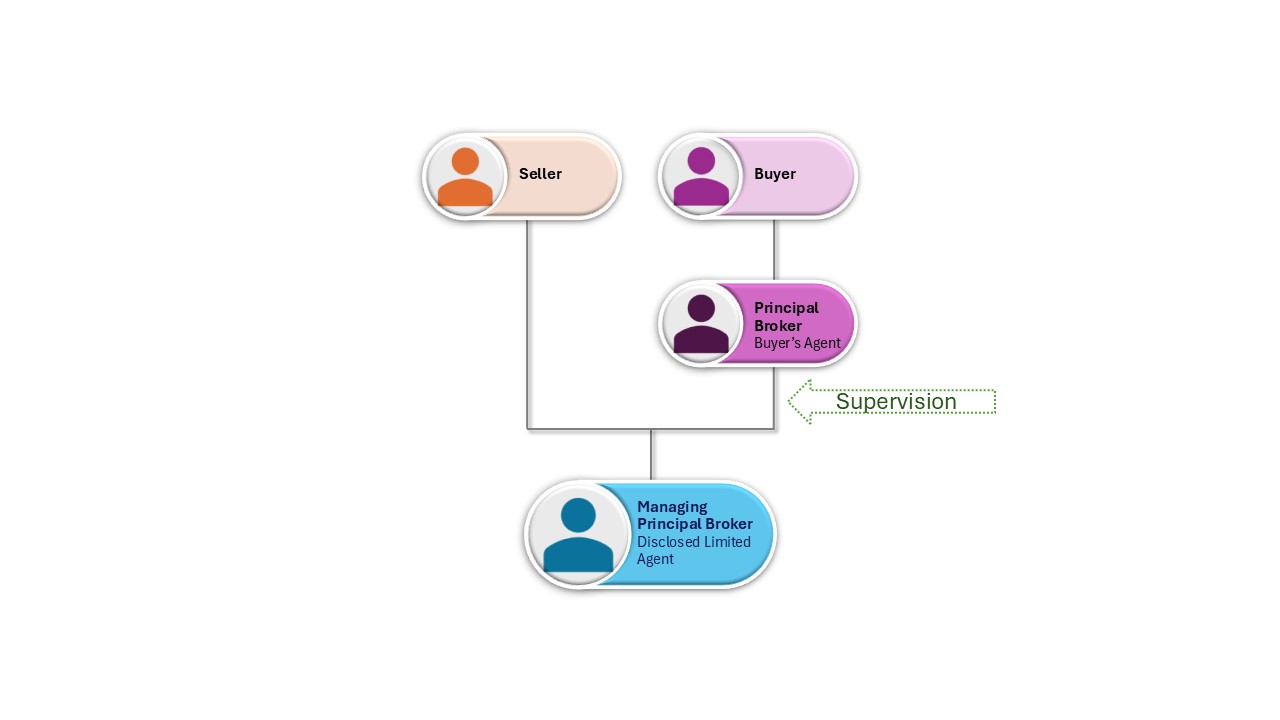
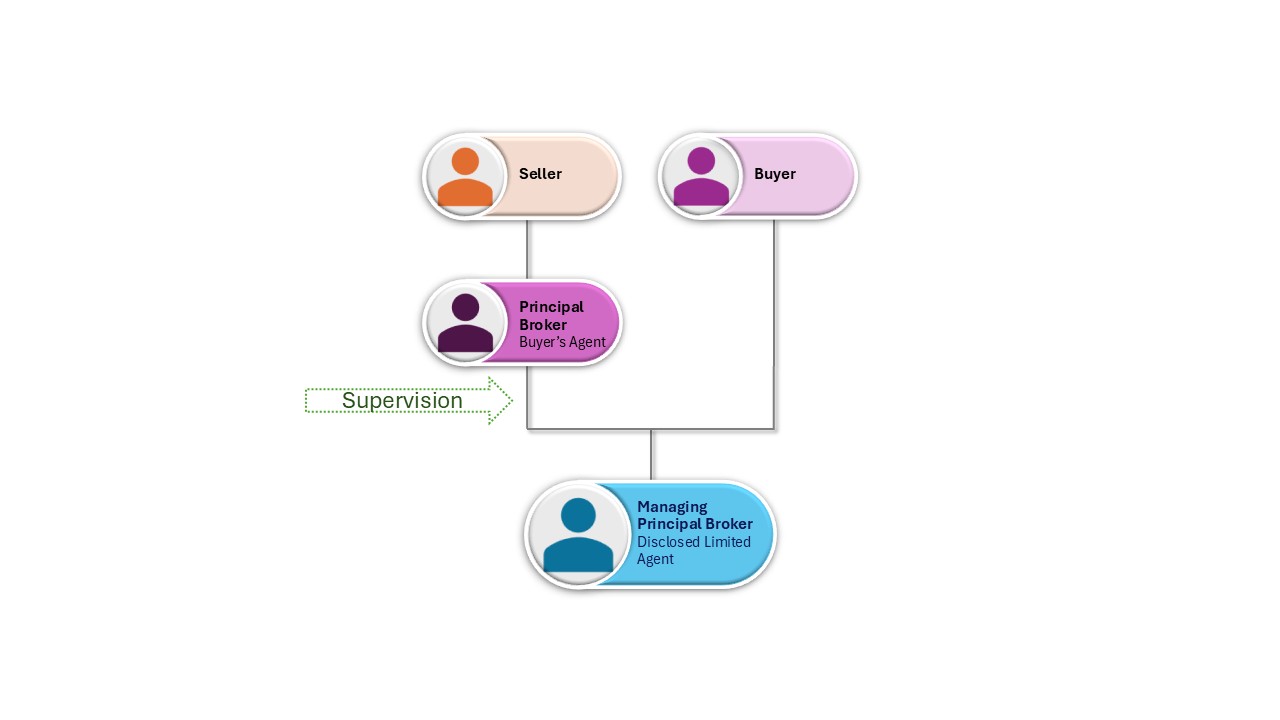
Disclosed limited agency begins where both sides of the transaction meet and extends upward from there. The graphics accompanying this article illustrate ten scenarios showing exactly who it applies to at each level of a brokerage.
Who Is a Disclosed Limited Agent?
-
A licensee representing both buyer and seller. A broker or principal broker representing both parties in the same transaction is a disclosed limited agent.
-
A licensee representing multiple buyers. A broker or principal broker representing two or more buyers competing for the same property is a disclosed limited agent.
-
A principal broker supervising a disclosed limited agent. When a principal broker supervises a licensee who represents both sides of a transaction, that principal broker is also a disclosed limited agent.
-
A principal broker supervising two licensees on opposite sides. When a principal broker supervises two licensees who each represent different parties in the same transaction, that principal broker becomes a disclosed limited agent even though the individual licensees continue to represent only their own clients.
-
The managing principal broker — always. Oregon law requires the managing principal broker to supervise all brokers and principal brokers in the business. That means whenever any two sides of a transaction meet within the same brokerage, the managing principal broker is a disclosed limited agent.
What a Disclosed Limited Agent Cannot Do
A disclosed limited agent owes duties to both parties. That means the agent cannot:
- Tell the seller that a buyer is willing to pay more than their offer
- Tell the buyer that the seller will accept less than the listing price
- Share any confidential information (see definition in ORS 696.800) about either party without that party's written permission
For the managing principal broker, those duties also mean:
- Supervise licensees in serving each client fairly
- Refrain from taking sides
- Do not use or disclose anything a client has shared in confidence.
Your brokerage should have written policies in place to protect confidential information whenever a disclosed limited agency situation exists.
Get it in Writing
Disclosed limited agency doesn't happen by default. It must be established by written agreement and meet the requirements found in Oregon Administrative Rule 863-015-0210. Both the seller and the buyer must sign separate agreements before the relationship is effective.
If you're unsure whether disclosed limited agency applies to your transaction, start at the licensee level and work up. Where do both sides of this transaction meet? That's where the obligation begins and it applies to everyone above that point.