October 9, 2026
2026 is
International Year of the Woman Farmer* and in celebration of that, ODA is thrilled to shine a spotlight on Oregon women whose hard work powers our communities and beyond.
Meet
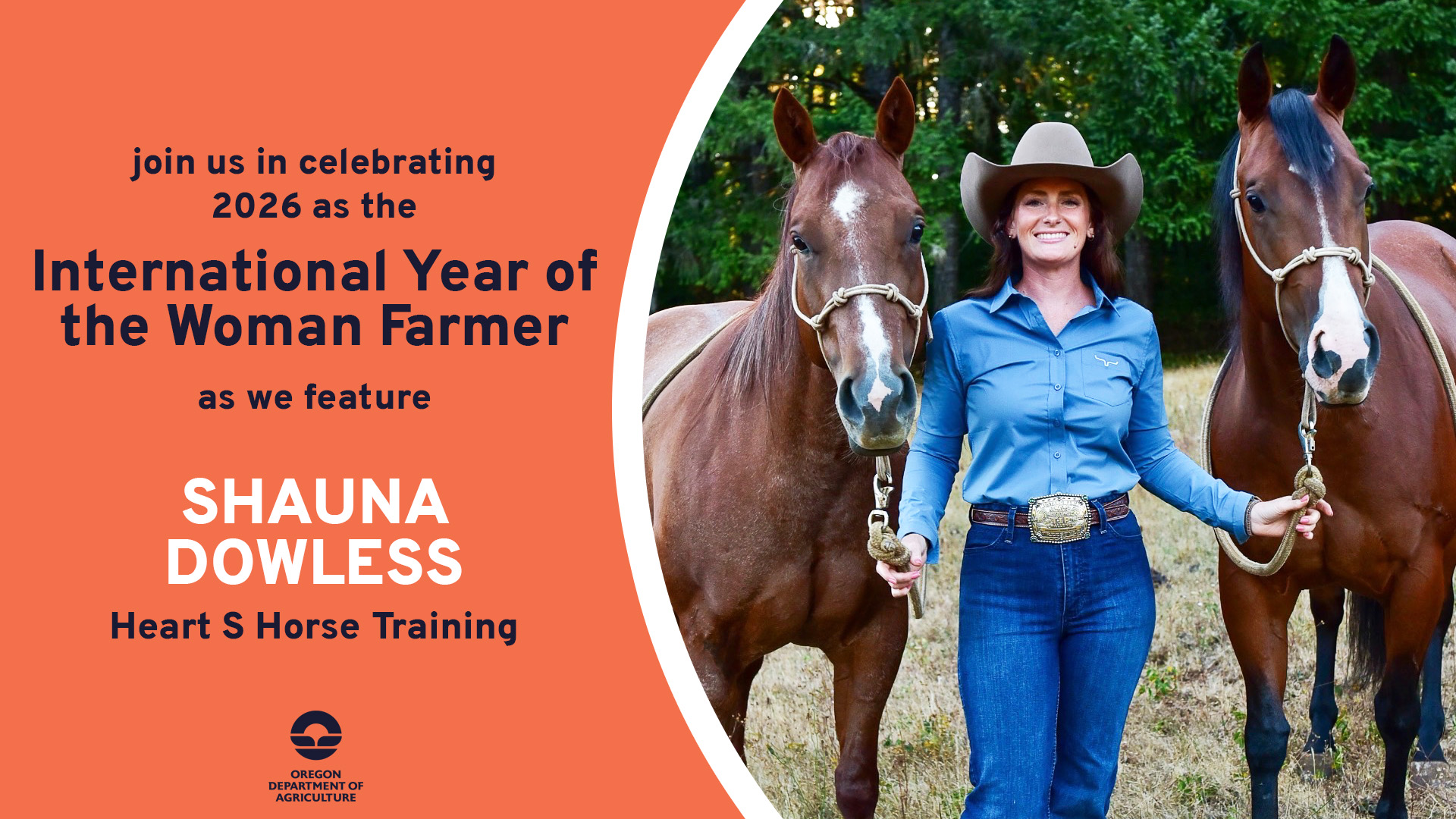
Shauna Dowless, who is a professional farrier, educator, and owner of Heart S Horse Training, where she offers horse training, lessons, and clinics focused on horsemanship, education, and helping others experience horses' positive impact.
Raised in Philomath, Oregon, Dowless developed her passion for horses and agriculture early through 4-H, equestrian team, and timber sports. She began starting colts in 2005 and has competed nationally, specializing in trail competitions, mustang makeovers, barrel racing, and colt starting. As a T.I.P. trainer with the Mustang Heritage Foundation, she has gentled and rehomed nearly 100 BLM wild horses and burros, demonstrating her commitment to horsemanship and responsible horse placement.
Dowless went on to earn a bachelor’s degree in animal science from Oregon State University in 2014. She completed the professional farrier program at The Oklahoma Horseshoeing School, where she was the only student in her class to receive full credit on forging and shoeing evaluations. In 2017, Dowless and her family moved to Vale, Oregon, where they established a training facility. After eight years, however, they returned to Philomath in May 2024. She then joined Linn-Benton Community College’s Equine Science program as an Instructional Specialist, Barn Manager, and part-time faculty member. She is now pursuing a master’s degree in Agricultural Education at Oregon State University to become an agricultural teacher and inspire the next generation. She plans to continue teaching about the horse industry and its role in agriculture, and to give back as a 4-H leader for the Benton County Horse 4-H program.
Stay tuned, because ODA will be featuring more women farmers throughout 2026. If you know of (or are) a fantastic Oregon-based woman farmer and would like to share a story with us to feature... please use the form just below this to put in a nomination!
*click here to see the official State of Oregon Governor's Proclamation
Previous Features in 2026
October 2, 2026
Meet
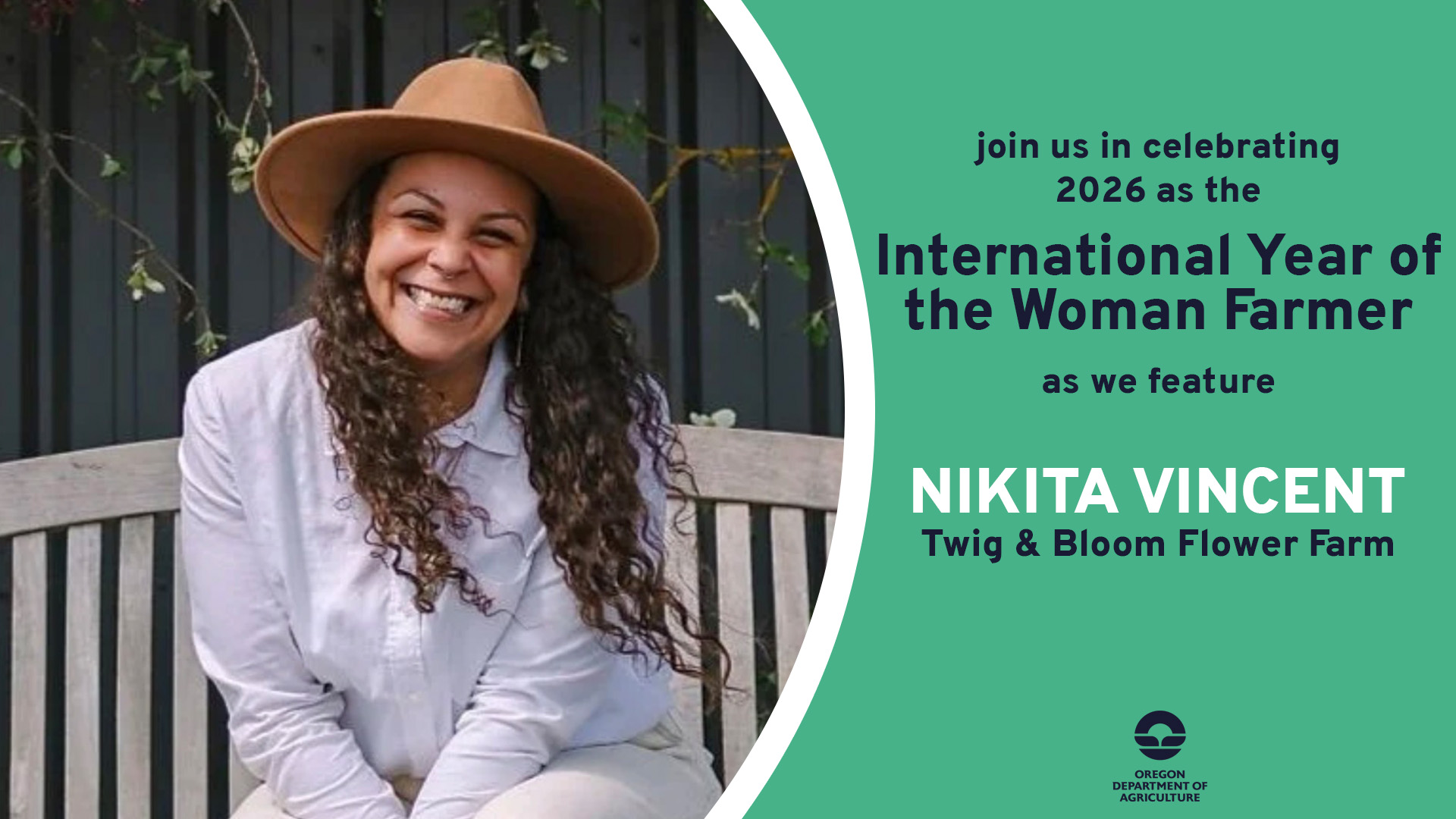
Nikita Vincent, who owns and operates Twig & Bloom Flower Farm, a micro, sustainable, pesticide-free farm in Salem. Vincent is a micro-flower farmer, agricultural program coordinator, and farmer advocate focused on building equitable, community-rooted food systems in Oregon. Her work centers on food justice, land access, and rural economic development, supporting BIPOC and small-scale farmers.
Vincent grew up in the Tigard-Tualatin area and developed her passion for agriculture in her grandparents’ garden. When her grandmother was diagnosed with cancer, she started working in the cannabis industry and later developed a line of cannabis edibles. She decided to leave the industry after experiencing racism, but later began taking horticulture classes at Clackamas Community College, became active in the small farming community, and now leads initiatives supporting BIPOC farmers and entrepreneurs. She founded and coordinated the Cultural Harvest Collective BIPOC Farmers Market in Monmouth and consults on a BIPOC-led cooperative grocery project for the City of Monmouth.
In 2025, Vincent was appointed Food Systems Chair of Oregon's Environmental Justice Council. The year before that, she joined the Oregon Agricultural Trust board and began serving as Environmental Justice Chair on the Natural and Working Lands Advisory Committee for the Oregon Climate Action Commission. She teaches gardening at Little Friends Montessori School, and continues to lead the Cultural Harvest Collective Farmers Market. She remains dedicated to preserving Oregon’s agricultural land and advancing more inclusive, sustainable, and community-driven food systems statewide.
September 25, 2026
2026 is
International Year of the Woman Farmer* and in celebration of that, ODA is thrilled to shine a spotlight on Oregon women whose hard work powers our communities and beyond.
Meet
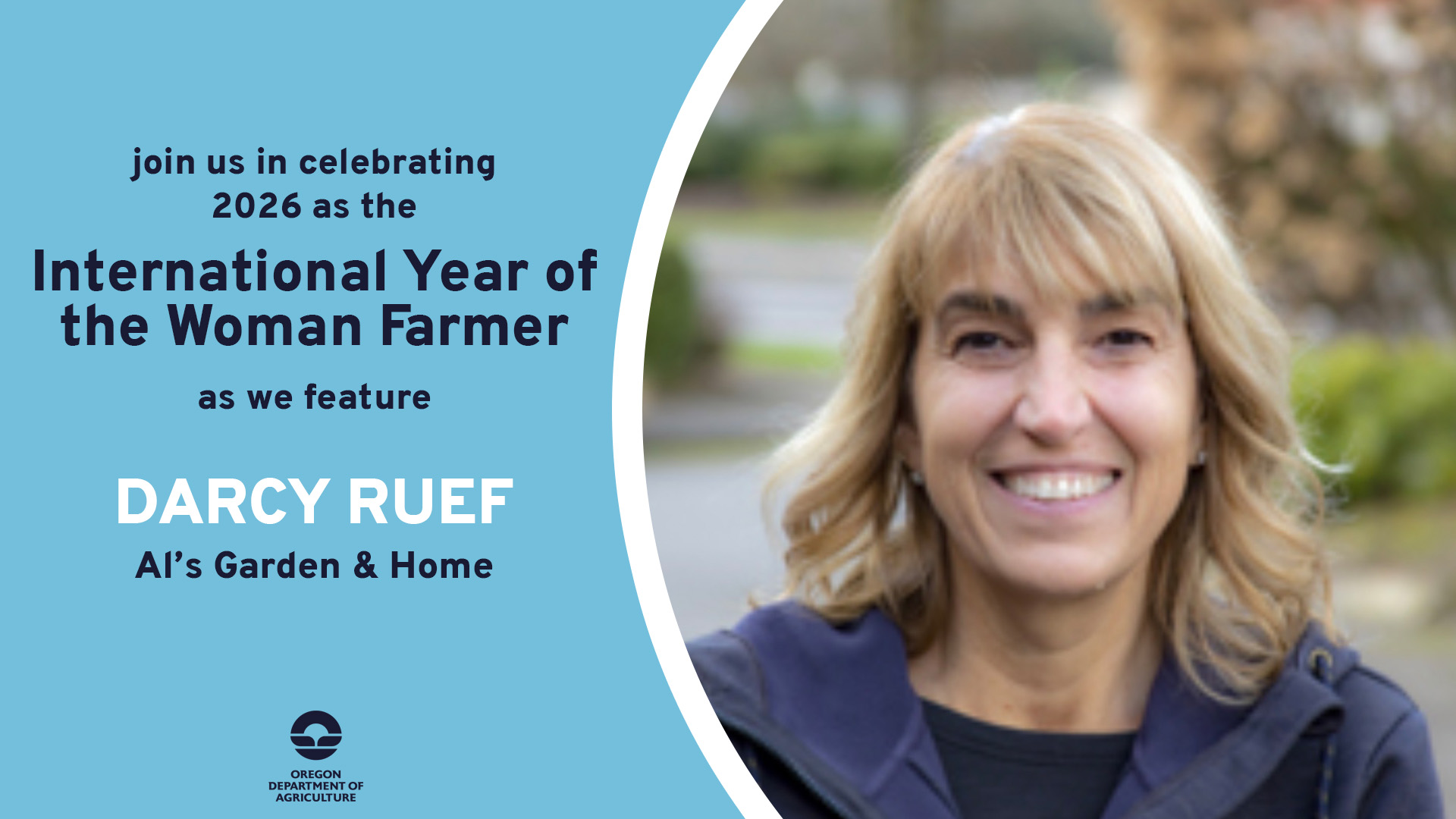
Darcy Ruef, who is the Chief Financial Officer (CFO) and co-owner of Al’s Garden & Home, a business she co-owns the business with her siblings, Mark Bigej and Dorothy Russo, and which employs over 200 people in Oregon across three growing facilities and four retail locations. Originally established in 1949 as Al’s Fruit Stand in Woodburn, the company has grown under Ruef's leadership from a single fruit stand to four stores and an e-commerce platform.
Ruef, alongside her siblings, grew up in the family business and watched it transition from primarily fruit to full nursery with 80 percent of plants grown locally, eventually expanding to four retail stores in the Willamette Valley. Her family's legacy spans decades, with earlier generations building the business while raising their children at the nursery. Jobs on the farm were always assigned by age rather than gender, and women have consistently played a vital role in the company's 75-year success.
As CFO, Ruef now carefully oversees the horticulture company's financial decisions. As a third-generation horticulturist, she also serves on the Oregon Association of Nurseries board. Her own daughter, Annie Ruef Cantonwine (a fourth-generation member of Al’s Garden & Home), grew up observing women in leadership roles, and hopes others are inspired by women like her mother, who has set a strong example for future generations.
September 18, 2026
Meet
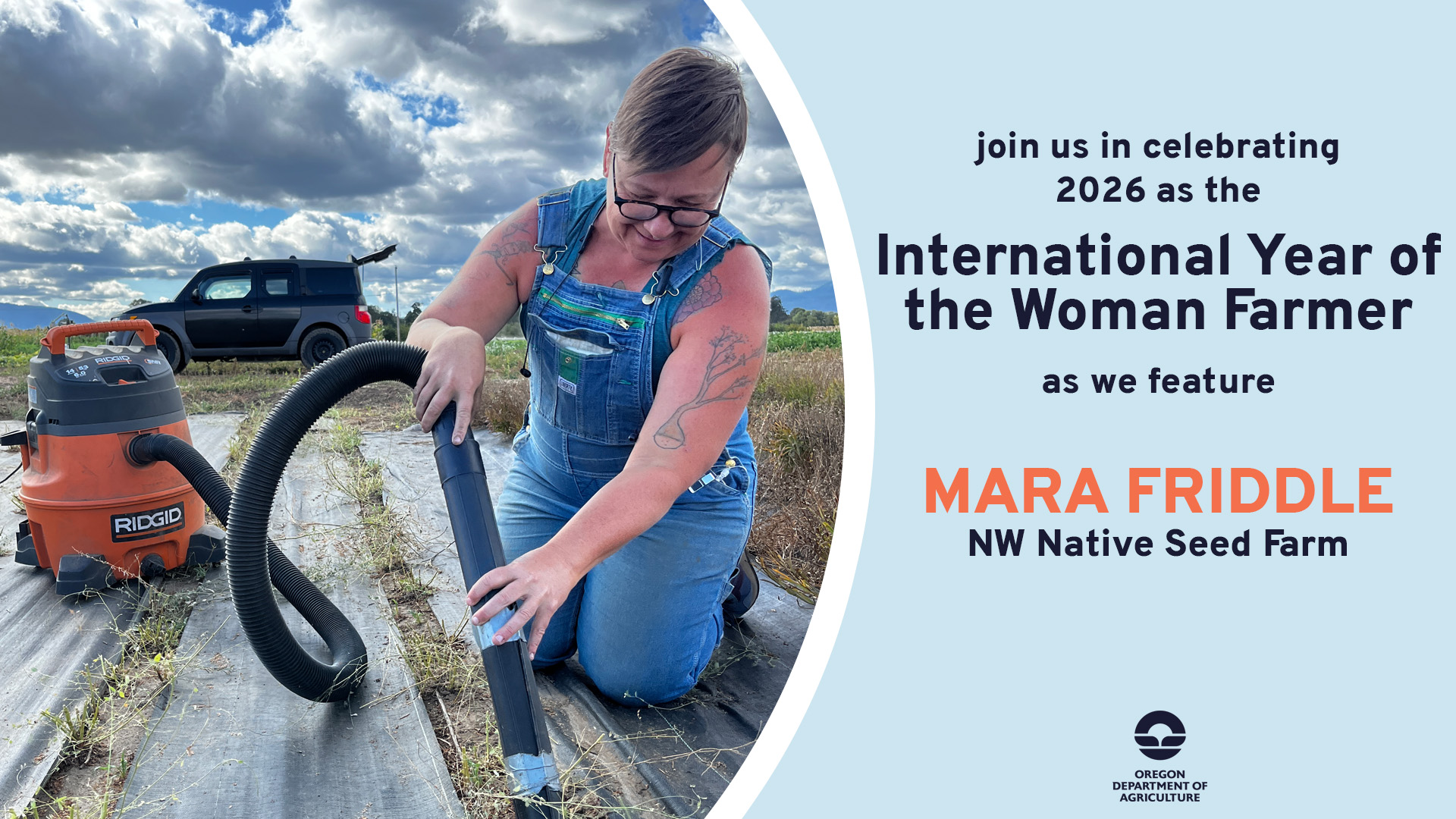
Mara Friddle, a leader in Oregon's native seed industry with over 25 years of horticulture experience -- including oilseed crop research, ornamental plant breeding, native plant development, and native seed farming. Over the years, she has developed exceptional knowledge and practical expertise in a field with few seasoned professionals, and has developed production protocols for many threatened, endangered, and difficult native species, often where no established methods previously existed. Her work has increased the availability of high-quality native seed for restoration across the Pacific Northwest, and strengthened the knowledge base of this emerging industry.
Friddle began her career studying horticulture while working at a landscape nursery and garden center. During her studies, she conducted canola disease trials for Cargill in Canada. Although the work was technically challenging and well-compensated, she sought greater fulfillment. A conversation with Oregon State University's Environmental Plant Breeding program at a Portland trade show sparked her interest in ornamental plant breeding and broadened her perspective on plants and agriculture. She took a pay cut to join the USDA Natural Resources Conservation Service's Corvallis Plant Materials Center, where she developed expertise in native plant production and greenhouse propagation and gained a deeper appreciation for biodiversity and restoration ecology.
In 2020, Friddle joined the Institute for Applied Ecology as manager of the native seed farm. Leading the program during the pandemic was challenging, but she successfully guided it through the transition and supported its growth. She is skilled in all aspects of native seed farming, including propagation, field production, harvest, seed cleaning, and storage. She now encourages new farmers to see challenges as opportunities to build resilience.
September 11, 2026
Meet
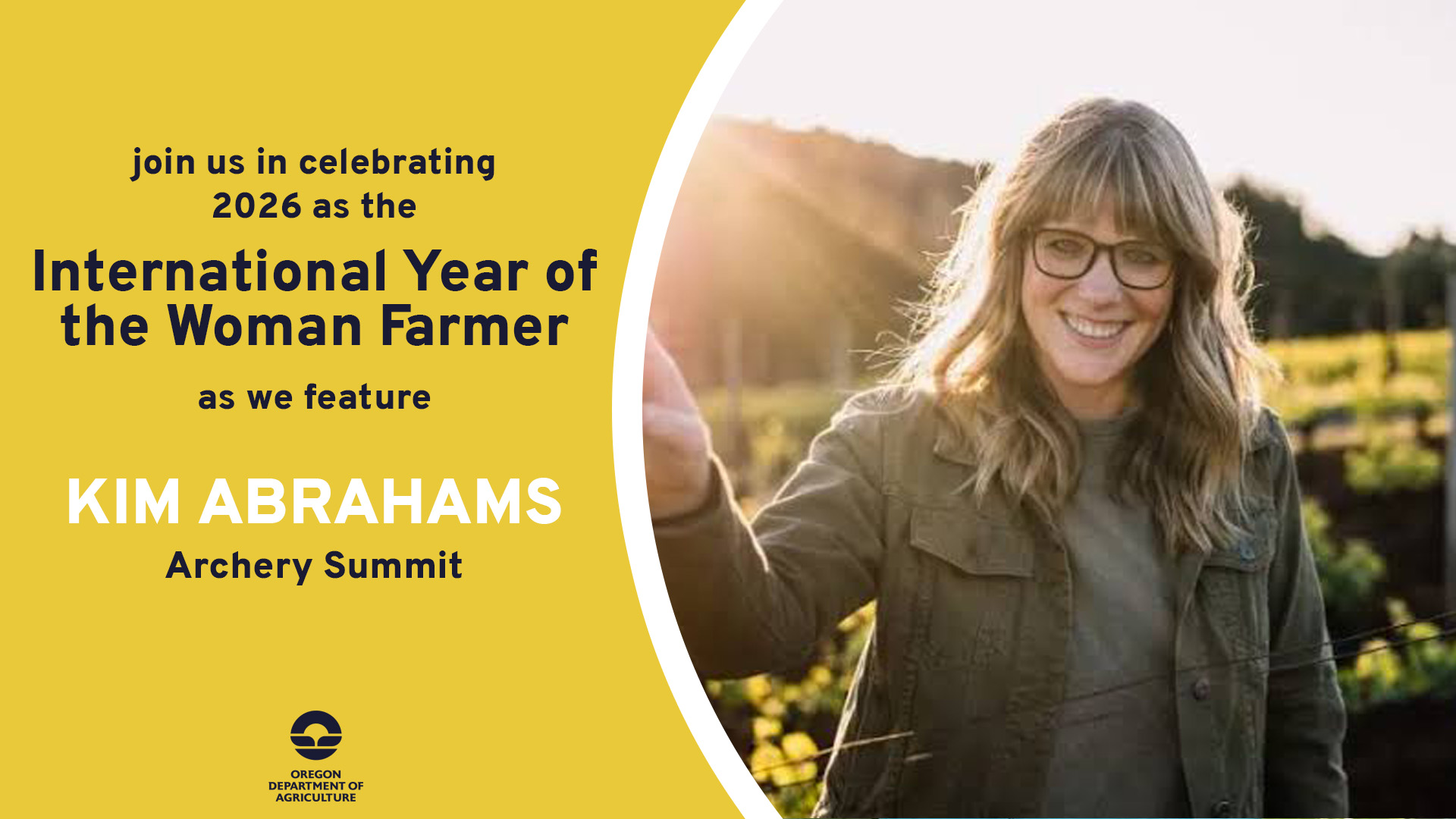
Kim Abrahams, who oversees the vineyard and winemaking program at Archery Summit in Oregon's Dundee Hills, helping guide the future of the exclusive Pinot Noir producer. Her work combines agriculture, science, leadership, and creativity, focusing on stewarding the land and crafting wines that reflect Oregon's wine country.
Abrahams grew up working at her parents' nursery southern Louisiana, and after earning a degree from the University of Louisiana she later pursued a Certificate in Viticulture from Washington State University, building a strong foundation for a career in vineyards and winegrowing. After that, she spent a summer working at a vineyard in Australia -- an experience that eventually led her to Oregon and the Willamette Valley, where she wanted to better understand the relationship between farming and wine.
In the years since, Abrahams has come to believe that exceptional wines begin with caring for the land and understanding each growing season's unique character. She has become a respected voice in Oregon's wine community, speaking at events like the Oregon International Pinot Noir Celebration and the Oregon Wine Symposium, and sharing insights on vineyard practices, winemaking, and the future of Oregon wine. Outside of the winery, Kim remains closely connected to Oregon's agricultural community. She lives in McMinnville with her husband, two sons, Ansel and Miller, and their golden retriever, Cedar. She is also a beekeeper, reflecting her appreciation for biodiversity and sustainable agriculture, and co-owns Mac Wine Lockers with her husband.
September 4, 2026
Meet
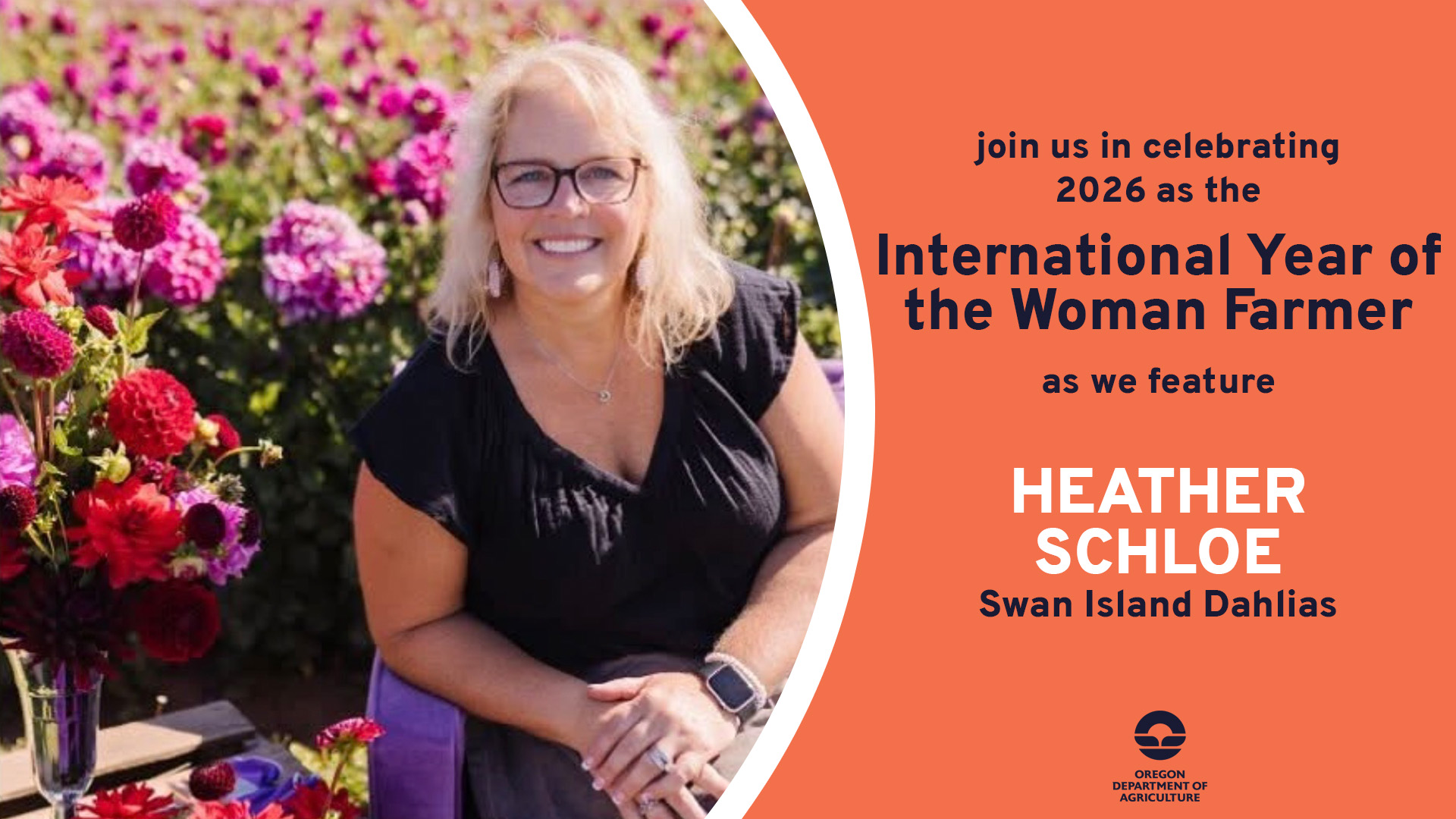
Heather Schloe, Senior Manager of Swan Island Dahlias, which is marking its 100 year anniversary with the 2026 Dahlia Festivan in Canby, OR this fall. Schloe is a third-generation grower, carrying forward a family legacy that began when her grandparents, Nick and Margaret Gitts, purchased the farm in 1963 from the original owners, who had established it in Portland in 1926.
Swan Island Dahlias is among the largest and oldest dahlia farms in the United States, and under Schloe's guidance, the farm has been an innovator in the industry. It became an early adopter of online business when Schloe registered the URL 'dahlias.com' and built a strong digital presence through use of Google ads. She is also proud that the farm uses bee-safe commercial products for pest management, as she believes that bees are essential to the its success. A beekeeper approves all sprays, and the farm uses electrostatic spraying to minimize application.
In the 1940s, the farm relocated from Portland to Canby, where it remains to this day. In 2021, Schloe and her husband expanded the farm by 10 acres, bringing it to nearly 50 acres as it continues to thrive in the community her family has called home for generations. The annual Dahlia Festival, held the last weekend of August and Labor Day weekend, features 400 dahlia arrangements. Visitors are also welcome to walk the fields for free during bloom season. Schloe herself describes the maintainance of those fields as a labor of love, and she enjoys walking the fields for the natural beauty and relaxation they offer.
August 28, 2026
Meet
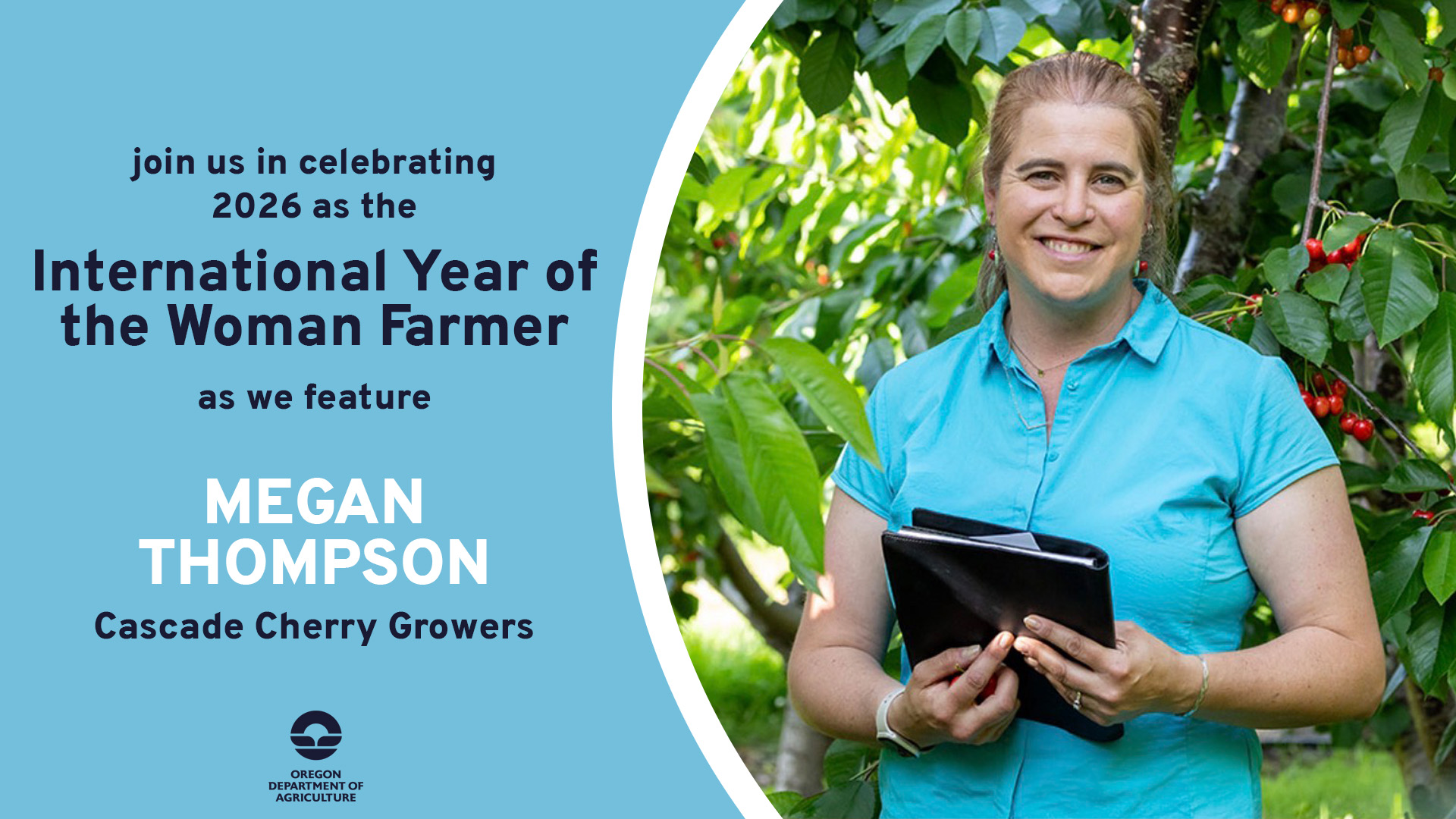
Megan Thompson, who has spent nearly 3 decades working in the cherry industry, both for Cascade Cherry Growers and also managing her own small farm, Sunset Ridge Orchard. Despite growing up in the city of Portland, Thompson found a love for agriculture as a child and went on to earn her horticulture degree at Oregon State University.
She then dove into the whirlwind of cherry season as a field representative for Oregon Cherry Growers. Nearly three decades and 27 harvests later, her passion for guiding growers toward fruitful, thriving seasons still shines as brightly as ever. Through Oregon Cherry Growers' many changes over the years, Thompson climbed the ranks from field representative to director of field services. When tough economic times hit, she briefly pivoted to processing, gaining hands-on experience that enriched her perspective until she was able to return to the field. When the processing side of Oregon Cherry Growers was sold in 2017, the fresh division transformed into Cascade Fruit, and Megan stepped up as president.
Throughout her nearly thirty years in the industry, she has faced the agricultural industry's toughest challenges, often as one of the only women at the table. She has proven herself as a leader and an active member of the ag community. In 2017, she was a member of the first Resource Education and Agricultural Leadership (REAL Oregon) class. In addition, she gives back by volunteering with groups like Ag Link and the Oregon Agricultural Trust.
August 21, 2026
Meet
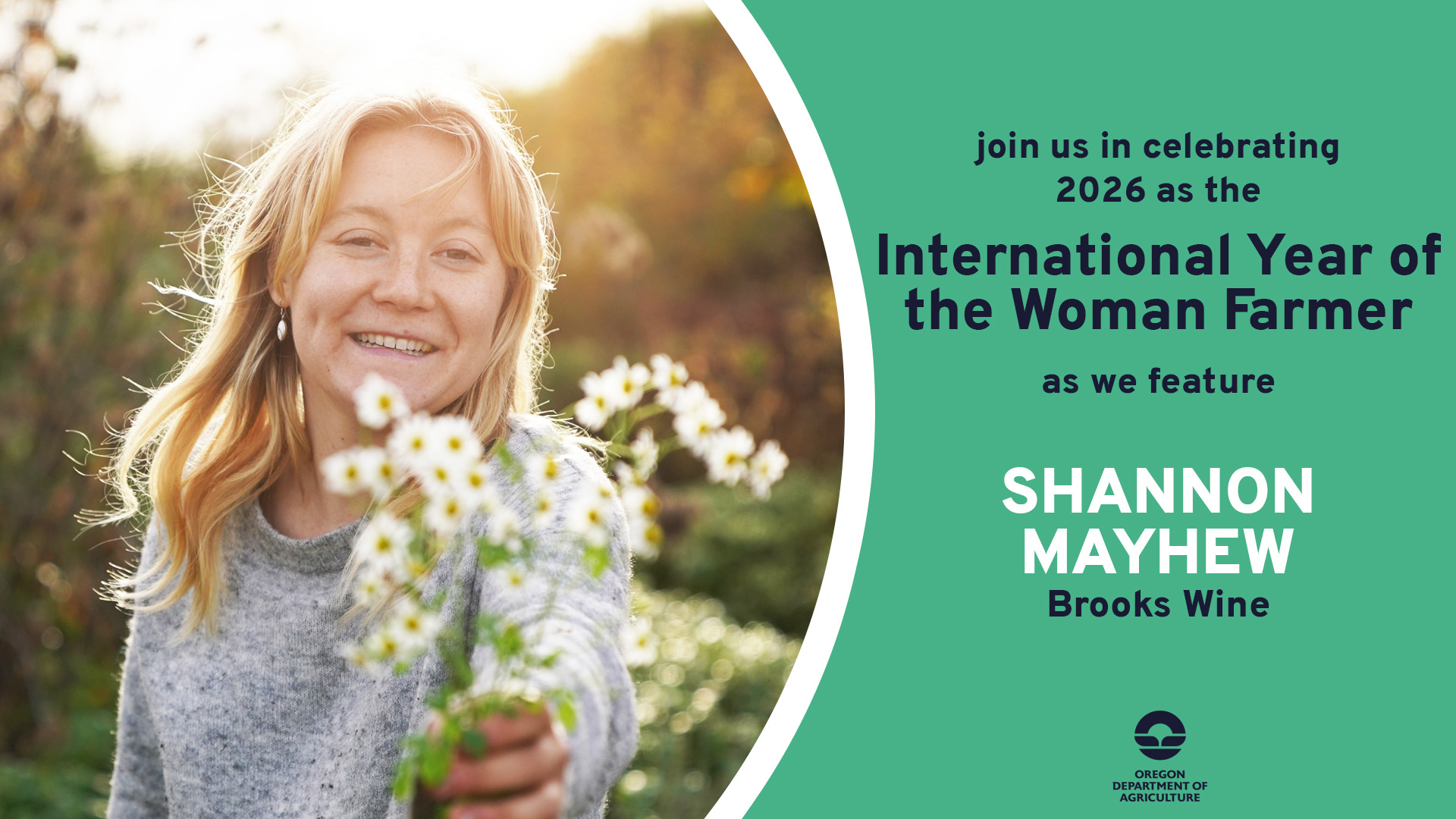
Shannon Mayhew, who serves as Estate Sustainability Director at Brooks Wine. For her, land stewardship is a calling that shapes her daily work. In 2026, she received the Oregon Wine Board Sustainability Champion Award, which recognizes leaders advancing environmental care.
She grew up in the Napa Valley, and as a child after discovering hundreds of dying honeybees, she researched the causes and learned about the dangers of pesticide drift. At nineteen, she began designing living hedgerows for wineries to protect pollinators, marking the start of her lifelong commitment to land stewardship. She later earned a Bachelor of Science degree in Plant Science from the University of California-Davis, focusing on sustainability and biodiversity management. Her education and practical experience now inform her leadership at Brooks, where she oversees projects such as pollinator meadows, composting systems, and native hedgerows to restore ecological balance.
Nowadays Mayhew advises fellow female farmers to build supportive communities that share advice and understand the unique aspects of their work. She encourages taking breaks to gain fresh perspective, reminding everyone that the land endures. She also recommends letting go of perfectionism, as meaningful growth takes time. True stewardship involves embracing diversity, accepting some disorder, and trusting in the value of the journey.
August 14, 2026
Meet
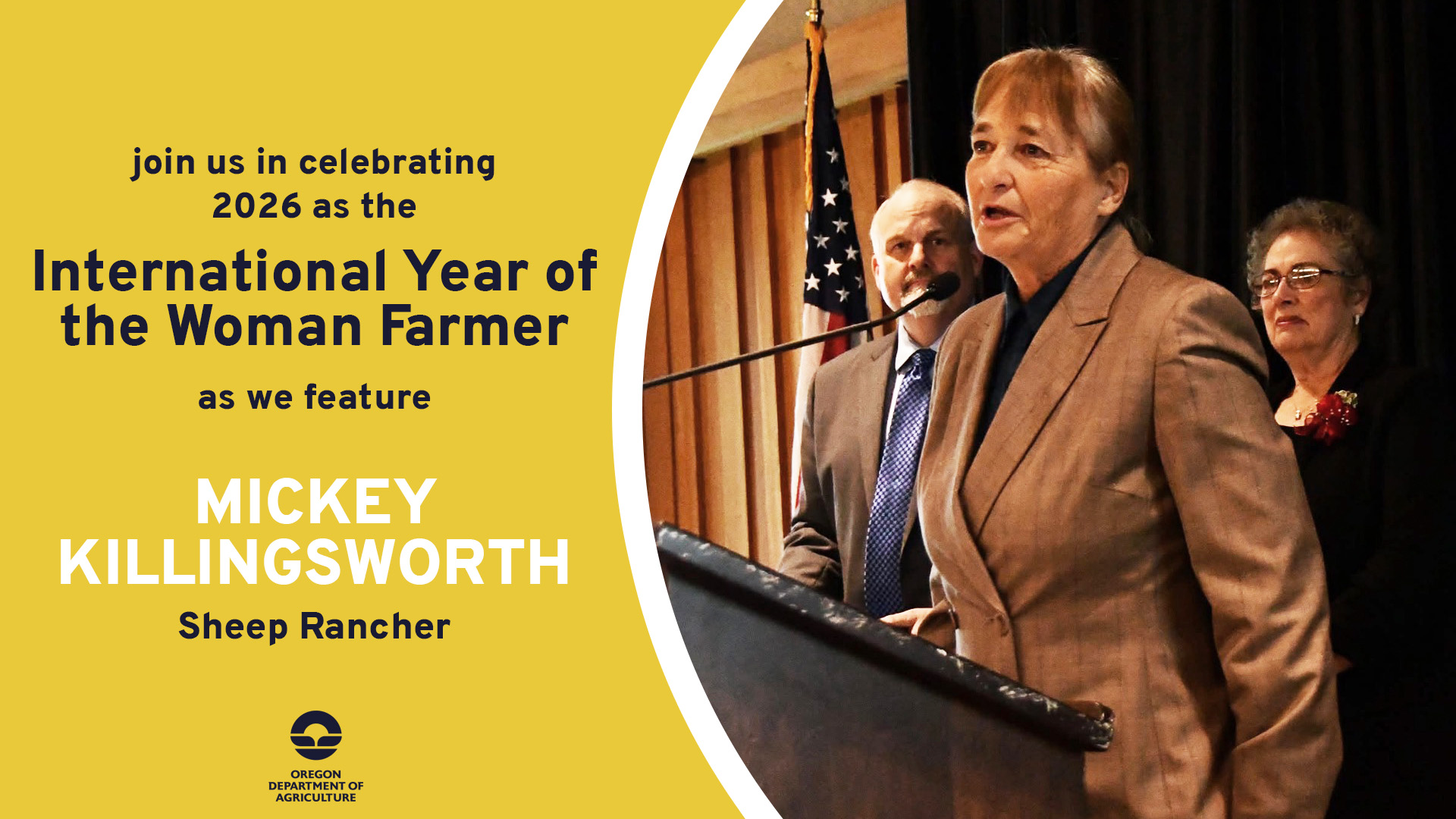
Mickey Killingsworth, a sheep rancher near Madras, Oregon. Despite growing up on a cattle ranch, Killingsworth was actually encouraged by her parents to become an attorney; instead, she chose to remain in agriculture and eventually blazed the trail for other woman farmers in Oregon.
First, Killingsworth earned a degree at Oregon State University in Agricultural Resource Economics. When she graduated, she was one of only 40 women in the United States to hold that degree. According to her, "when I started, my husband had a business and I was the farmer. And the hardest part was getting the federal resources, the state resources, to recognize that my husband's name didn't have to be on anything. It was my enterprise."
Killingsworth went on to affect the ag industry in multiple ways over the years, such as by working with U.S. Senator Mark Hatfield to get a livestock guard dog pilot program started in Oregon that later went nationwide, and also serving on ag oversight committees under U.S. Representative Bob Smith. She has also been honored with several awards, including being named to the Oregon Farm Bureau's Hall of Fame. However, she says that the honor she is most proud of is the trust of her peers to serve on legislative oversight committees as well as her previous service in the 1990s as the chairperson on the American Sheep Industry environmental council. She continues to work with the Jefferson County Farm Bureau on educational activities for children at the local level, as well as on legislative issues related to ag.
August 7, 2026
Meet
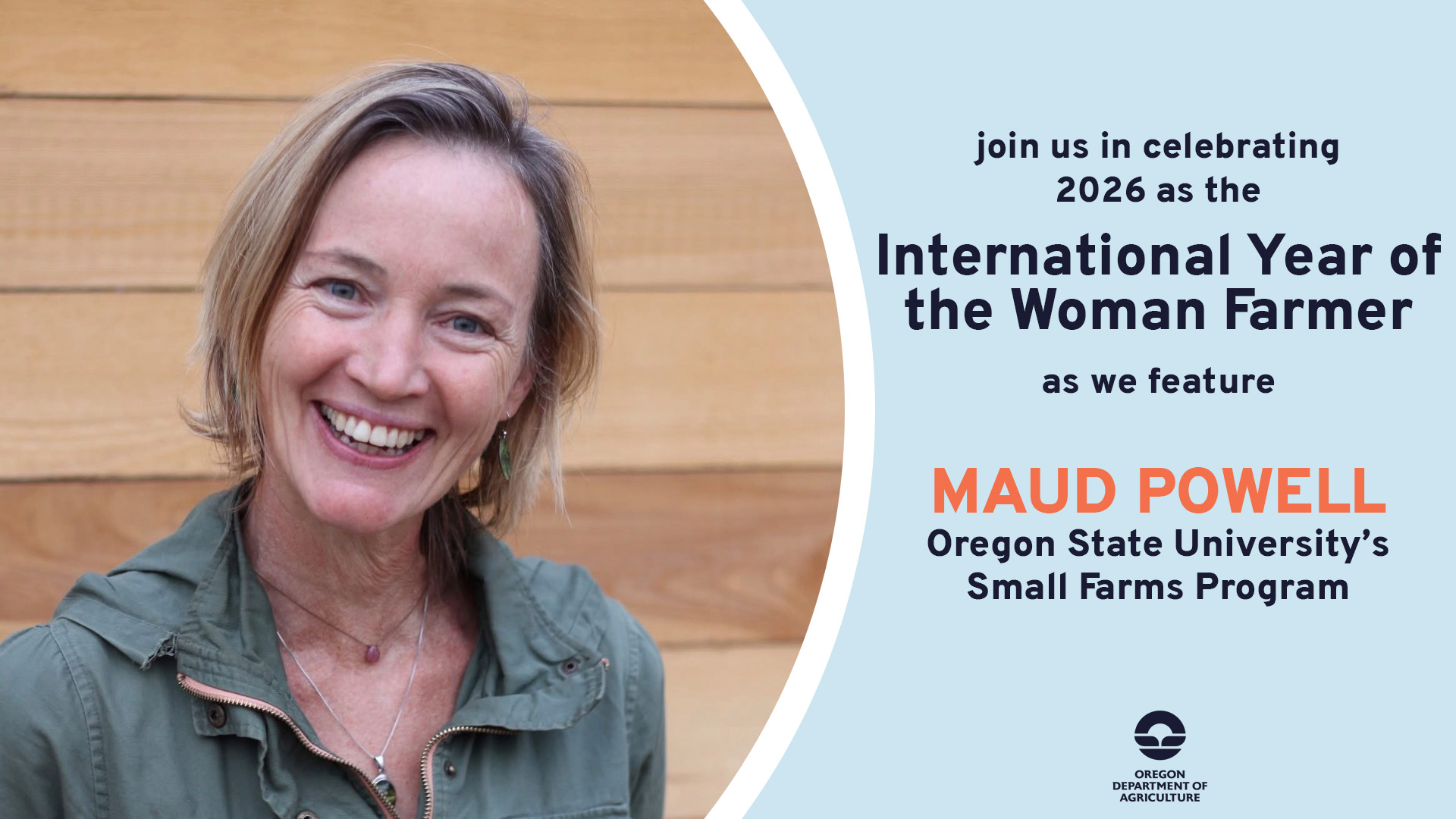
Maud Powell, who is a writer, farmer, speaker, facilitator, and professor in Oregon State University’s Small Farms Program. Previously, however, for 27 years she and her husband managed Wolf Gulch Farm, a diversified vegetable and seed operation in the Applegate Valley of Southern Oregon. Persistent drought over the course of two decades ultimately forced the Powells to relocate, after they first attempted to implement multiple water conservation strategies. Despite these efforts, the creek dried up in 2017, and a severe heat wave in 2021 necessitated their relocation.
Drawing on her experience with drought and climate-related challenges, Powell began using her role at OSU to organize workshops and trainings addressing climate grief and ecological stress, in order to support rural agricultural communities in processing the emotional impacts of environmental changes, droughts, and wildfires. These workshops are among the first of their kind and have received national recognition.
Powell conducts workshops across Oregon and the United States for individuals affected by climate change. She has published articles and essays in outlets such as
Health Affairs Insider, Greenhorns: 50 Dispatches from the New Farmers’ Movement, Oregon Humanities Magazine, Reckoning, and Environment: Science and Policy for Sustainable Development. In addition, she writes, directs, and produces community theater with the Little Apple Players and was named a 2025 Community Storytelling Fellow by Oregon Humanities.
July 31, 2026
Meet
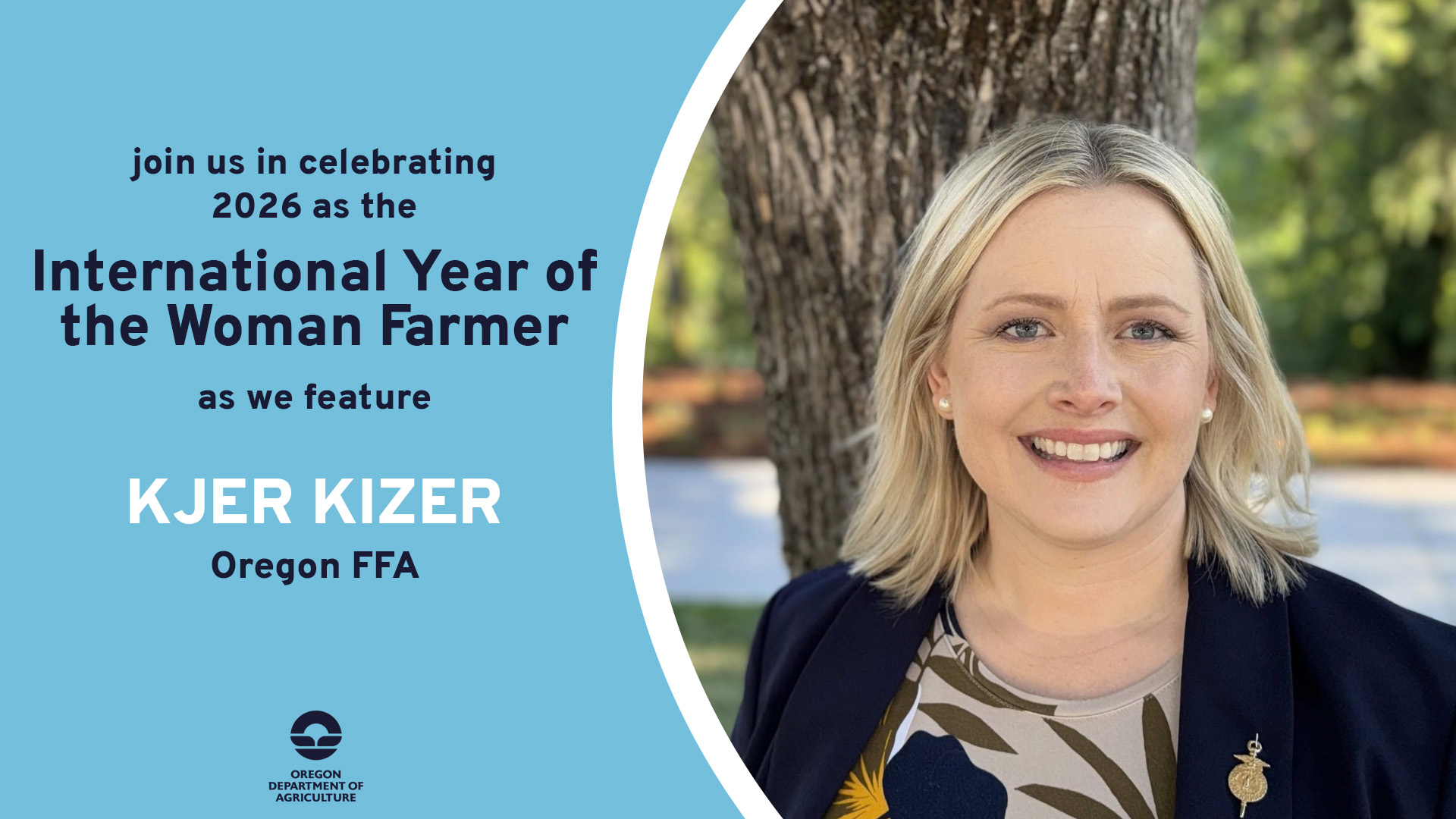
Kjer Kizer, who was appointed Chief Executive Officer of the Oregon FFA Association in 2024, bringing a wealth of experience in agriculture advocacy, education, and leadership development. In her position, she champions nearly 16,000 FFA student members across 124 Oregon high school chapters, inspiring career exploration and raising awareness about rural mental health.
Kizer grew up in Joseph, Oregon, where she found her calling in FFA during high school, eventually serving as an Oregon FFA State Officer for multiple years in the early 2000s. After earning her degree from Oregon State University, she carved out a dynamic career across various industries and leadership positions. Most recently, she was part of the Executive Leadership Team at Veterinary Service Inc., a national pet and veterinary distribution company and a trusted Oregon FFA Foundation partner. When the chance arose to lead Oregon FFA, she eagerly embraced it. Supporters say that she brings a rare blend of expertise and insight, deeply rooted in the organization's mission.
As CEO, Kizer feels privileged to guide an organization that shaped her own path. She is dedicated to furthering Oregon FFA's mission and opening new doors for future student leaders. She views her return to FFA as more than a career achievement; it is a heartfelt homecoming, filled with gratitude, purpose, and excitement.
July 24, 2026
Meet
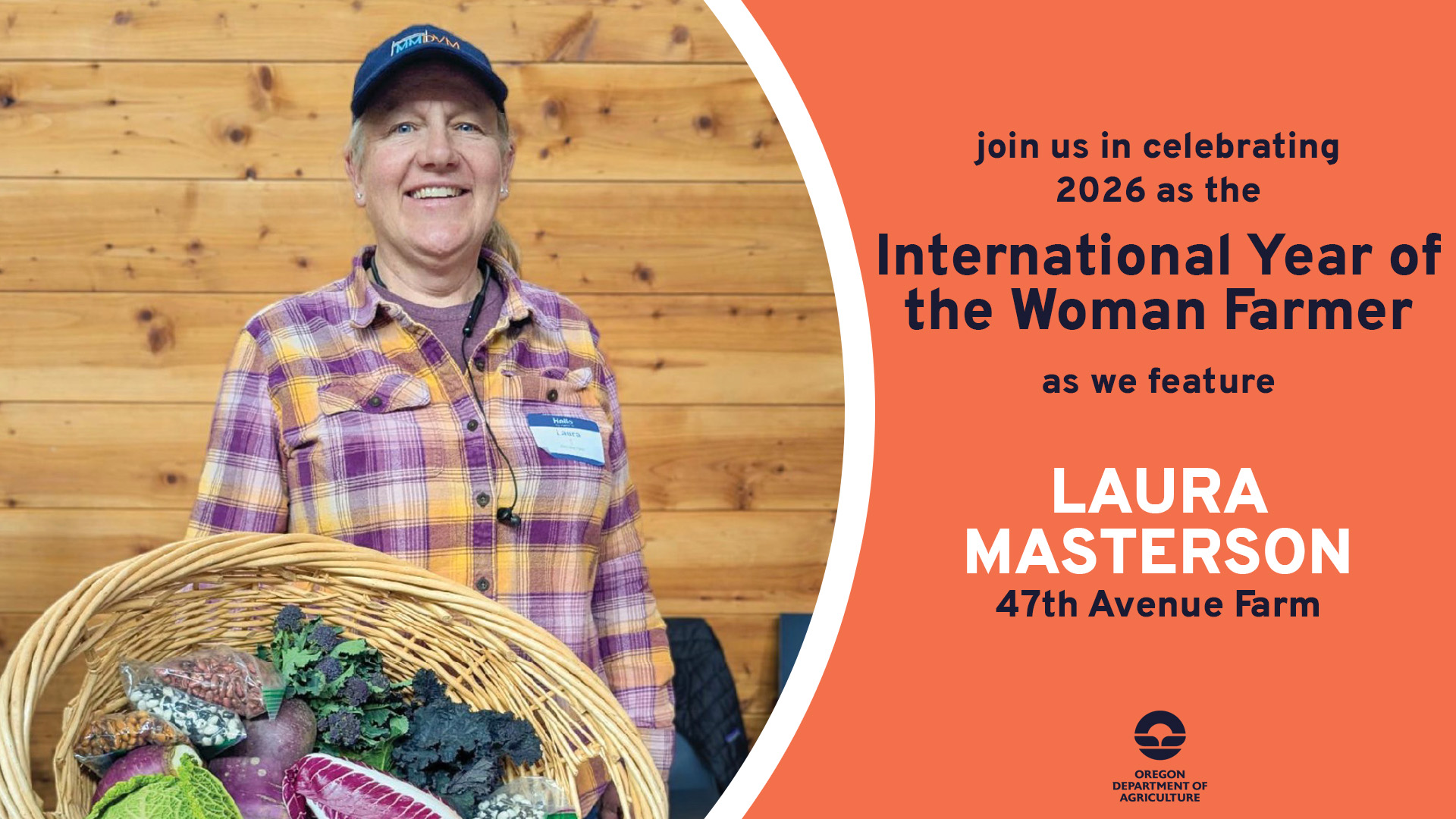
Laura Masterson, who has owned and operated 47th Avenue Farm for 3+ decades, along with a Community Supported Agriculture (CSA) program with local collaborators. Her CSA supplies fresh produce to subscribers year-round, including spring and summer harvests, as well as greens, root vegetables, and herbs from November through April. She prioritizes community engagement and seeks feedback on how shareholders utilize the produce. Additionally, she collaborates with local farmers to provide fresh eggs and fruit sourced from Kiyokawa Family Orchards in Hood River.
Masterson got her start in farming when, despite having formal agricultural training, she established 47th Ave Farm three decades ago, in 1996, after relocating to a residence with a double oversized lot in the Woodstock neighborhood. Nowadays, although her CSA shareholders collect their shares at the original Woodstock site, most of the produce is actually cultivated at her 38-acre Grand Island farm in Dayton, which she acquired over a decade ago. The Dayton location allows her to offer full-time employment and train future farmers, with a particular focus on soil health.
Masterson's commitment extends beyond agricultural production. She has served multiple terms on the Oregon State Board of Agriculture and the Oregon Watershed Enhancement Board, including participation in the 2018 technical committee that contributed to the launch of the Oregon Heritage Program. Additionally, she served on the East Multnomah Soil & Water Conservation District, including five years as Chair.
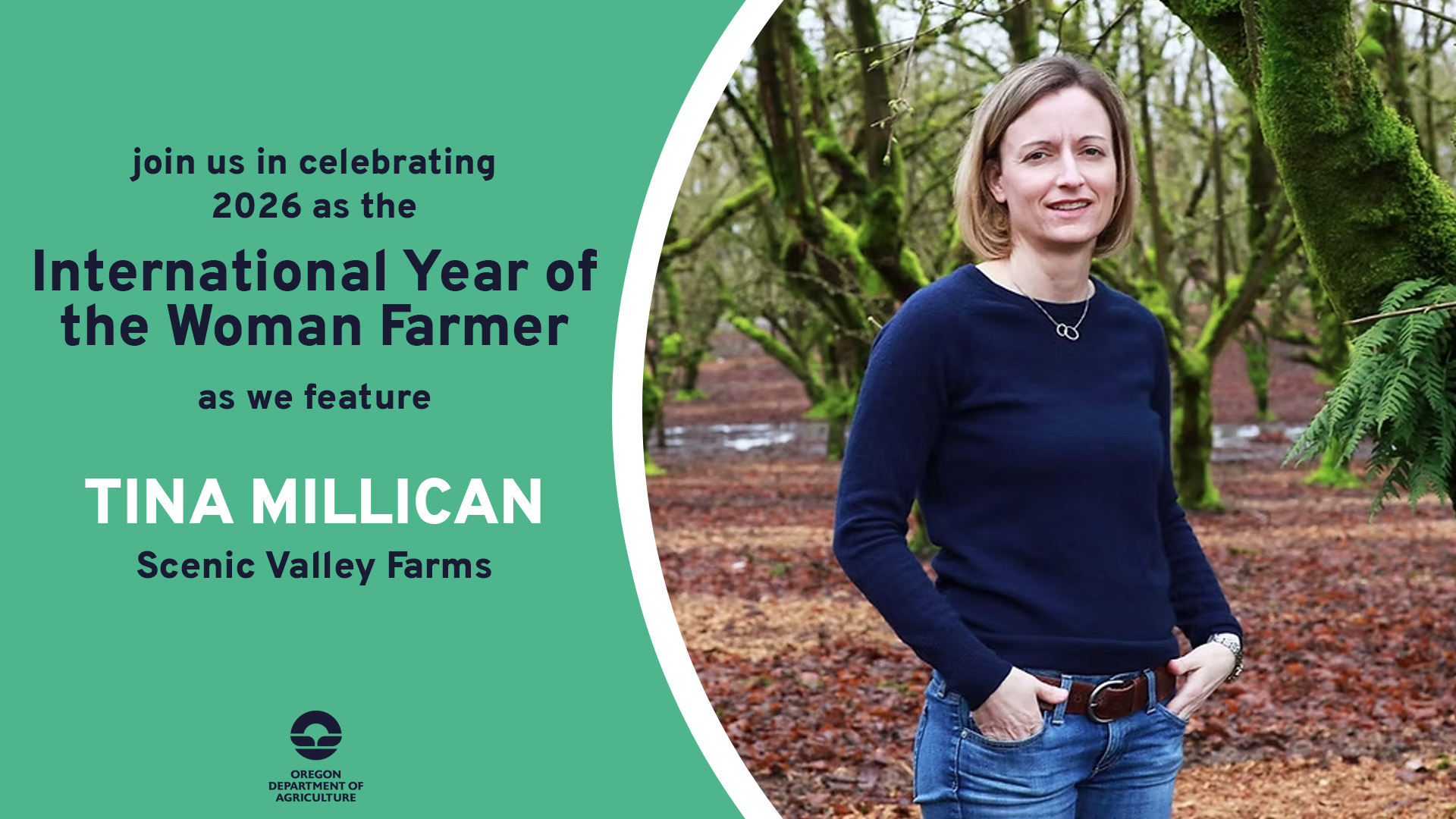
July 17, 2026
2026 is
International Year of the Woman Farmer* and in celebration of that, ODA is thrilled to shine a spotlight on Oregon women whose hard work powers our communities and beyond.
Meet
Tina Millican, the Command Center Operator at Scenic Valley Farm in Gervais, Oregon. After growing up on a farm and then working a 10+ year career in accounting, she left her job and returned to her roots to take over the family farm's finances, accounting, and human resource management. She noted that when you grow up in agriculture, the connection to the lifestyle becomes part of who you are, and "you learn to measure life by seasons instead of just calendars. That perspective stays with you forever."
Millican's accounting experience gave her valuable skills, including implementing a new accounting system and introducing new concepts and cost-analysis systems into the farm's operation. She says one of the biggest challenges for women in agriculture is earning a seat at the table so their voices are heard when questioning operations or introducing new ways of doing things; agriculture is deeply rooted in tradition, so change often requires trust built over time. Millican earned her seat at the table through the strength of her data and the value she contributed to the farm’s overall profitability and decision-making process.
She feels incredibly blessed to have grown up on a farm and to be able to extend that same upbringing to her two children. Millican's parents raised her and her siblings with the mindset that girls could do anything boys could; there were never barriers placed between "men's work" and "women's work" -- there was simply work to be done. She is delighted to now be building a foundation for her daughter, who has also chosen to return to the farm and continue her family's commitment to agriculture. She notes that working in agriculture is not glamorous, but it can be an extremely rewarding way of life that requires drive, resilience, and a passion to persevere.
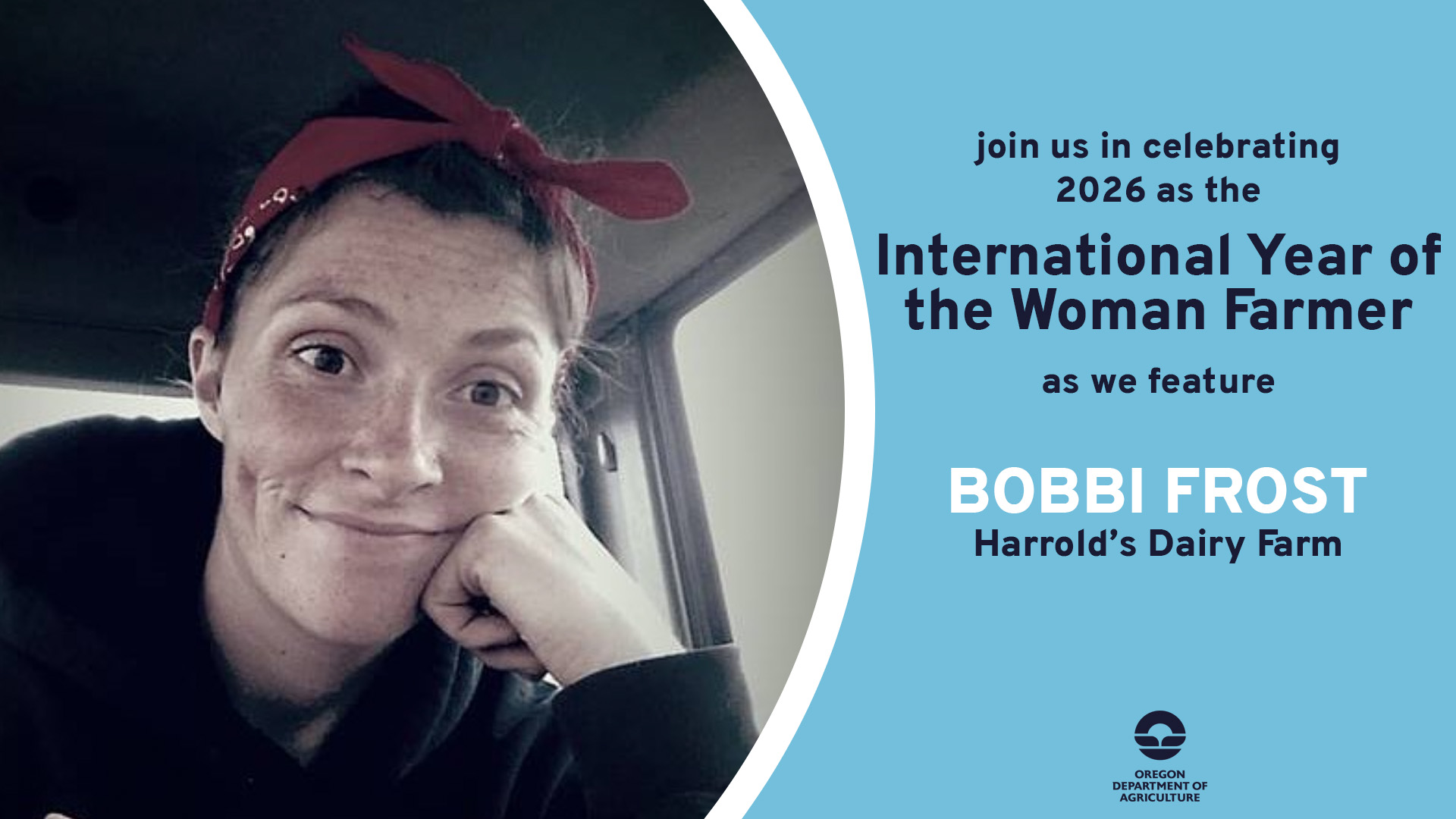
July 10, 2026
Meet
Bobbi Frost, a dairy farmer in Creswell, Oregon who is the fourth generation to work on the farm her great-grandfather started in 1946. Her parents, Max and Cindy Harrold, originally encouraged her to get a job with benefits like health insurance and paid vacation time, maybe as a nutritionist... anything but farming. They knew how hard it was to farm for a living. Yet Bobbi’s passion for cows and farming ran deep, and she couldn’t imagine doing anything else.
After graduating from Oregon State University with a degree in Animal Science, she partnered with her parents to jointly run the family farm, Harrold’s Dairy Farm, where they milk around 400 cows three times a day and grow most of their own animal feed, including grass, corn, alfalfa, wheat, and barley, on their 1,200 acres. The farm is now known for its educational outreach, collaborating with both the Oregon Agriculture in the Classroom and Adopt a Farmer programs. The family is proud to showcase its sustainable practices while adapting to the challenges of the modern dairy industry.
Frost is an active member of the Oregon Dairy Farmers Association, and is currently serving as its president. She enjoys getting to know fellow dairy farmers around the state and lobbying on their behalf on issues that matter to the industry. She is also proud to be raising her two daughters on the farm, and hopes to someday pass the business on to one or both.
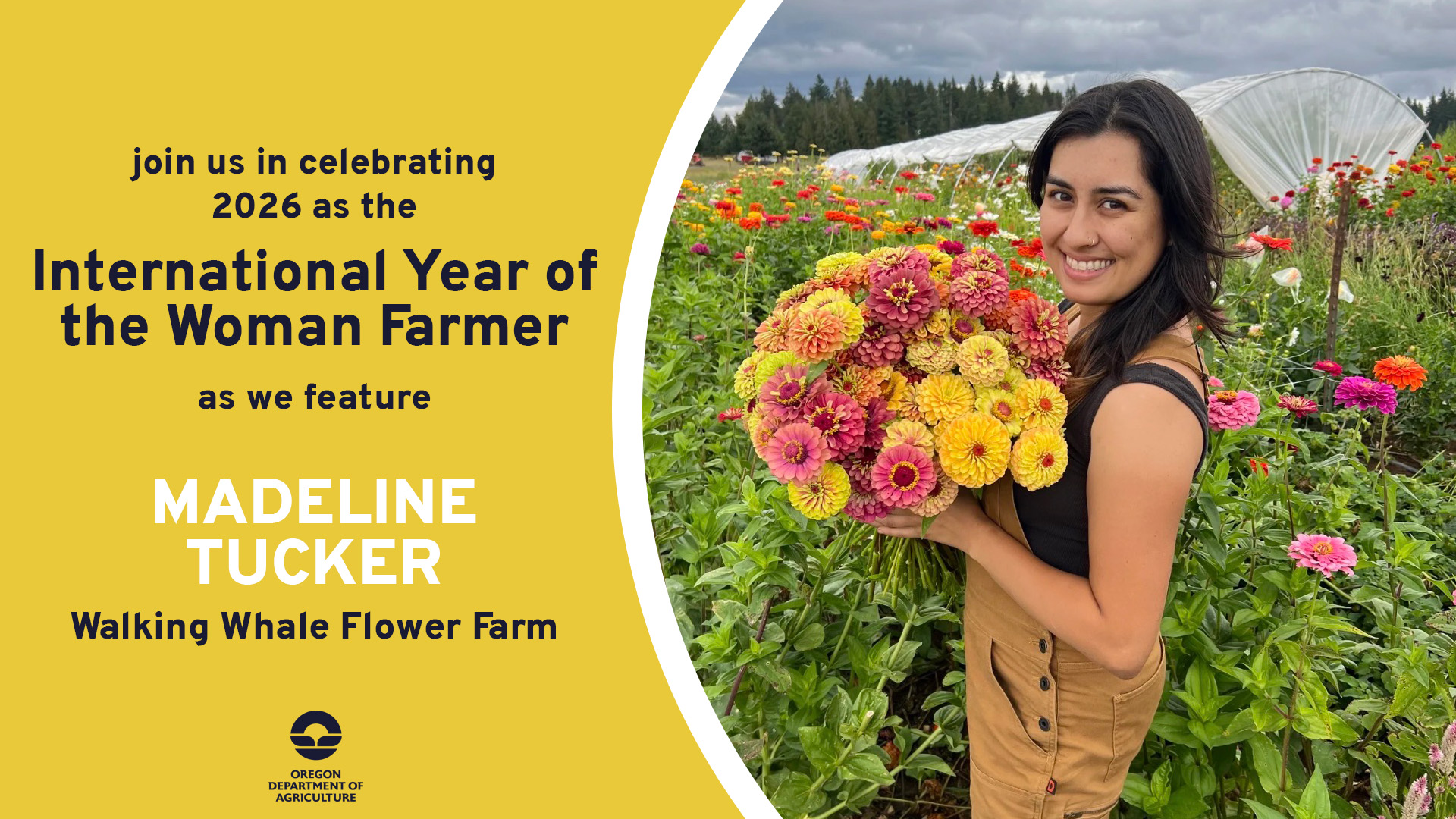
July 3, 2026
Meet
Madeline Tucker, who is the co-owner of Walking Whale Flower Farm, a vibrant half-acre oasis in Gresham, Oregon. On the farm, Madeline is responsible for crop planning, greenhouse nurturing, harvesting, drying blossoms, and marketing. Online, she is the friendly face behind @walkingwhaleflowerfarm on Instagram and TikTok, where she often dances while showcasing her colorful flowers, in addition to educating and connecting with thousands of followers. She often shares personal stories about her journey as a woman and as a farmer.
Tucker's agriculture journey began when her dad brought home a pepper plant for a backyard experiment. Instantly captivated, she dove into community gardening and urban farming and never looked back. She later studied sustainable agriculture at UC Berkeley and took part in urban farming projects there. As a mixed-race woman of color in agriculture, she is passionate about opening doors for those historically excluded from farming. She proudly shares her Filipino heritage through her work and activism.
At Walking Whale Flower Farm, she cultivates a colorful tapestry of annuals, perennials, and a handful of vegetables... all for farmers markets, florists, and designers. She also hosts flower arranging workshops for the public. She admits that she once dismissed flowers as silly & frivolous, but after growing flowers in her backyard and seeing pollinators flock to their fleeting beauty, her view changed. Nowadays she cites studies that show that cut flowers can boost mood and reduce stress. She champions community resilience over individual achievement, believing that collaboration is the key to transforming our agriculture and food system.
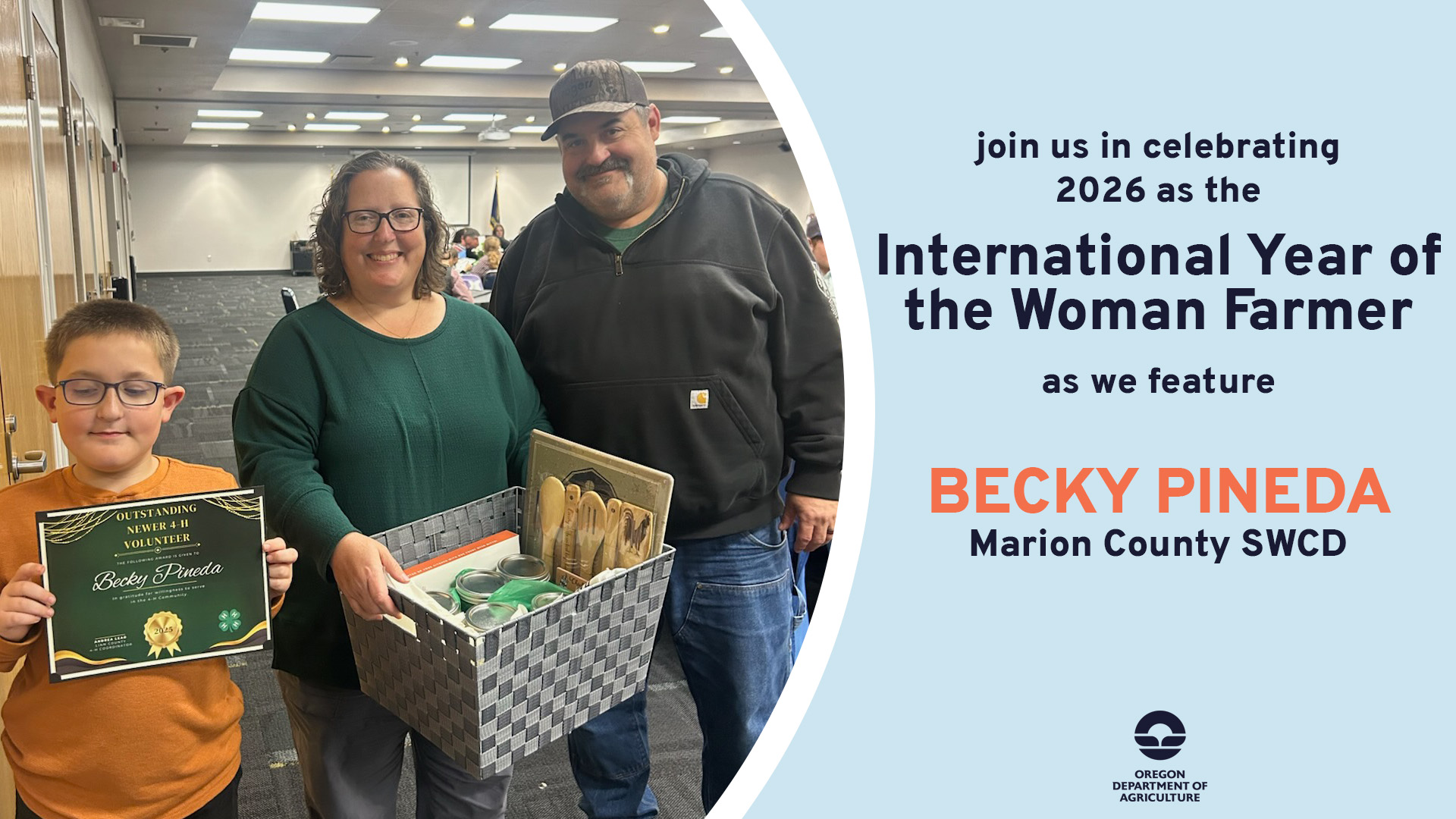
June 26, 2026
Meet
Becky Pineda, who works as an Ag Conservation Planner at the Marion County Soil and Water Conservation District (SWCD). Her connection to Marion County agriculture runs deep; she grew up on her family's farm, which has been around for over a hundred years. Her early experience in agriculture led her to study at Linn-Benton Community College and Oregon State University, where she earned a bachelor's degree in general agriculture and a master's degree in agricultural education.
Pineda later worked as an agriculture teacher and FFA advisor at Cascade High School, where she spent 15 years helping hundreds of students build confidence and learn about agriculture. Over the years, she ran Oregon's Ag Fest petting zoo, hosted an FFA exchange a high school in Illinois, and took multiple teams to the National FFA Convention.
Pineda now continues to support Oregon agriculture by working at the Marion County SWCD. She attends agricultural shows to raise awareness, and works with local landowners and managers to help conserve natural resources in Marion County. Along with her husband and son, she shows their farm's Horned Dorset sheep and also rabbits for 4-H. In recent years, she added dairy goats to her small farm and began making soaps and lotions from their milk. She also started a 4-H club in Linn County to stay active in agricultural education.
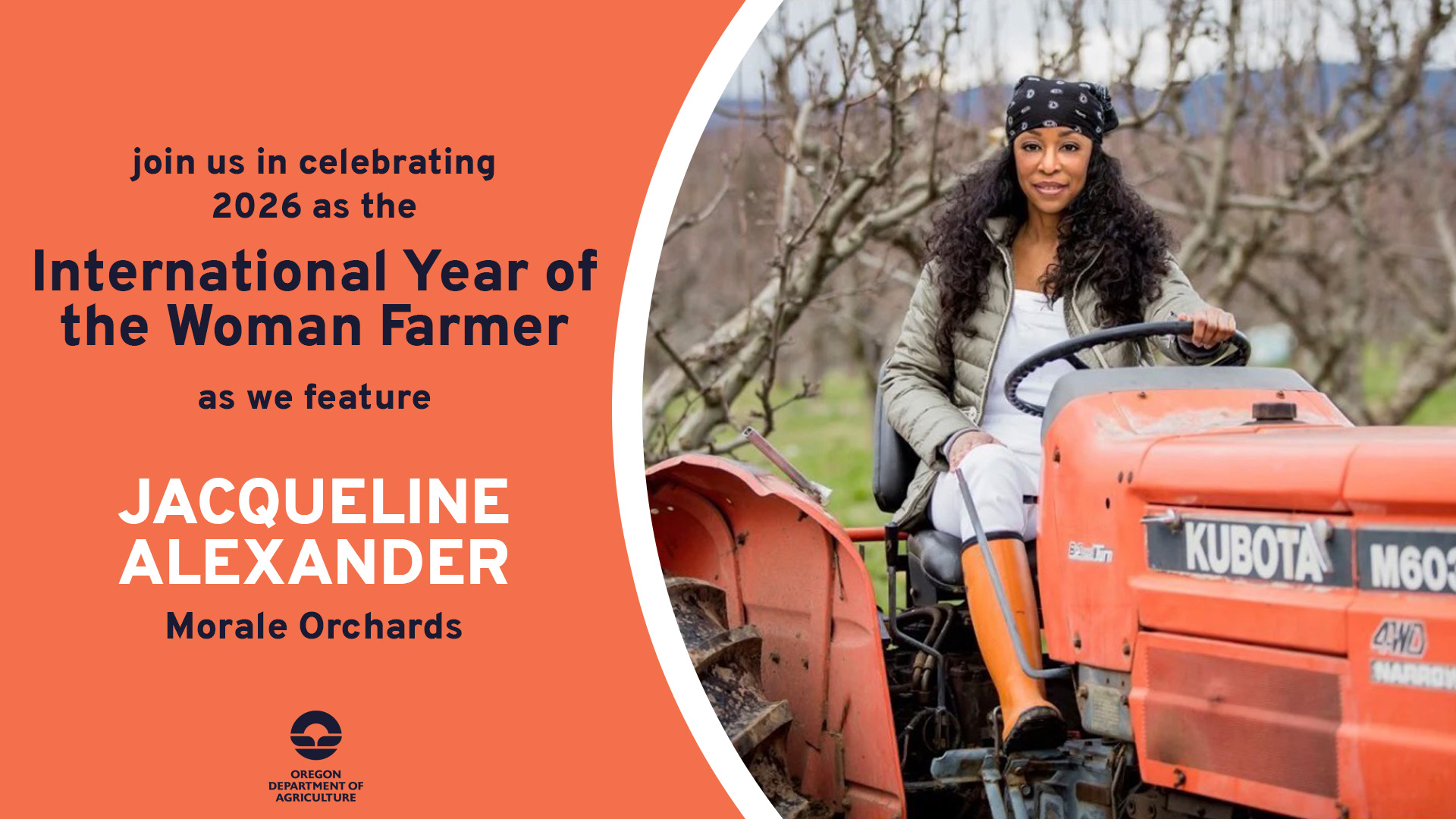
June 19, 2026
Meet
Jacqueline Alexander, J.D., a full-time farmer and attorney who has owned and operated Morale Orchards, LLC, a 40-acre pear orchard in Hood River, Oregon, since 2006. Under Alexander’s leadership as owner and orchard manager, Morale Orchards employs 8 full-time (and up to 22 seasonal) workers. Her commitment to diversity and inclusion in agriculture earned her the Northwest Mountain Minority Supplier Development Council's 2017 Supplier of the Year Award.
Alexander has had a transformative impact in the field after launching Morale Food Co. in 2015 after a failed cold storage unit destroyed 750,000 Asian pears. The pears were edible but not ideal for the fresh market, so they were returned; Morale Food Co. was born as a value-added food manufacturer that transforms imperfect, unsellable "cull" produce into freeze-dried and individually quick-frozen (IQF) products for wholesale and retail markets. Her freeze-drying facility, "The Puff Factory" in Hood River, is being discussed as a scalable, repeatable model for other growers, a blueprint for turning food waste into financial opportunity.
Alexander is also a deeply committed philanthropist. Her family endowed the Lewis & Clark Law School's annual MLK Speaker Series, and provided the lead gift for Lewis & Clark College's York Memorial, honoring the African American enslaved man who accompanied the Lewis and Clark Expedition. She serves on the board of SBP (formerly the St. Bernard Project), a disaster-recovery nonprofit born out of Hurricane Katrina, and on the board of the Upcycled Food Association, which leverages market forces to combat food waste nationwide.
"I've always felt like more Black people should be involved in farming because it's our legacy," she says. "My vision is for young people to understand that this is an option and it's how we build generational wealth."
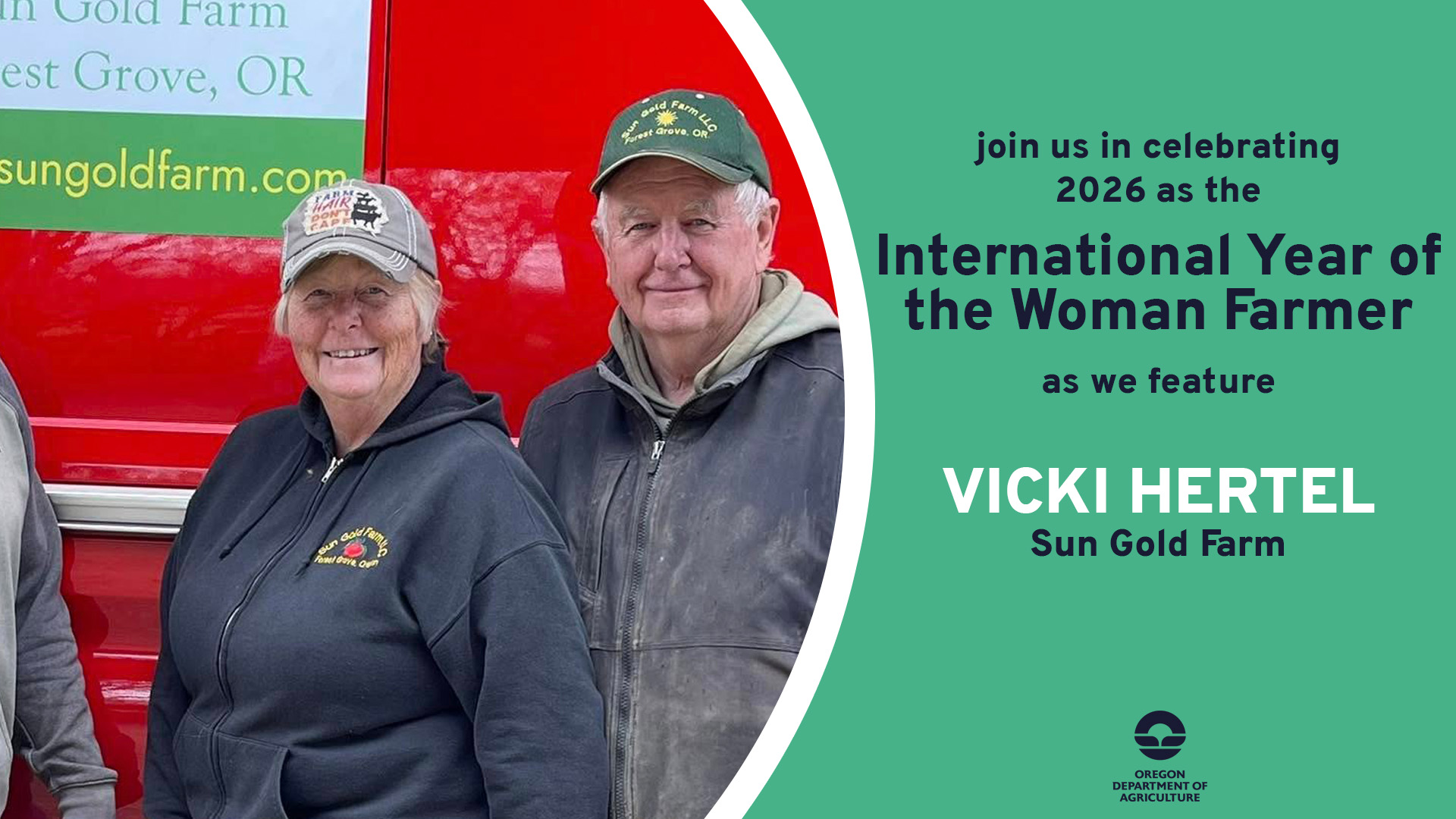
June 12, 2026
Meet
Vicki Hertel, a fourth-generation farmer who owns and operates Sun Gold Farm near Forest Grove, Oregon, with her husband, Charlie, and son, Chris. Originally dairy farmers, the Hertels sold their cows and gradually shifted their focus to growing commercial crops -- including Timothy hay and soft white wheat -- and to starting a nursery operation.
Hertel believes that hard work, dedication, and perseverance define success in farming. At its peak, Sun Gold Farm products appeared at more than 10 Portland-area farmers' markets each week. During this time, Vicki became the familiar face at their booth, known as Vicki’s. In recent years, their focus has shifted to directly connecting a diverse range of fresh produce to the community through farmers’ markets, their CSA program, and an online store.
Hertel is proud to promote the farm's sustainable farming practices, including crop rotation and weed control with rototillers and hoes. Her family credits Sun Gold Farm’s inclusive environment and enduring values to Vicki’s leadership, as she has championed the belief that farms should welcome all people and nurture strong communities. She insists on the importance of persevering, stating "we need farmers and farms of all sizes. Farmers feed communities."
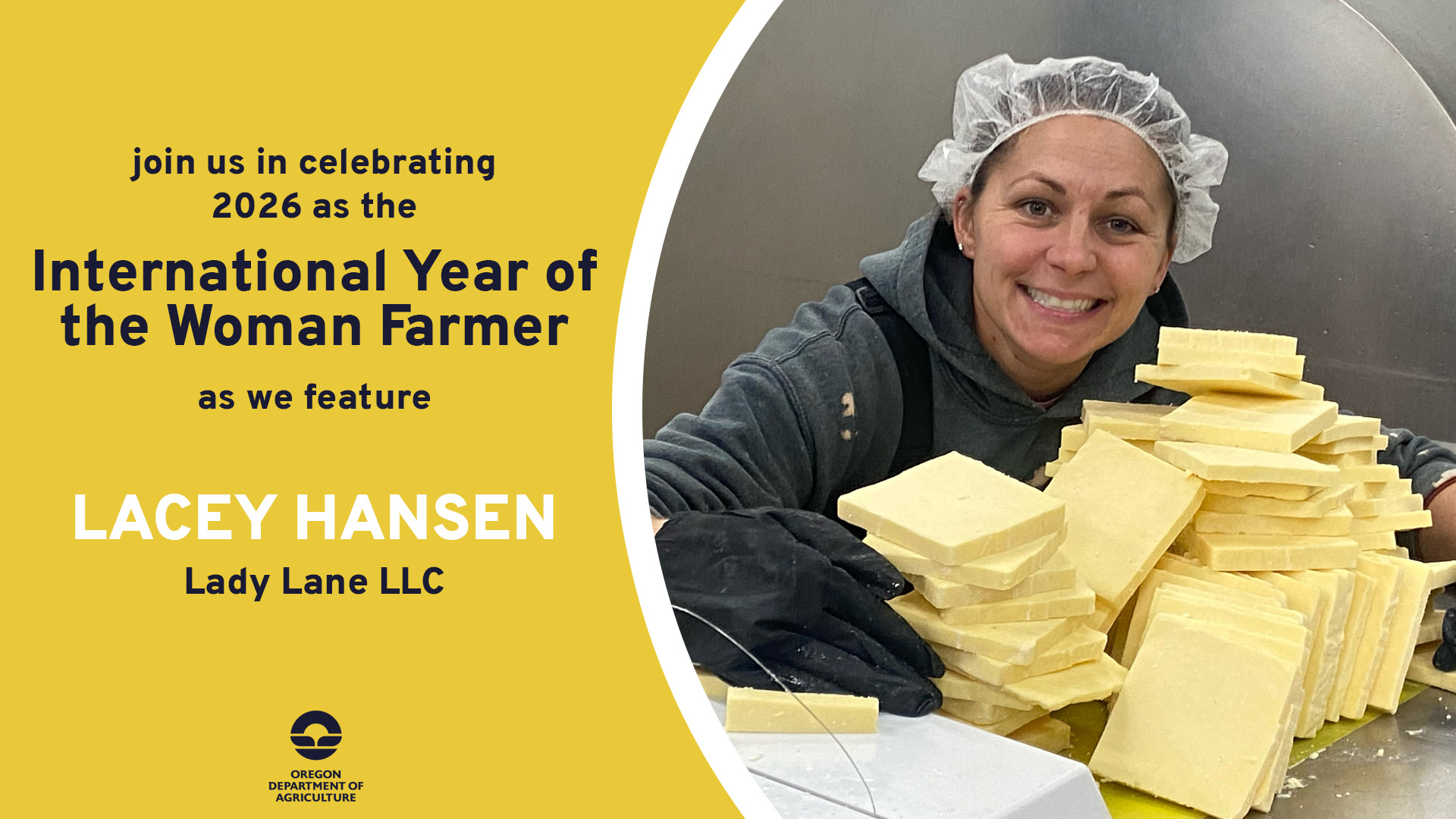
June 5, 2026
Meet
Lacey Hansen, who co-owns Lady Lane Farm with her husband and spends her days milking 85+ dairy cows and and operating a creamery that sells milk, cheese, butter, ice cream, and other farm-fresh products direct to consumers.
Hansen's love for farming took root early, first with time spent in the FFA and judging livestock while in high school, and later as she earned a degree in Animal Science from Oregon State University. She served as an ambassador for the OSU College of Agriculture and Forestry, and was later a graduate of the Western College of Auctioneering.
Nowadays Hansen is heavily focused on educating the next generation of farmers. She leads a dedicated team of women at the Lady Lane creamery, guiding them with a steady hand and helping each member develop new skills. She also opens Lady Lane Farm to students in order to offer hands-on agricultural education; through daily chores and marketing lessons, she teaches the next generation how food is produced and brought to market. Her own mentor, a high school FFA advisor who worked as a USDA meat inspector and feed analyst, inspired her early on and taught her the intricacies of meat and poultry production.
Hansen believes in caring for both body and mind, starting each day with stretching and a positive outlook. She lives by her favorite quote from Ray Bradbury: "Love what you do and do what you love." This philosophy shines through in every aspect of her life and work, as she continues to inspire those around her with passion and dedication.
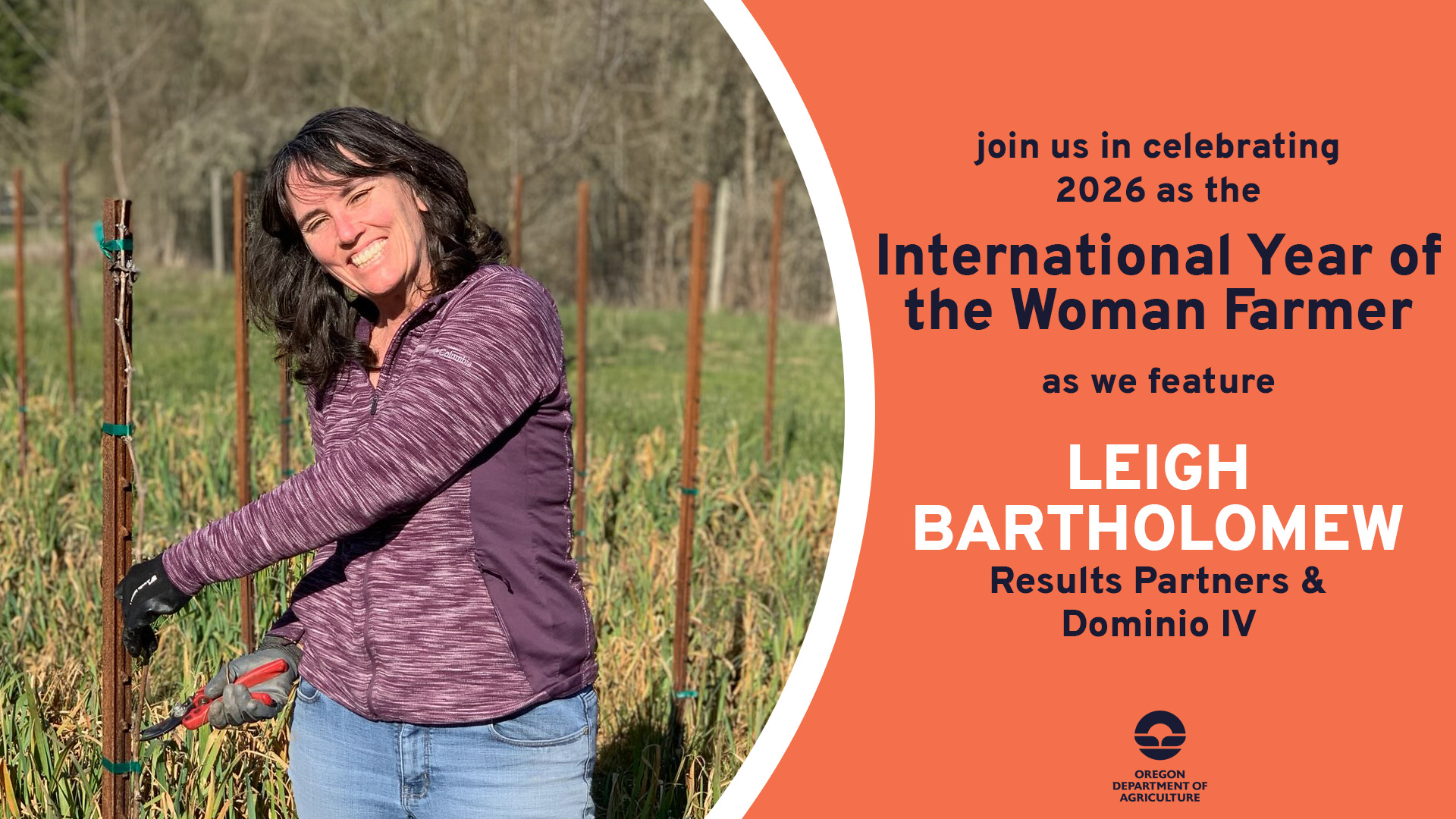
May 29, 2026
Meet
Leigh Bartholomew, who studied agriculture from an early age, eventually earning an undergraduate degree at the University of Oregon and later a master's in viticulture at UC Davis. She found that viticulture required real-time problem-solving, hands-on work, and creative teamwork. She went on to work harvests in Burgundy, New Zealand, Chile, California, and Washington, sharpening her wine expertise. In 2000, she settled in the Willamette Valley at Archery Summit, first as its Vineyard Manager and then as Director of Vineyard Operations during a time of rapid change and rising expectations for Oregon wine.
Together with her husband, winemaker Patrick Reuter, Bartholomew later co-founded Dominio IV in McMinnville, a venture that allowed her to delve deeper into intentional farming and site expression. Then, after fourteen years at Archery Summit, she joined Results Partners, where she is now Chief Viticulture Officer and guides farming strategies across hundreds of vineyard acres and some of the Valley's most respected wine brands.
Her legacy is seen in the region's widespread adoption of organic, biodynamic, and regenerative practices, guided by her belief that respectful stewardship of the land yields healthier vines and more expressive fruit. Convincing vineyard owners and teams to embrace short-term risk for long-term health has been no easy task. She has always led by example, experimenting with pruning, cover crops, spacing, and clonal selection... allowing the land itself to show the value of these changes. Her perseverance has transformed vineyards and helped establish sustainable practices that are now woven into the fabric of the region.
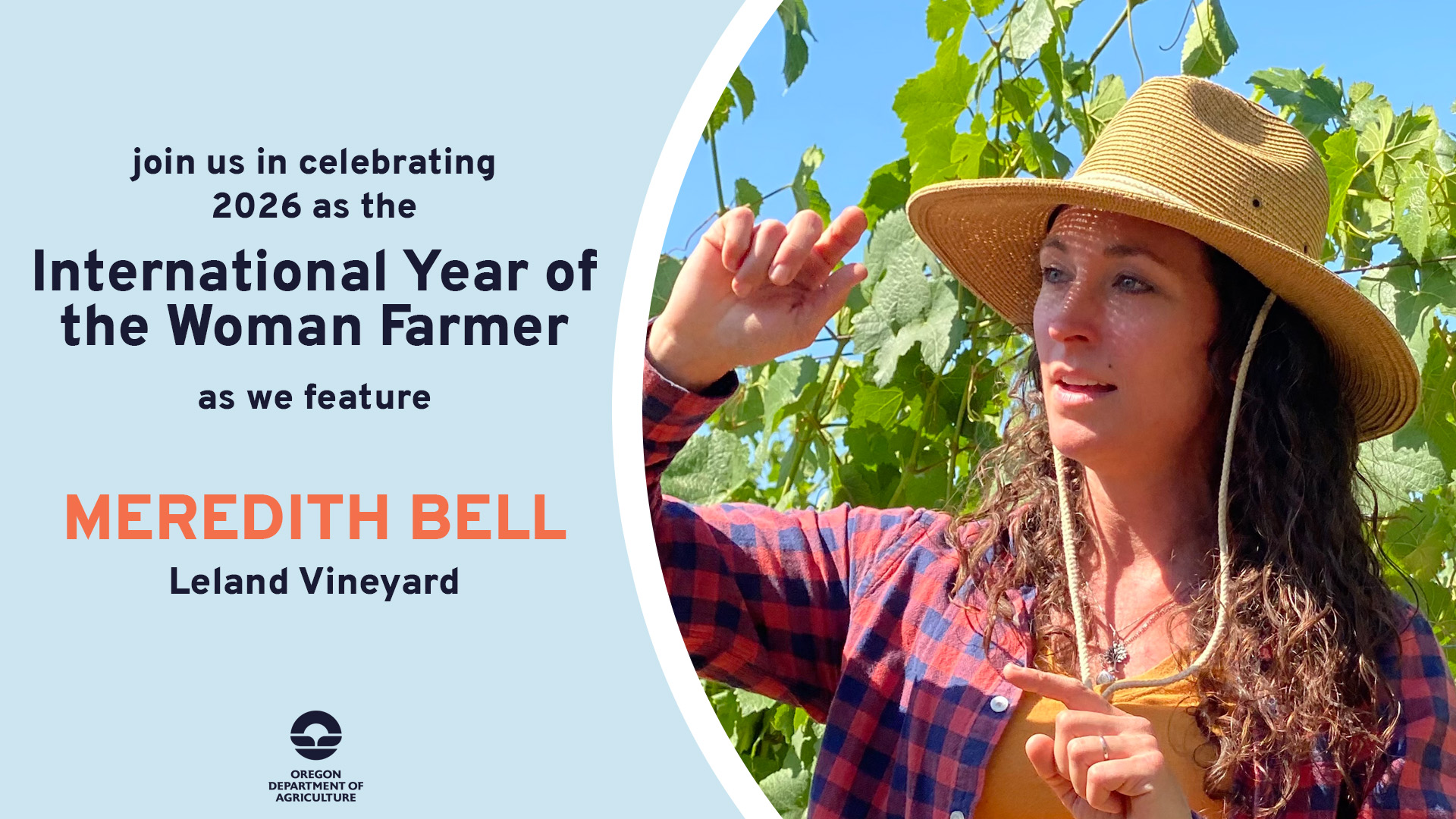
May 22, 2026
Meet
Meredith Bell, who is a winemaker at Leland Vineyard. She grew up just outside Portland, and then moved south to study biochemistry at UCLA and later earn a master’s degree in viticulture and enology from UC Davis. Her path to winemaking came after she spent time serving in the Peace Corps in Mauritania, where she soon realized that she missed wine and returned to Oregon. After working harvests in both France and Australia, she eventually began farming Leland Vineyard. She now lives in Southeast Portland with her husband James, their two children, Arlo and Edith, their dog Monty, and three backyard chickens named Hot Dog, Mustard, and Ice Cream.
Farming has taught Bell to let go and accept things as they come. Many parts of farming are beyond control, but instead of getting frustrated, she has learned to appreciate the unpredictability. She believes that one of the biggest challenges to farming and winemaking is the changing weather caused by climate change. In the wine industry, this means dealing with everything from spring frosts to smoke, like the Willamette Valley saw in 2020. That year, many winemakers chose not to harvest or pay for smoke-affected grapes, leaving their farmers behind. Bell was determined to see it through, however, and instead tried new winemaking techniques to create a wine that, despite its smoky flavors, turned out well and could be sold. She says farmers will face more smoky years, and not harvesting grapes is not a sustainable option.
Bell's advice to other farmers is to build a supportive network in the farming community, help others when you can, and don't be afraid to ask for help. Strong connections are essential because farming is difficult, and support from others makes success possible.
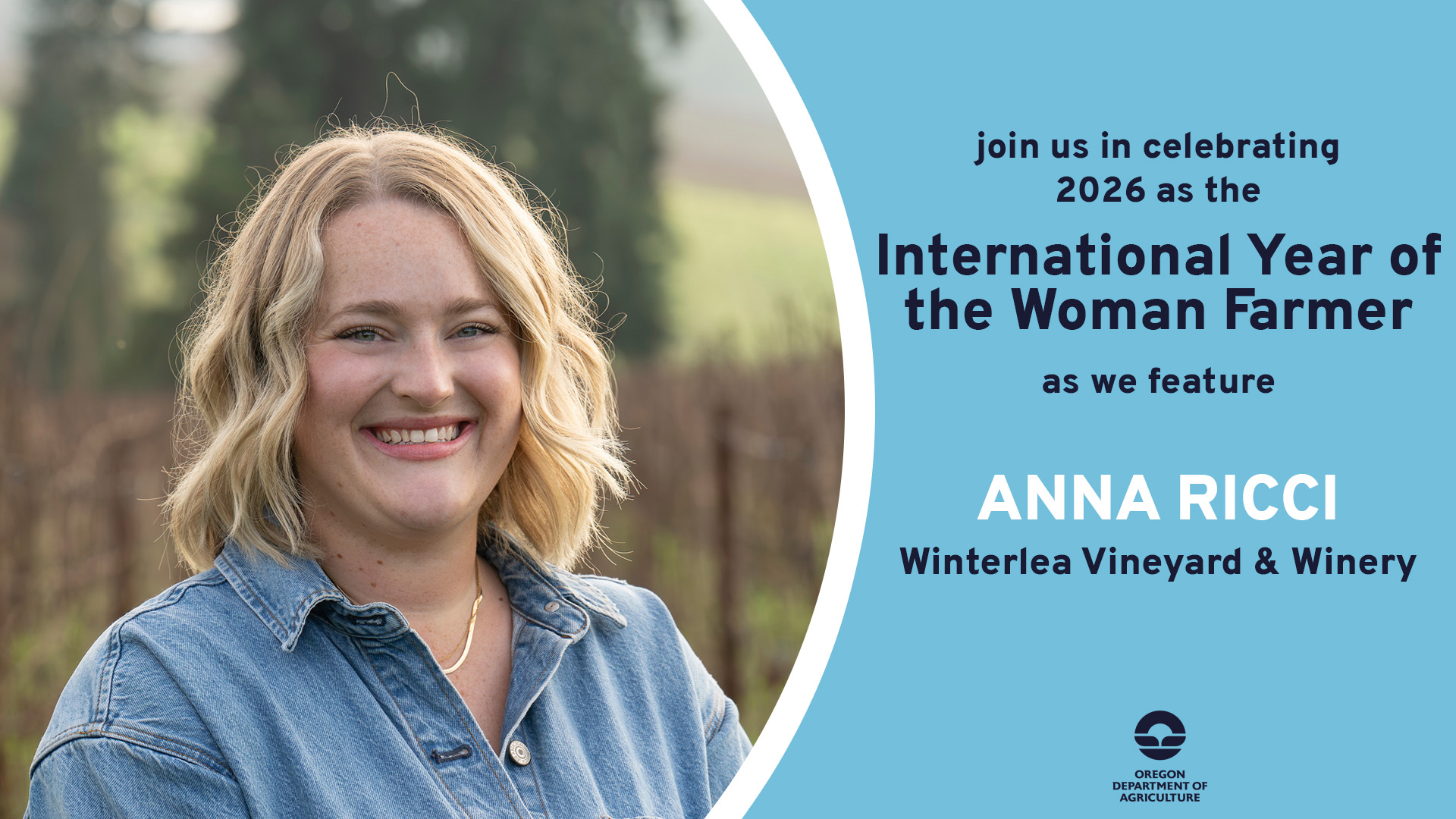
May 15, 2026
Meet
Anna Ricci, who works as the Director of Engagement & Ownership Relations at Winderlea, a well-known estate with a 50-year-old vineyard and a 20-year-old winery in Dundee Hills, Oregon. Her career in wine was inspired by her family history and a strong respect for Oregon's special food culture. Growing up in a family dedicated to the state’s farming and hospitality, she felt connected to caring for the land across generations. Winderlea's reputation for careful, natural, biodynamic farming, motivated her to use her skills in a job closely connected to the land.
Ricci's hands-on work in the vineyard and tasting room has showed her that sustainable farming requires humility and a willingness to learn. She is especially passionate about making small batches of Pinot noir, Chardonnay, and traditional sparkling wines that show the care of the Dundee Hills. She sees business as a positive force, as evidenced by Winderlea being the second B Corp-certified winery in Oregon and the fourth in the world. She believes that true care for the land is a slow, careful process that honors the vision of those who planted the first vines in 1974, rather than rushing big changes.
Her advice to future generations of female farmers: regularly consult with trusted advisors and experienced industry members, uphold your core values, minimize environmental impact, and lead in renewable energy and restorative land practices. By following these steps, she feels you can ensure your farming contributes positively to both the land and your community.
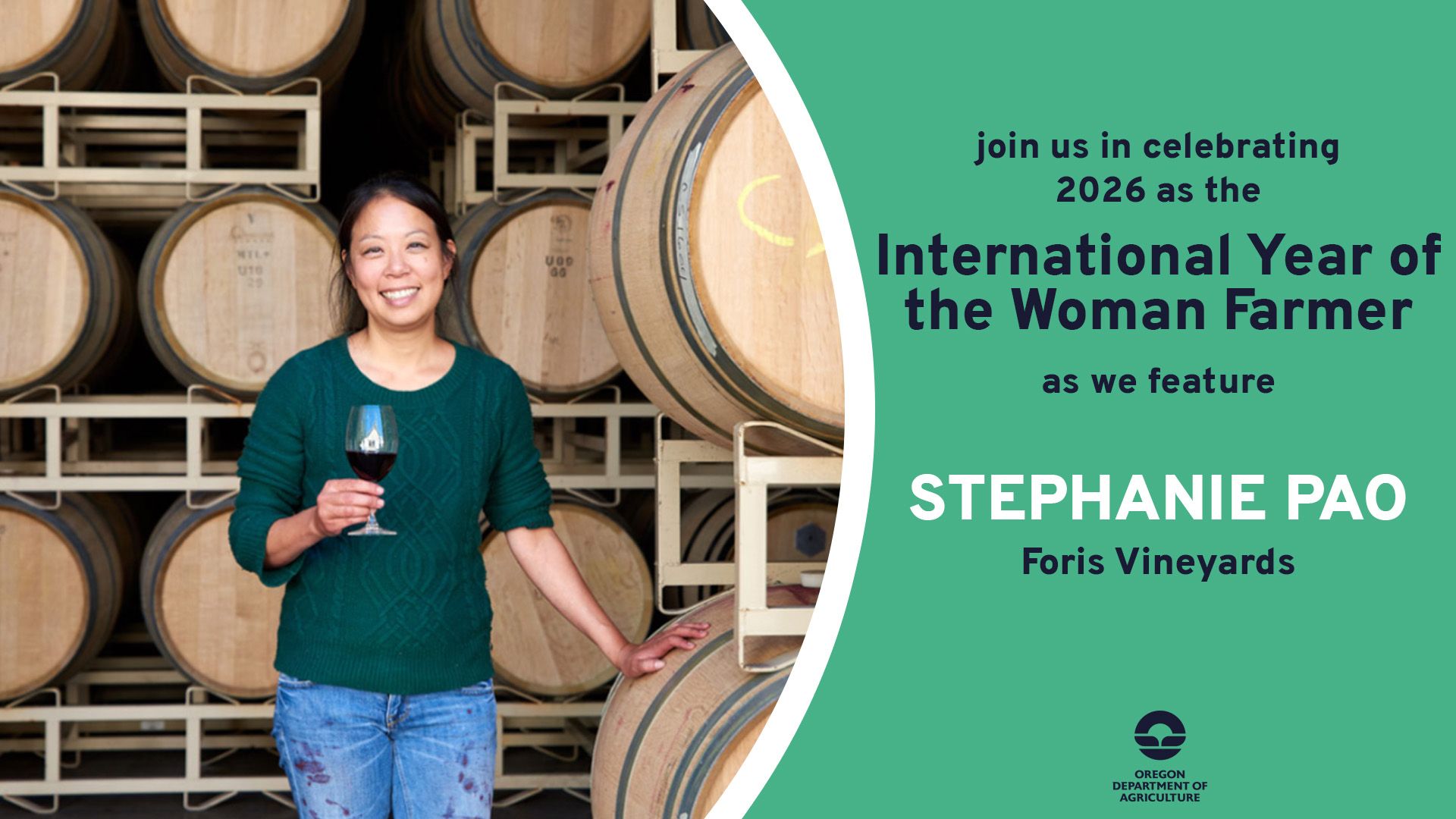
May 8, 2026
Meet
Stephanie Pao, who since 2017 has been the head winemaker at Foris Vineyards, nestled against the Siskiyou Mountains near Cave Junction. She honed her skills in New Zealand, California, Washington, and other Oregon regions, developing a deep appreciation for the state's wines. Today, Pao is known for showcasing outstanding fruit with minimal intervention.
Pao's career path was unusual. She grew up in Southern California and earned a Bachelor of Science in Molecular Biology from UC San Diego, which led her to spend 8 years in bioinformatics. During a sabbatical, she worked on a wine harvest and was instantly hooked, inspiring her to return to school to study viticulture and enology at UC Davis.
Drawing on her background, Pao encourages women to pursue winemaking -- especially those from diverse backgrounds. She believes the industry needs diverse educational experiences to address challenges such as climate change. Knowing that women are in the minority in the industry, she champions other women interested in the wine business because their diversity can be reflected in both the wine they produce and the eventual culture of their workplace.
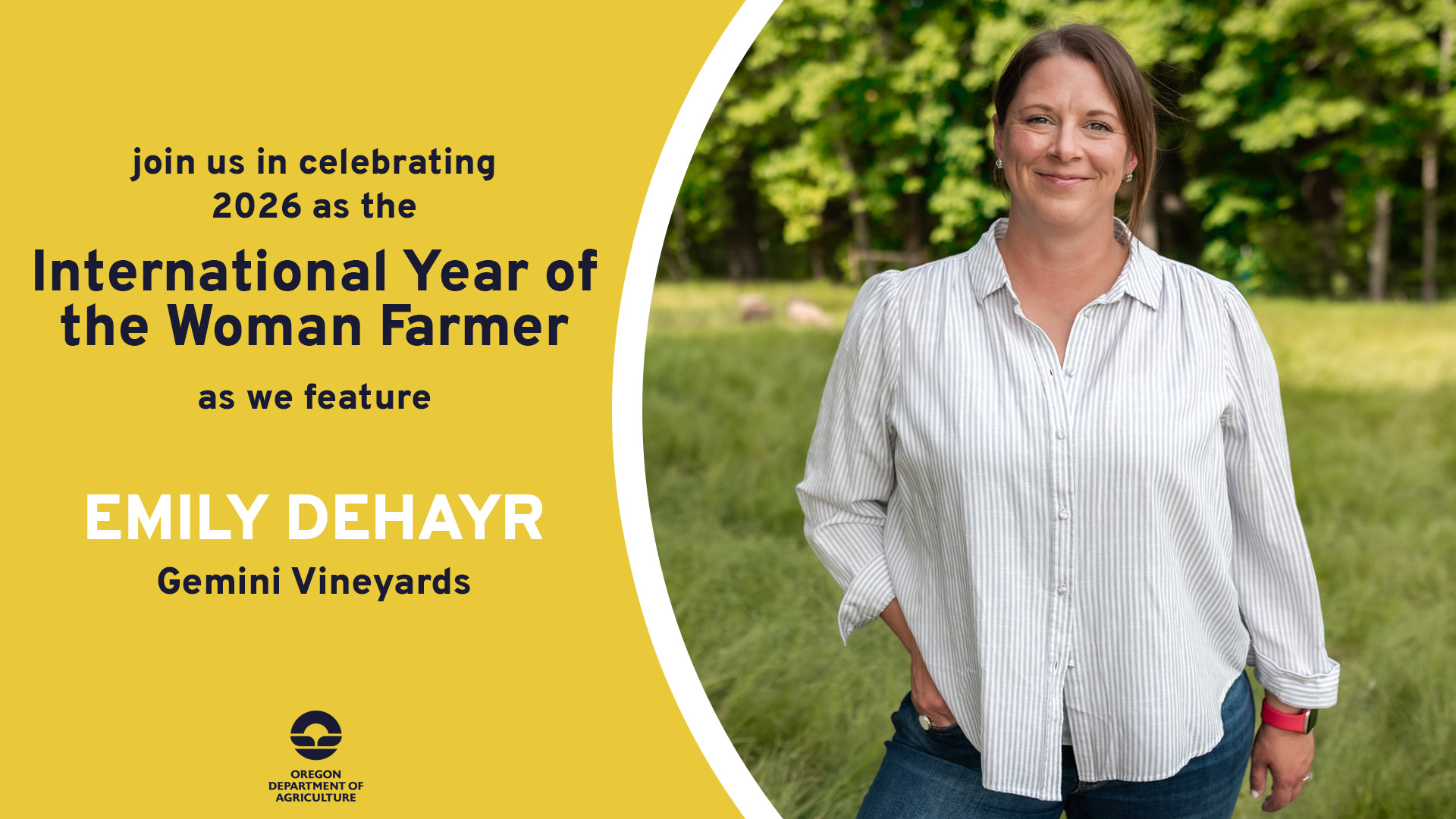
May 1, 2026
Meet
Emily DeHayr, who as both a farmer and a winemaker, embraces her underdog status in the male-dominated field of agriculture with pride and determination. DeHayr and her husband, Luke, bought Gemini Vineyard in 2019. The following year, the Oregon wine industry faced one of its most difficult seasons when wildfire smoke engulfed the region and endangered Gemini's near-perfect vintage. Instead of abandoning the nearly 60-ton harvest, DeHayr helped Gemini reimagine the vintage, turning the smoke-affected fruit into a bold experiment that customers welcomed. Through that experience, she learned firsthand how unpredictable farming can be, and the importance of resilience.
Rather than letting obstacles slow her down, DeHayr turns them into motivation to connect with fellow women to share lessons learned. She encourages female farmers to seek mentors, ask daring questions, and support one another whenever possible. Because agriculture can be so unpredictable, she believes that the relationships made within the industry are critical. Additionally, when she sees how climate change and drought are reshaping agriculture, she draws from her public health background and stresses one principle: prevention. DeHayr urges women to do the hard work now to achieve the outcome they want, before circumstances force their hand.
April 23, 2026
Meet
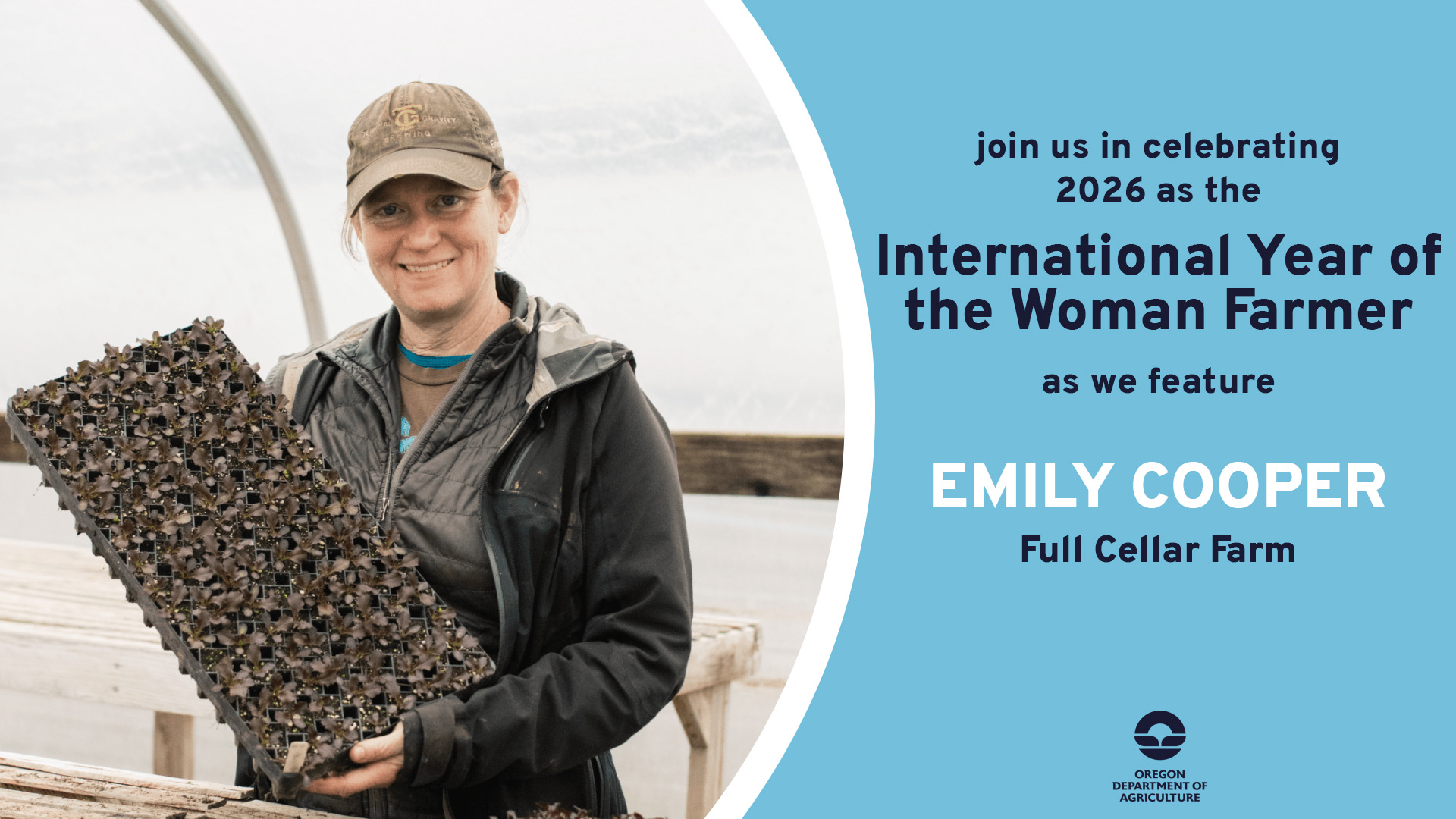
Emily Cooper, who runs Full Cellar Farm and grows organic produce in Boring, Oregon. After launching the farm in 2014 with support from Roan Steel and the Headwaters Farm Business Incubator Program, she now carefully balances her crops to provide fresh food for dozens of preschoolers and her Community Supported Agriculture (CSA) members.
Each year, Cooper and her all-female team grow over 50 kinds of vegetables for their CSA members and for Mt. Hood Community College (MHCC) Head Start and Early Head Start. She does not see herself as a female farmer, however -- just as a farmer. When asked for advice, she prefers to help by acting and often mentors young farmers who need support. For her, showing up and helping is her way of giving advice, while letting others learn by doing.
Similarly, when she was first starting out over a decade ago, Cooper moved to Joseph, Oregon, to learn from Beth Gibbons, a founder of Sauvie Island Organic. Before starting Full Cellar Farm, she also worked for Laura Masterson at 47th Ave. After finishing all of this training, she leased land from the East Multnomah Soil and Water Conservation District and gradually grew her CSA membership until she had the chance to buy land with a forever farm easement. Now, she is not only running a successful farm business but also caring for the urban wilderness on her land by working with native plants and animals. She is also helping to start a new food hub that supports all local farmers.
Cooper stands out for her dedication to the farmers she hires, works with, and meets. Her farm crew is more like a group of partners, as opposed to just employees, and she never sees her peers as rivals. She is known for saying, "Farmers are farmers, and we need to stick together."
April 17, 2026
Meet
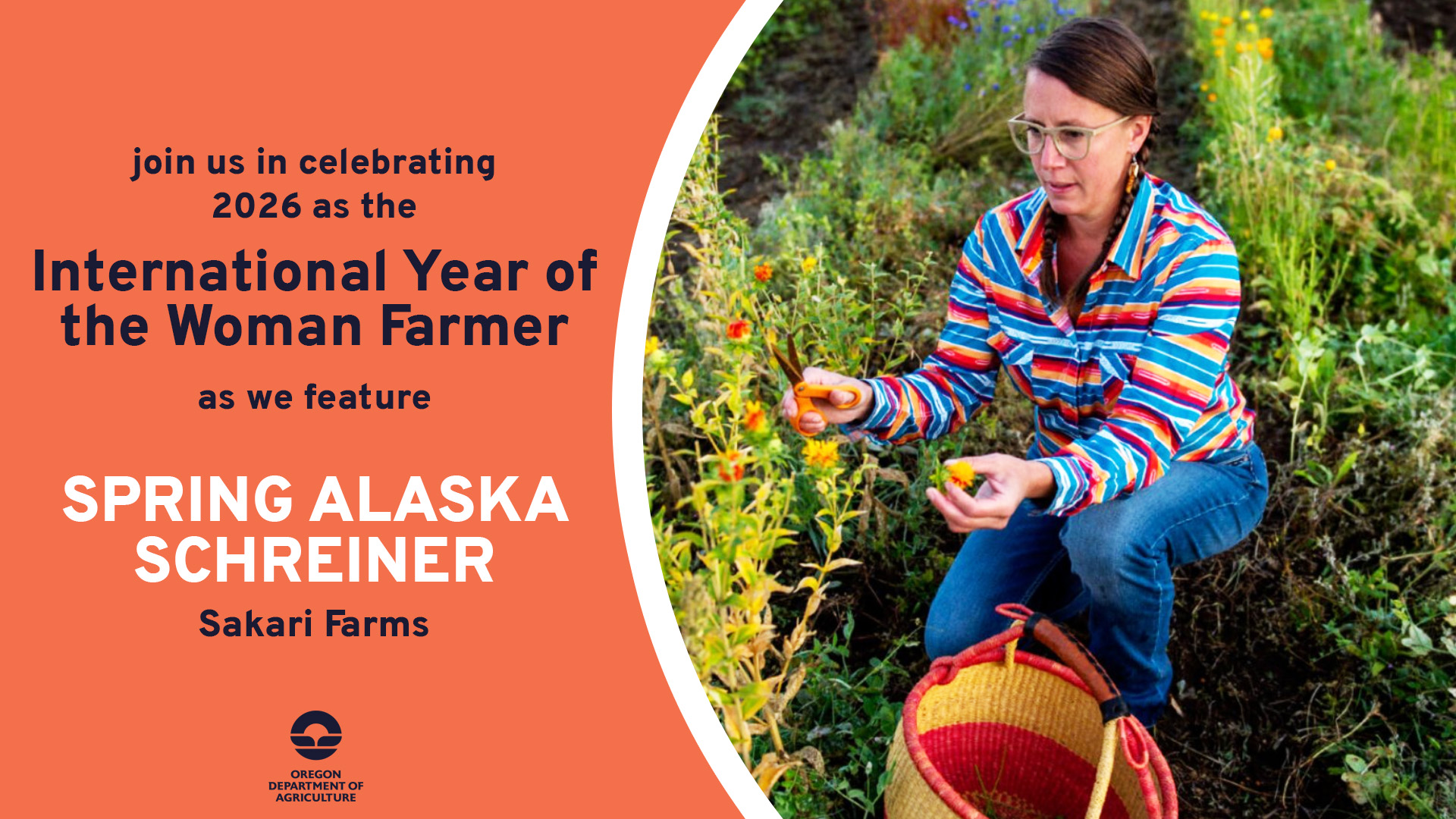
Spring Alaska Schreiner, an Indigenous farmer in Oregon who owns Sakari Farms, a specialized seed bank focusing on Native American tribal foods, cold-climate seeds, and education. She collaborates with the Central Oregon Seed Exchange and provides on-farm technical assistance for seed production.
Schreiner was born and raised in Alaska and is a member of the Chugach Alaska Native Corporation and the Valdez Native Tribe. When she moved to Oregon in 2006, she noticed a lack of access to culturally relevant foods, which has been a driving force behind her decades-long work championing Indigenous food sovereignty through agriculture, advocacy, and activism.
Sakari Farms implements organic and biodynamic growing practices and uses regenerative native farming practices. What makes the six-acre farm in the high desert unique is its emphasis on growing Native American First Foods -- plants with deep cultural and historical significance that were consumed before European colonialization -- offering hands-on classes that teach culturally relevant agricultural practices and conducting research-based tribal seed production for contract and wholesale growing. Her farm has also become a hub for Native producers, chefs, and other people to gather and share food, recipes, resources and inspiration.
Schreiner's dedication has earned her many accolades, including the 2023 Central Oregon Environmental Center Sustainability Award, the Ecotrust 2022 Indigenous Leadership Award, the 2021 Na’ahlee Fellowship, and the 2019 NASDA Women Farm to Food Award. Furthermore, she recently co-produced a feature-length documentary, A Reflection of Life, that explores climate change–induced water issues in the Pacific Northwest, with a focus on their effects on Native communities.
April 10, 2026
Meet
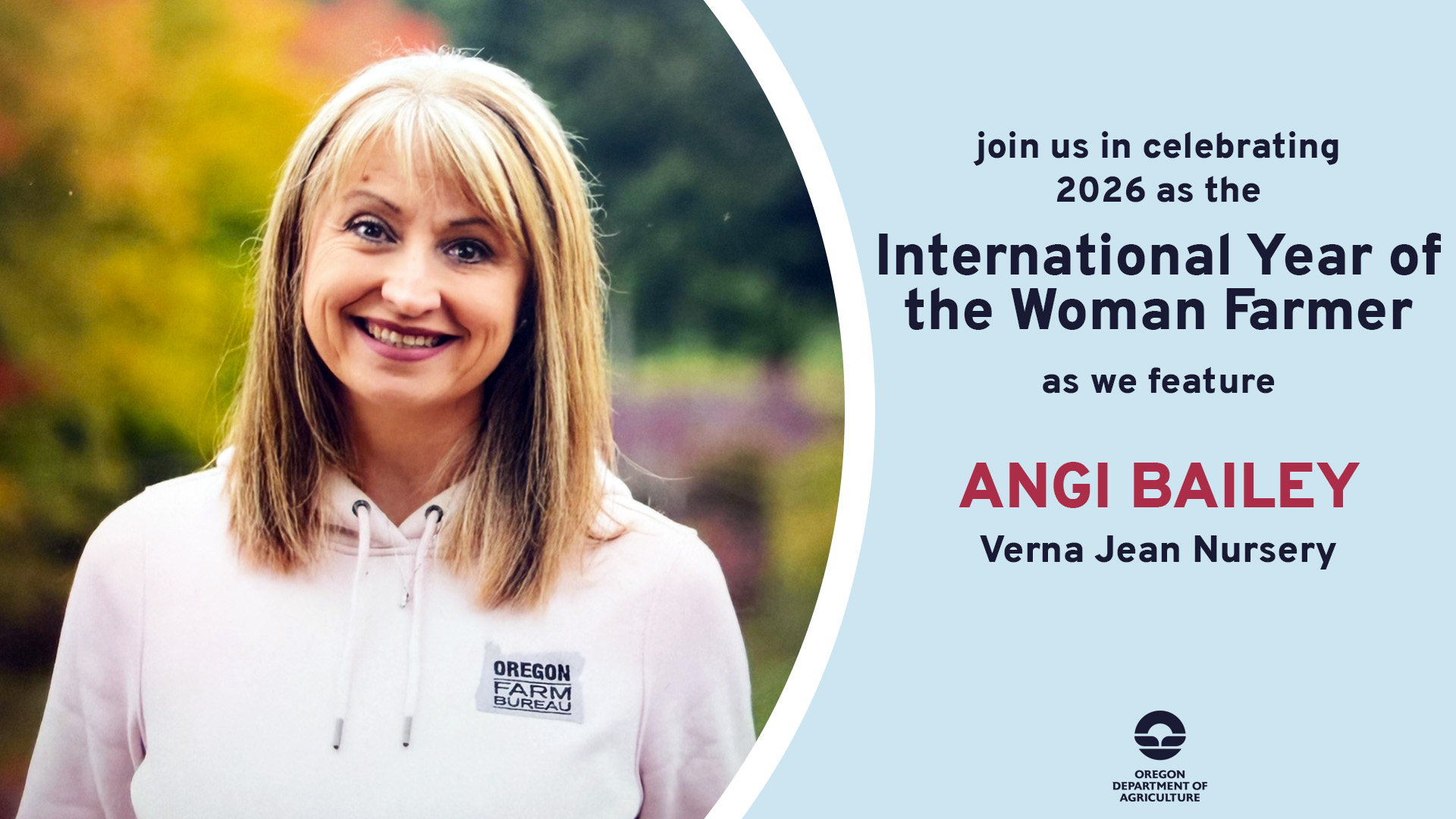
Angi Bailey, a fourth-generation farmer, a nursery owner, and president of the Oregon Farm Bureau. A leader in Oregon’s agricultural community, Bailey’s mission is to uphold her family's tradition of excellence and to nurture the next generation of Oregon farmers.
She grew up in the nursery that her mother, Verna Jean Hale (her nursery's namesake), established in Gresham in 1967. She believes that her mother's role in the industry broke ground for female farmers, even though her mother didn't see herself as a trailblazer and simply loved growing trees and helping customers.
Bailey encourages the next generation of female farmers to find their community, even if they have to build it themselves. She notes that "farming and ranching are hard and complex ways of life, and it’s easy to become isolated. Finding people who are in your corner -- who mentor, encourage, and support you -- is important."
April 3, 2026
Meet
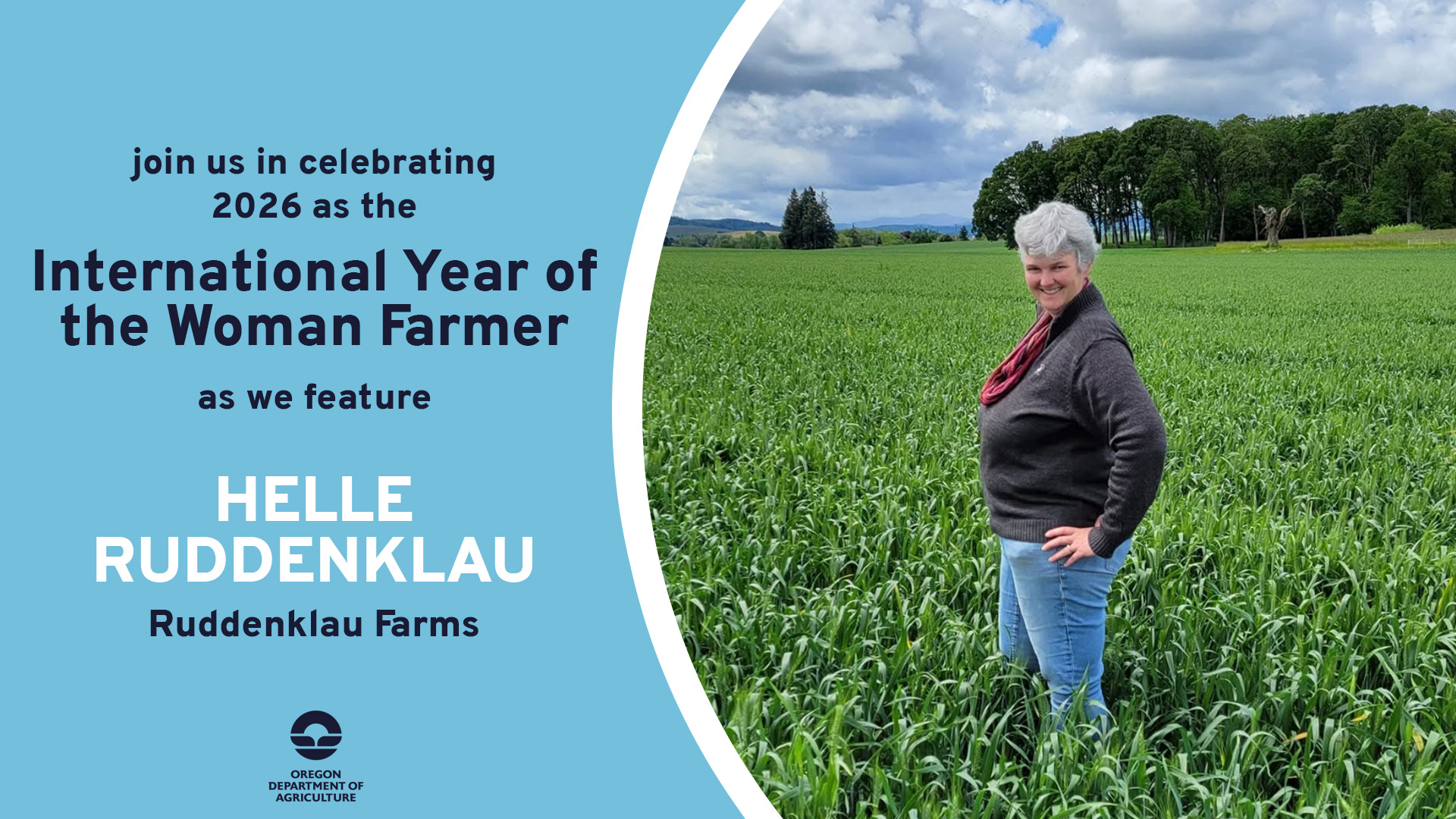
Helle Ruddenklau, a farmer near Amity, grew up watching her Danish immigrant parents dive into their new Oregon community. They were always eager to lend a hand, and as a teenager she tagged along to agriculture events and helped out at state and county fair booths. That early spark for community and education still fuels her passion for sharing the story of farming today.
Proud of her role as a female farmer, Ruddenklau has spent nearly four decades championing agriculture, both as a longtime board member of organizations such as Oregon Women in Agriculture, the Oregon Farm Bureau, and Agriculture in the Classroom, and as an active voice online. Education is at the heart of her mission. She invites the public into her world, sharing how she and her husband, Bruce, keep their diverse crops thriving with techniques like crop rotation and no-till methods, which helped their farm rebound after tough battles with stubborn, chemical-resistant weeds.
Three decades into her farming journey, Ruddenklau still recalls that the idea of feeding the world was the inspiration that set her on this path. To young women entering the agricultural field, she offers heartfelt advice: "Seek out those who encourage you, believe in your worth, and never hesitate to speak up. You belong in every room you enter."
March 27, 2026
Meet
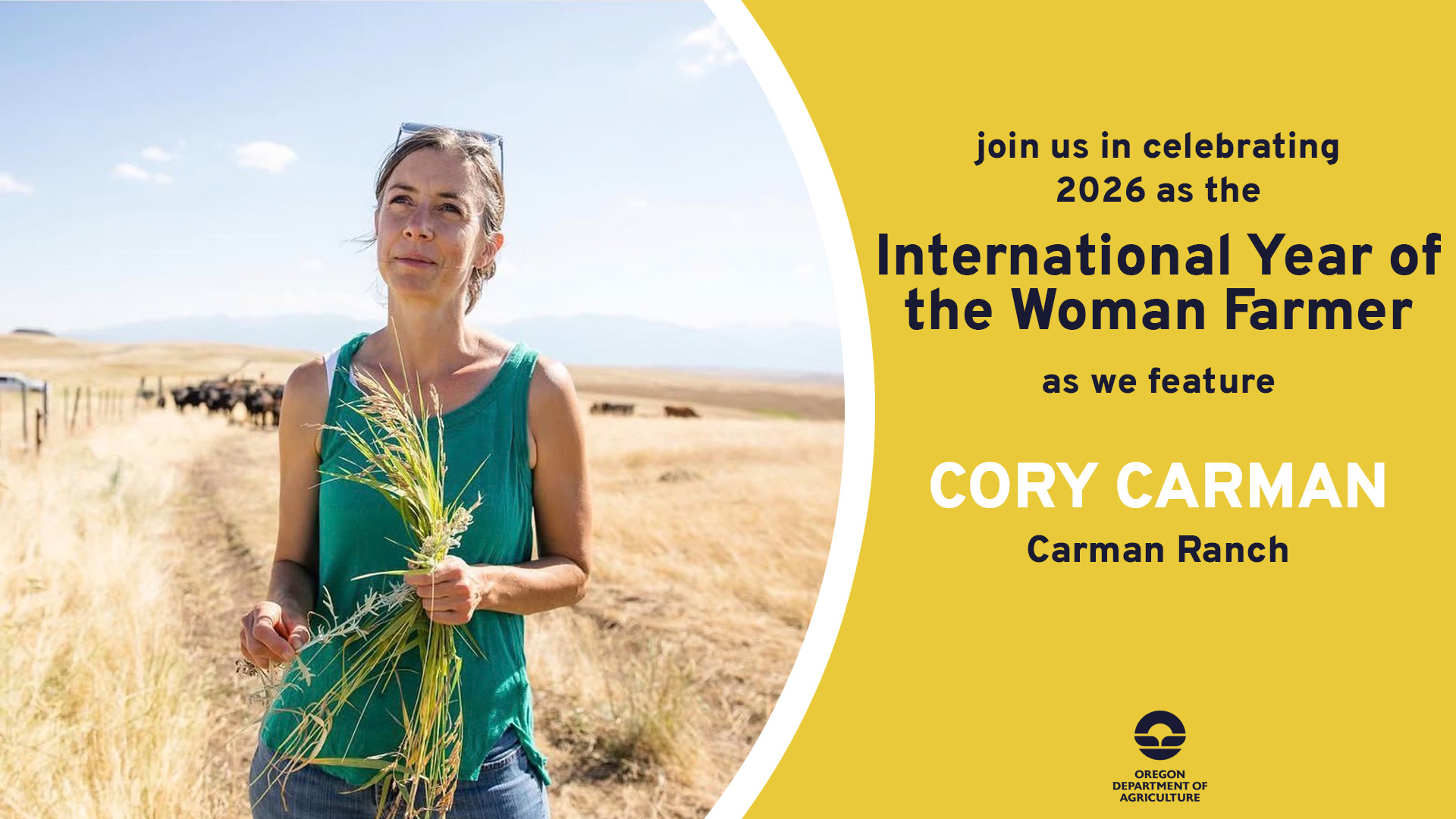
Cory Carman, who runs Carman Ranch in Oregon's Wallowa Valley. A fourth-generation rancher, she continues her great-grandfather's legacy from 1913. Raised on the ranch, Carman initially left and earned an environmental policy degree from Stanford and worked in Washington, D.C. and Los Angeles, before eventually returning in 2003 to take over the ranch -- with the goal being to raise the best meat for the health of the land, animals, people, and planet.
Carman Ranch uses holistic management, integrating environmental, social, and economic systems to produce 100% grass-fed beef and a few pastured pigs. It also uses regenerative grazing practices that restore the land, and every decision at the ranch considers long-term soil health.
Carman's business model and leadership are making a difference in an industry traditionally dominated by men. When speaking to other women in agriculture, she advises them to find ways to "work smarter" while also encouraging them to pursue more leadership roles in their businesses and communities and to serve on boards or commissions at any level.
March 20, 2026
Meet
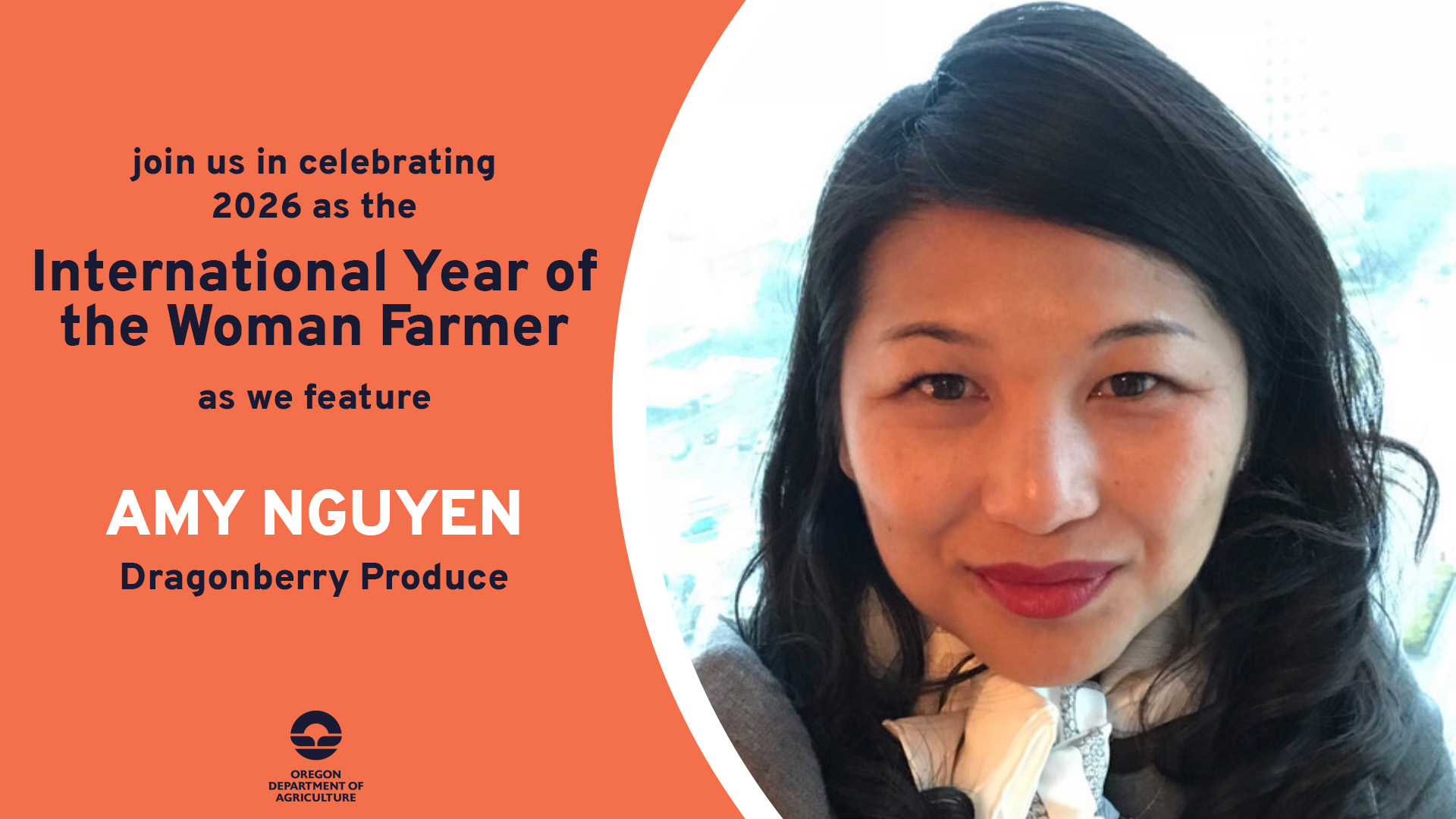
Amy Nguyen of Dragonberry Produce, a leader in international agricultural trade, importing dragon fruit and other specialty fruits from Vietnam and marketing them across the U.S. West Coast. Inspired by her Vietnamese heritage, Nguyen has played a key role in connecting Vietnamese growers with U.S. markets. Emphasizing the importance of quality and food safety for success in the U.S., she advises producers to adopt GlobalGAP standards and limit pesticide use.
In 2013, Nguyen was behind the construction of Oregon’s first LEED-certified produce distribution building in Canby, Oregon. During the same time, she advocated for a new chemical tolerance law for dragon fruit with the U.S. Environmental Protection Agency. By 2020, her company was recognized with the annual Oregon Consular Corp Global Trade/Mid-Size Business Award for her efforts in global engagement. Amy's work combines entrepreneurship, international trade, and advocacy, with a focus on providing high-quality, unique produce.
As a woman working in agriculture, Amy has found that perseverance, strategy, and quality are essential for success. She encourages women to innovate, champion sustainability, and shape global markets with confidence, persistence, and attention to detail.
March 13, 2026
Meet
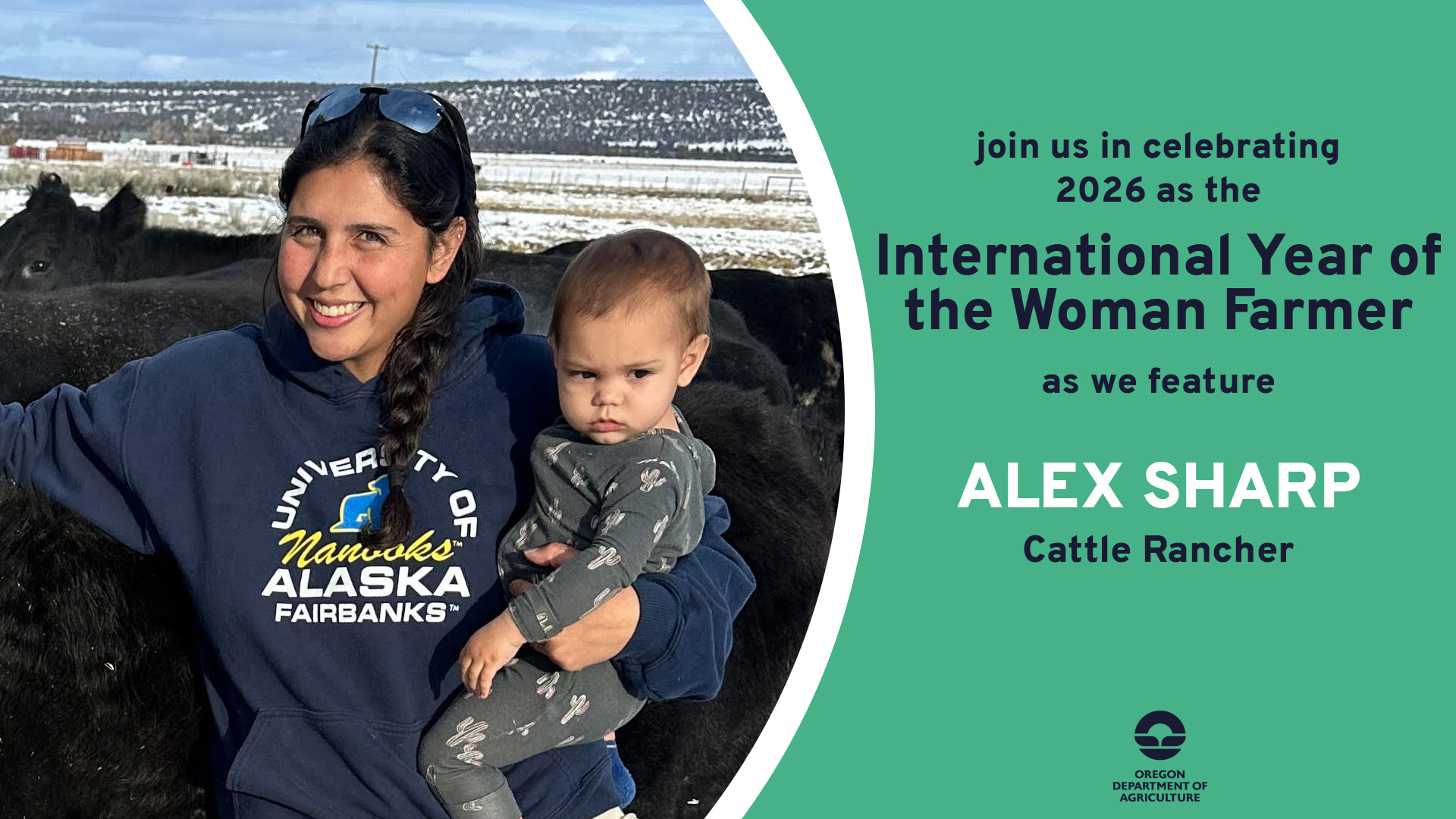
Alex Sharp, a fourth-generation cattle rancher who lives and works in Oregon’s Klamath Basin. She also manages water projects for Sustainable Northwest in the Upper Klamath Basin, partnering with landowners to improve water and habitat. In the past four years, she has led conservation projects totaling over $1.2 million.
After attending an environmental science camp in Washington, D.C. when she was 16, Sharp decided to dedicate her life to educating the public about farm and ranch life, inspired by seeing how hard farmers and ranchers worked to care for livestock and the land. She later graduated from Oregon State University with a focus on wildlife management in Agricultural Science, and then returned to the basin to start her own cattle operation and work her way into the role with Sustainable Northwest.
Sharp recognizes the challenges of ranch life, and reminds herself that it’s okay not to be okay and seeks help when needed. When discouraged about profitability, she takes time to visit her milk cow, Marsha, finding comfort and reassurance as Marsha nudges her for attention and reminds Alex that she is where she is supposed to be. She notes that every day brings new life lessons, and she continues to educate and advocate for agriculture through community involvement, photography, and the management of water projects.
March 6, 2026
Meet
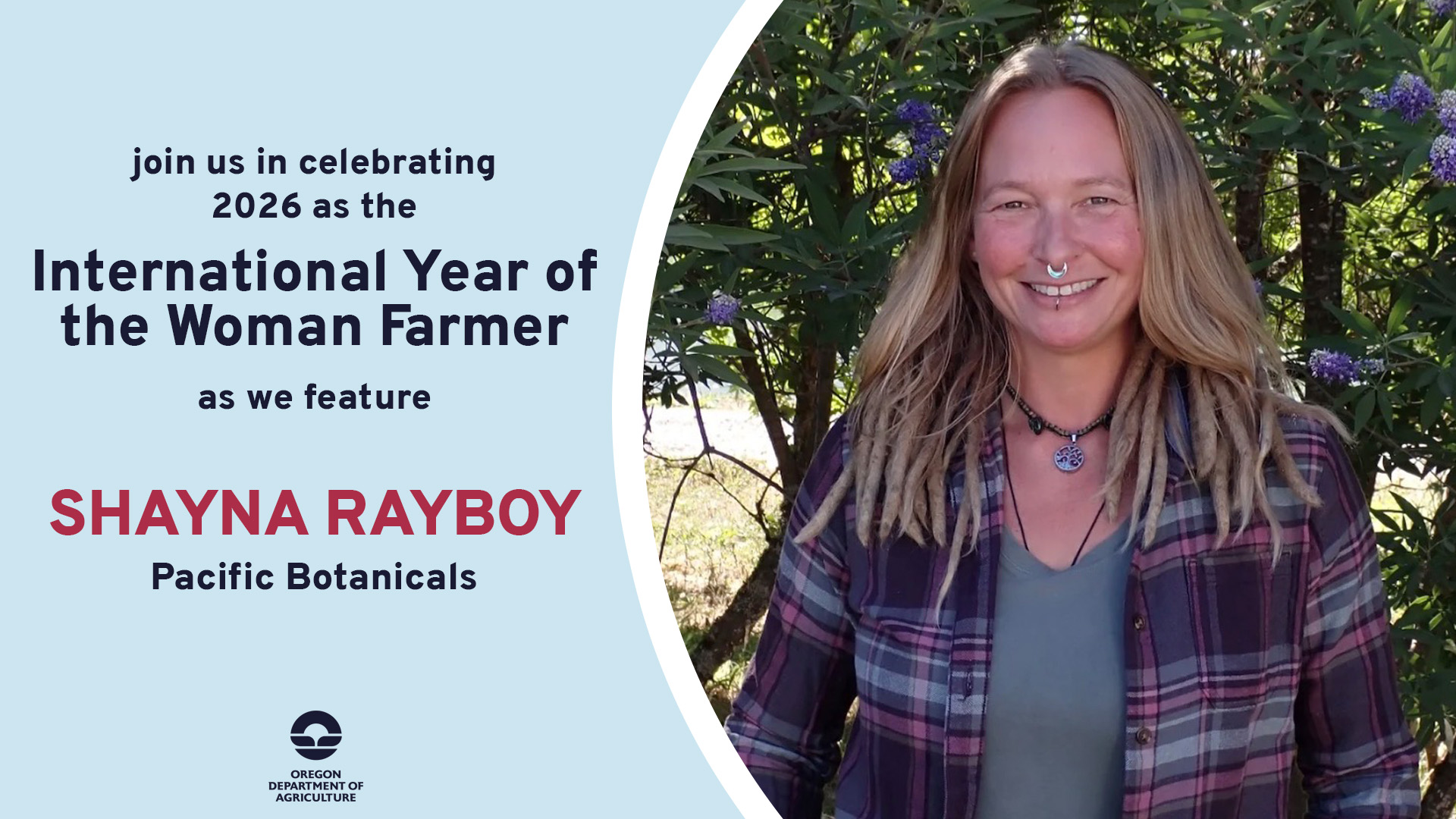
Shayna Rayboy of Pacific Botanicals, who uses her years of experience growing, preparing, and using plants for healing in her work as Farm Manager for the Rogue Valley operation. Originally from south Florida, she was drawn to Oregon in 2018 by the mountains and rivers, and although she did not plan to become a farmer, working with the earth felt natural to her. She learned from people who respected the land and saw themselves as part of it, and she found that growing food and medicine brought her closer to the community.
Over the years, Rayboy has found that there are often challenges for women working in agriculture -- for instance, women cannot always match the physical strength of their male coworkers -- but she also says that these challenges have helped her learn to use tools more efficiently, and have ensured that she is never afraid to ask for help. Farming has taught her about respect and balance, and she sees hope for a sustainable future. Over time, she has come to see healthy farming as strong crops and healthy soil, not just making money. She believes that true abundance comes from helping people and the earth.
February 27, 2026
Meet
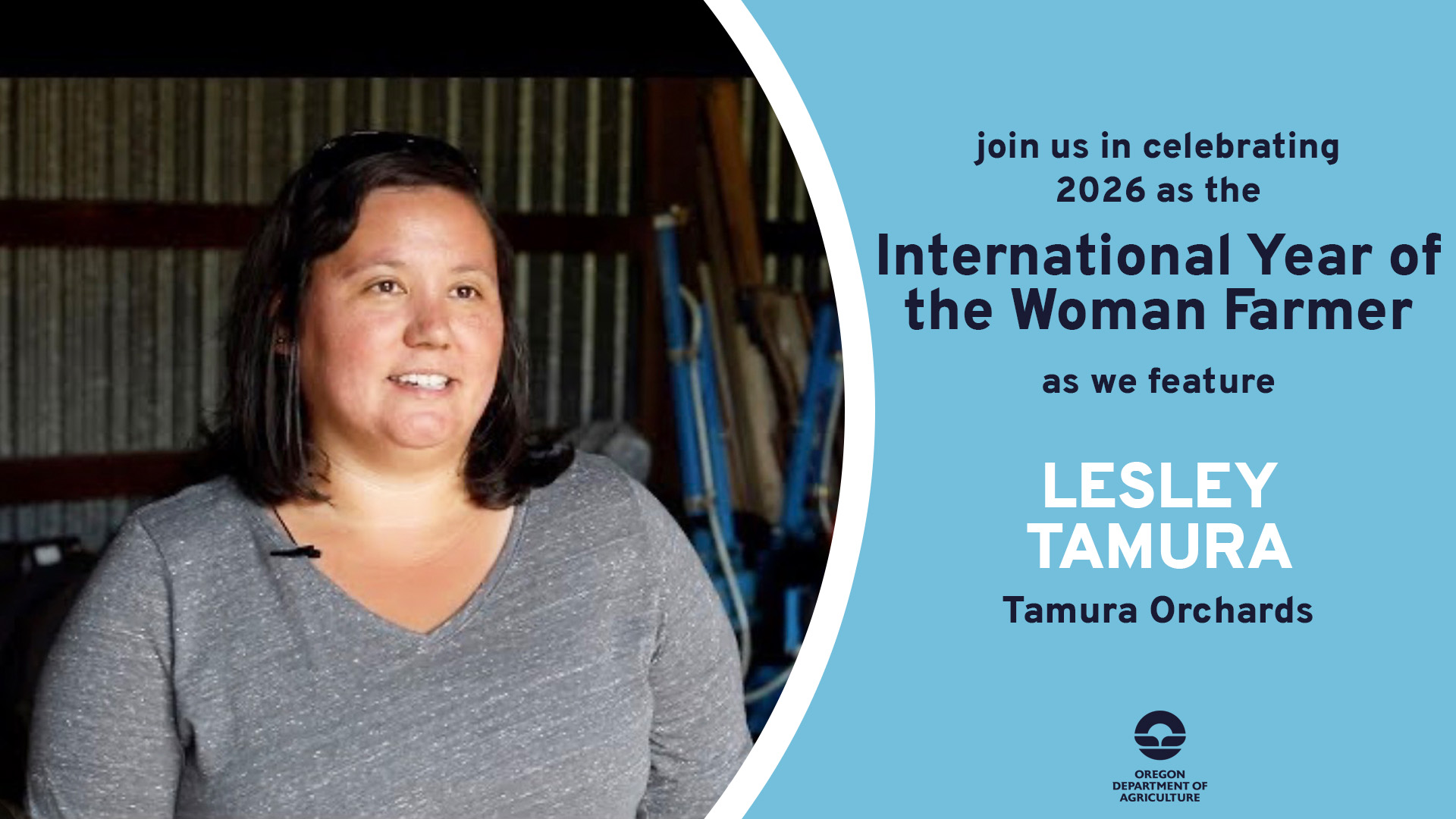
Lesley Tamura of Tamura Orchards, who works in the same pear orchards that her great-grandfather once owned -- land that was taken from her family, and against great odds, returned during World War II. Today, she honors that history by working tirelessly to keep the farm in operation and helping other farmers do the same.
Tamura was a teacher before returning to the family farm, and today she continues to educate herself and her fellow farmers on the rules and regulations of the trade. As a community leader, she is an active member of the local farm bureau, she serves as vice-chair of the Columbia Gorge Fruit Company, she regularly speaks with lawmakers on agricultural issues, and she is a wealth of information on grant opportunities that benefit farmers in her area.
In December 2025, Tamura addressed ODA's Board of Agriculture with a message shared by many Hood River Valley producers: the numbers no longer add up. She spoke candidly of low commodity prices, rising labor and input costs, and mounting regulations that are straining small farms in Oregon. Almost 100 years after her grandparents planted their first trees, she fears her 42-acre operation may not survive. Her advice to fellow female farmers is to educate themselves, be seen, and be heard. Despite the current hardships, her friends describe her as always having a smile on her face and looking on the bright side, even when the light seems dim for many Hood River Valley farmers.
February 20, 2026
Meet
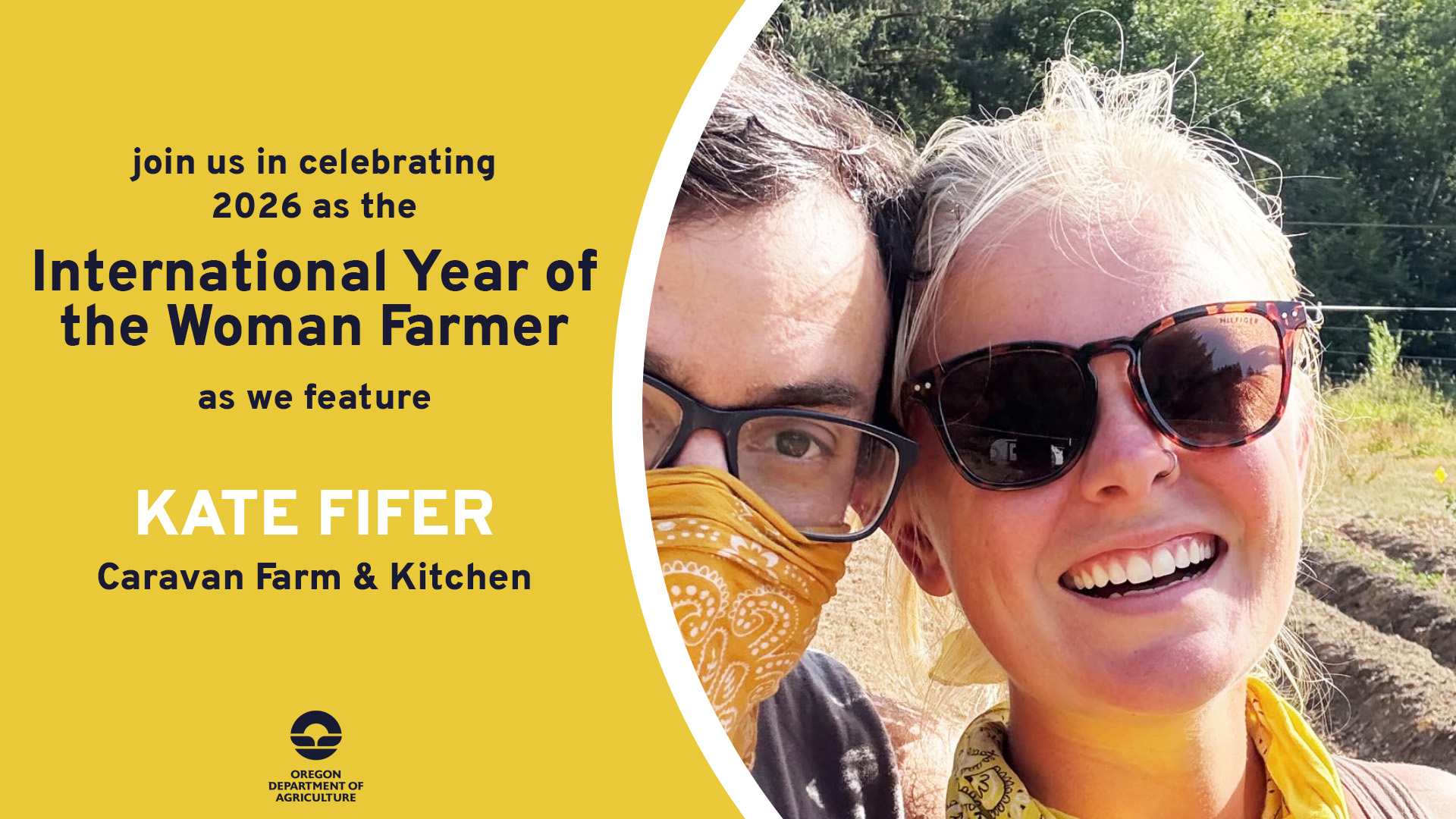
Kate Fifer of Caravan Farm & Kitchen, an inspiring chef-turned-farmer. After six years honing her culinary skills in restaurants, she returned home to the Oregon coast in early 2025 with her partner, Daniel, to launch their micro-produce farm and food event business. They settled on the historic Edenfeld Dairy farm property and are transforming it into Caravan Farm & Kitchen, a small chef-driven produce farm. Passionate about fresh produce, they aim to enrich their community through unforgettable dinners and local events.
Caravan Farm & Kitchen hosts pop-up events that showcase Kate's culinary talents, connecting people to their food and providing a personal dining experience. Despite setbacks -- such as flooding ruining much of her first harvest -- Kate remains motivated, connecting with local farmers and improving their growing practices. She has learned that hard work and dedication can get you a long way, but kindness and community close the gap to including happiness with your successes. Her advice for other new farmers is to keep moving forward in chasing your dreams.
February 13, 2026
Meet
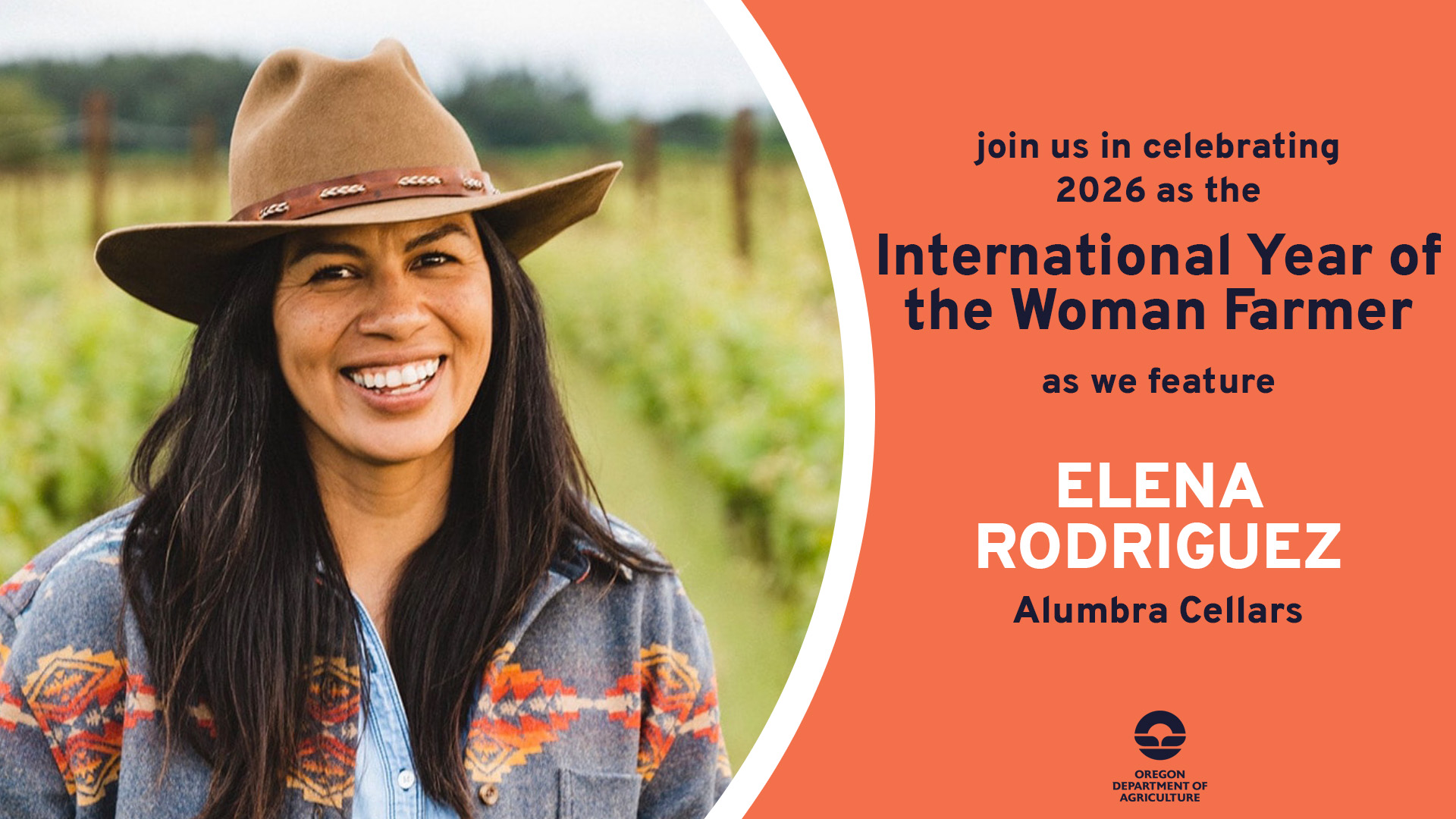
Elena Rodriguez of Alumbra Cellars, an award-winning winemaker and trailblazer who, as one of the few Latina winemakers in the Pacific Northwest, is opening doors for future Latinos in the industry. Rodriguez leads her family’s vineyard, Rodriguez Family Vineyard, and its winemaking operation, Alumbra Cellars -- a name that means “to shine,” highlighting her Mexican roots as well as the work being done in the vineyard.
Despite growing up on her family's farm, participating in her local FFA chapter, and raising livestock, Rodriguez initially pursued a career in medicine. She worked as a nurse for 10 years, before eventually choosing to return home in 2014 to help her family with the farm, honoring her parents’ sacrifices and hard work. Over time, Rodriguez helped expand the business from selling grapes to producing their own Pinot Noir and Pinot Gris, establishing a wine club and tasting room, and transitioning their operation from conventional to organic/biodynamic farming practices (non-certified).
Rodriguez spends her life in service to her family, friends, God, and community, and continues to give back by serving as a mentor on the Education Committee for a nonprofit: Asociación Hispana de la Industria del Vino en Oregon y Communidad (AHIVOY). The organization empowers vineyard stewards to advance their wine careers through English language immersion and professional development. Through her innovative spirit and cultural pride, Rodriguez is not only crafting exceptional wines, but is also nurturing a legacy of hope and empowerment.
February 6, 2026
Meet
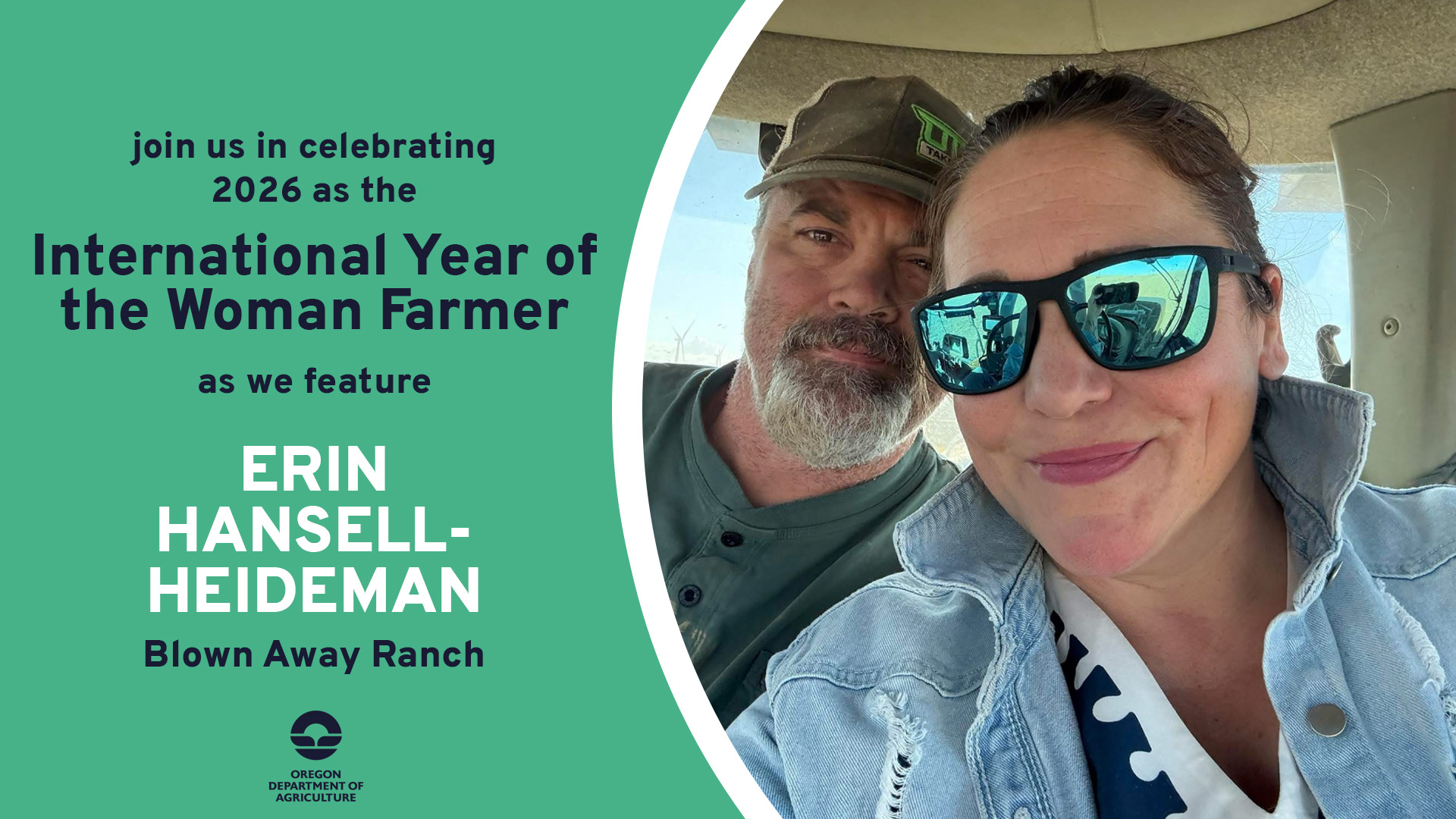
Erin Hansell-Heideman of Blown Away Ranch in both Morrow and Gilliam counties. As the eldest of five children -- and the only girl -- Erin’s leadership journey began on her family farm, where expectations were always equal, regardless of gender. She built her confidence through involvement in FFA, years of teaching agriculture, and years spent as a 4-H agent. She now encourages women in agriculture to learn every aspect of their operations, ask questions, seek partnerships, and never underestimate the power of preparation and hard work.
Over the years, Erin has served with distinction: as a member of the Farm Bureau, the Eastern Oregon Women’s Coalition, the Oregon Cattleman’s Association, and most recently as President of the Oregon Wheat Grower’s League -- only the second woman to hold this role in the organization's 100-year history.
Farming alongside her husband, Deacon, Erin carries the words of her grandfather, Dr. Wm. H. Hansell: "Farmers do not own the land, but are stewards of it." This philosophy guides her approach to agriculture and life -- always striving to leave the land better for the next generation.
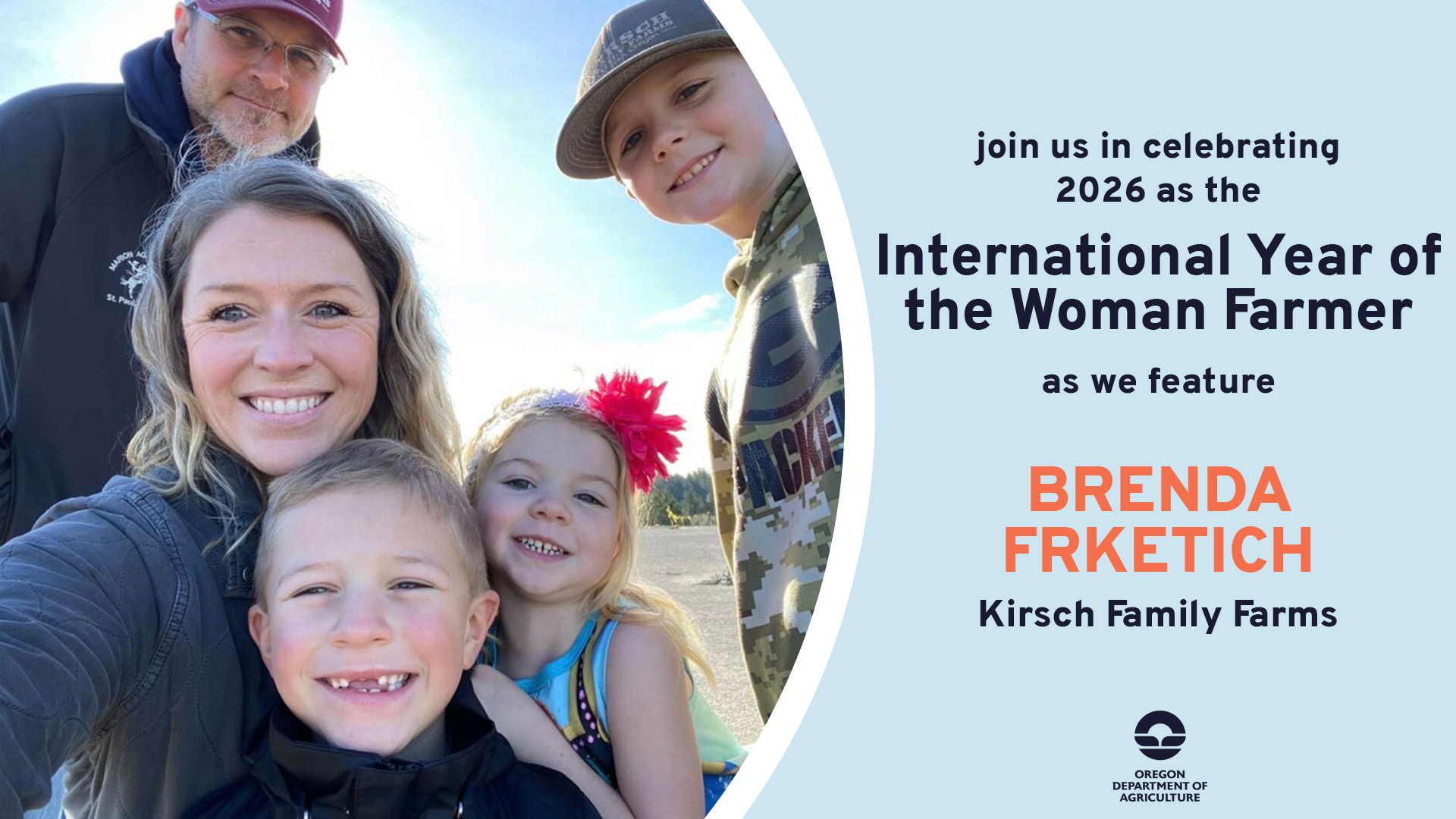
January 30, 2026
Meet
Brenda Frketich. Her path to farming took an unexpected turn after college in Southern California, when she came back to the Willamette Valley and joined her dad for a trial run managing the family farm. Since then, Brenda has thrived. She and her husband, Matt, now run the family business together, and she’s active in groups like the Oregon Farm Bureau. Her enthusiasm for sharing agriculture’s story earned her the 2016 Ag Communicator of the Year award from Oregon AgLink, thanks to her lively social media and her blog, Nuttygrass, where she helps people learn about and appreciate farm life.
Outside of farming, Brenda works as a firefighter and paramedic, serves on her local school board, and is raising three kids.
.