The Native Plant Conservation Program is involved in many conservation projects throughout the state, and assists land managers with listed plant species on their properties and works to support recovery goals for Oregon's listed species.
Recent Projects
State endangered and threatened species list review
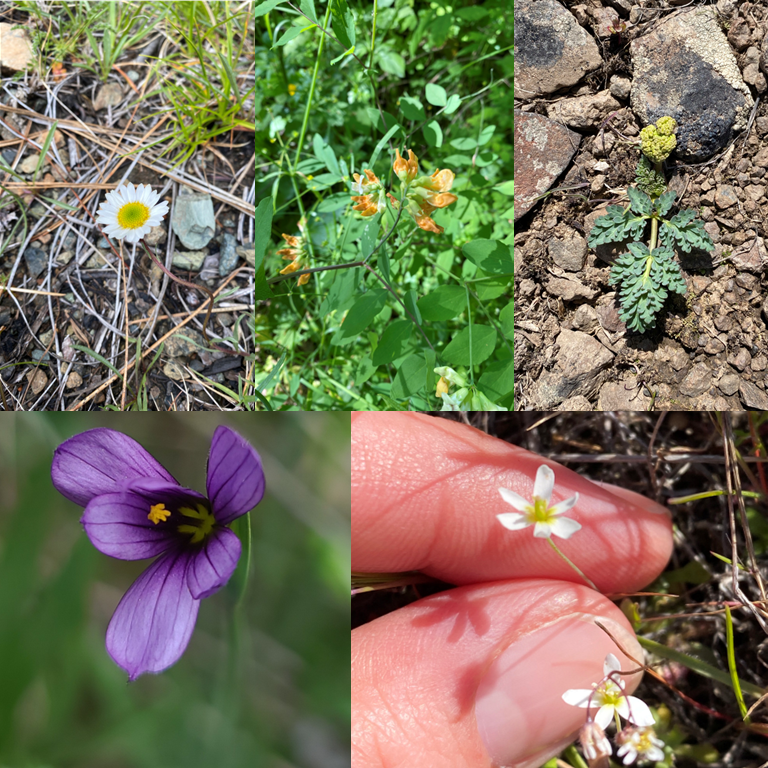 From top, clockwise: Erigeron stanselliae, Lathyrus holochlorus, Lomatium ochocense, Meconella oregana, and Sisyrinchium hitchcockii.
Over the 2021-2023 biennium, additional state funding supported a crucial review of species to be added to the State's list of threatened and endangered T&E) plants (maintained by the Native Plant Conservation Program as part of its regulatory authority), which was last updated in the mid-1990s. The work included processing substantial amounts of updated information, gathering outside recommendations and comments from experts and the general public, and conducting spot field studies to determine which plant species need a change in protective status.
Due to the number of unique species and habitats in Oregon, the list of species in need of review is extensive. Therefore, a subset of species will be reviewed on a rolling annual basis. In 2023, 13 species were reviewed and added to the State's T&E list following review by a Technical Advisory Committee and a public comment period. Across 2024 and 2025, an additional 9 species were reviewed; 6 species were added to the State's T&E list and 1 will be uplisted from Threatened to Endangered in the next OAR update.
Species review and the rule-making process for proposed changes to the State List of Threatened and Endangered Plant Species is one of the program's most important tasks over the coming years, as the state's Threatened and Endangered plant lists can impact on-the-ground activities of all state and local land-managing agencies.
Cooperative field project highlights
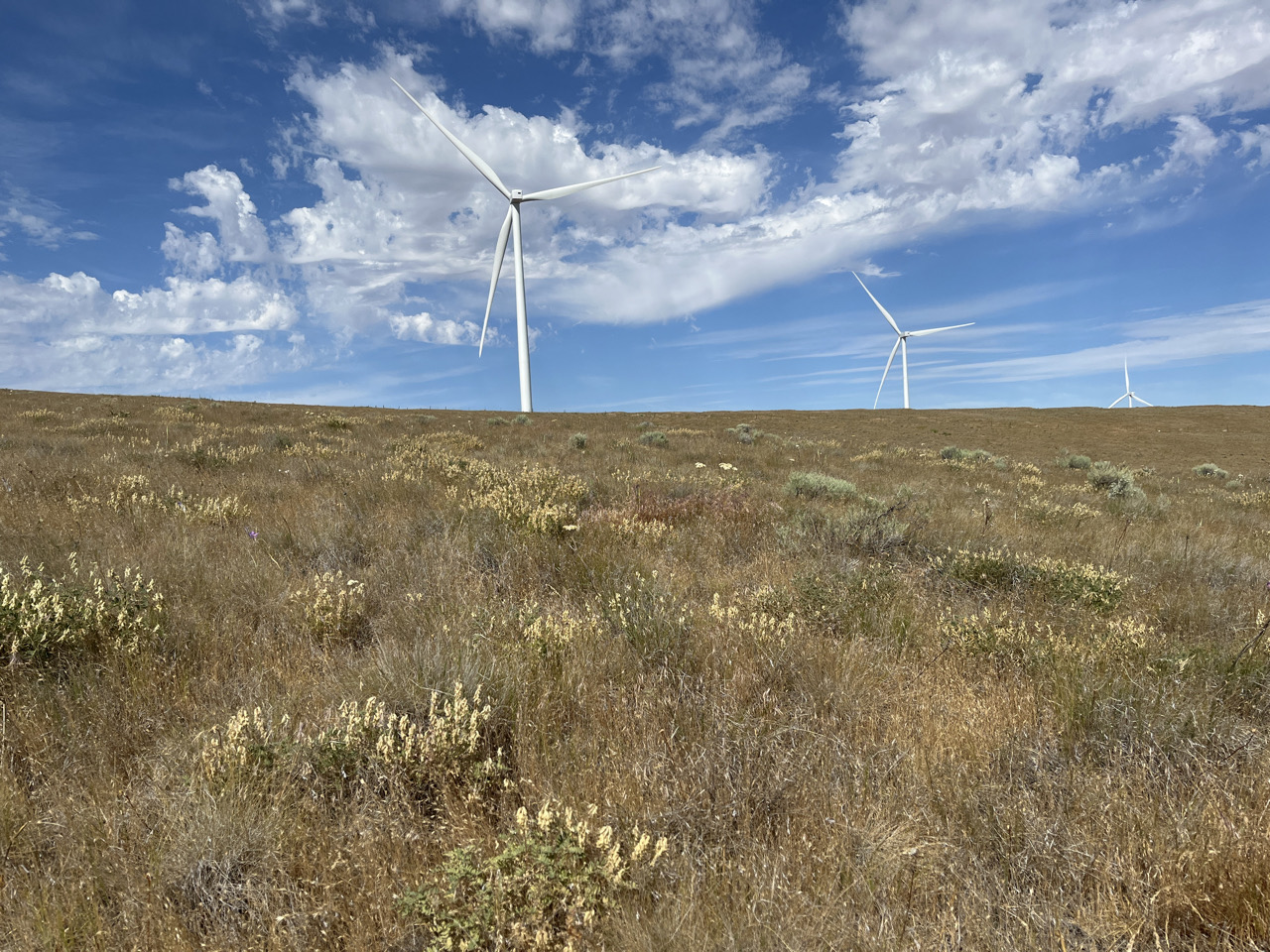
Lawrence's milkvetch population (above) at Wheatridge Renewable Energy Facility, near Heppner, Oregon.
ODOE Mitigation: Boardman to Hemingway (B2H) and Wheatridge
- Under agreements with the Oregon Department of Energy, the NPCP entered the first stage of two multi-year projects focused on research and recovery of four state-listed species impacted by energy infrastructure development in eastern Oregon. The projects are intended to mitigate for the loss of the protected plants during construction of Idaho Power's Boardman to Hemingway (B2H) transmission line and Wheatridge Renewable Energy Facility East, owned and operated by NextEra Energy and Portland General Electric.
- The affected species are endangered Snake River goldenweed (Pyrrocoma radiata) and Mulford's milkvetch (Astragalus mulfordiae); and threatened Cronquist's stickseed (Hackelia cronquistii) and Laurence's milkvetch (Astragalus collinus var. laurentii). In 2025, the NPCP scouted populations of all species and collected seed at 13 sites in Morrow, Baker, and Malheur counties. Project goals include researching germination, cultivation, and introduction methodologies; introducing cultivated plants in the wild to replace those lost to development; and banking seed for use in future research and recovery efforts.
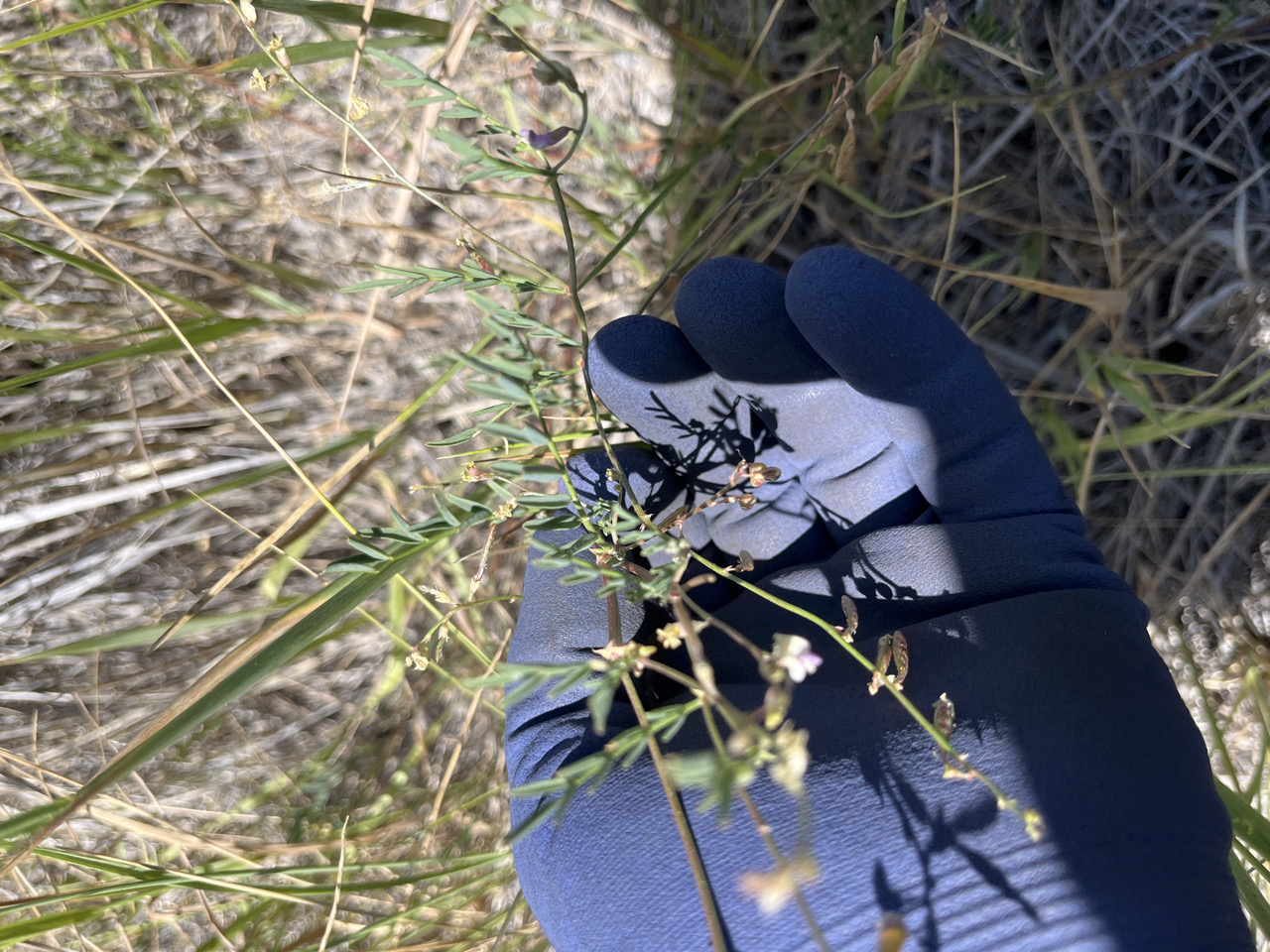
ODA censuses Applegate's milkvetch (above) while in bloom.
Applegate's Milkvetch (Astragalus applegatei) - Endangered Milkvetch of Klamath Basin
Applegate's milkvetch is one of Oregon's rarest native plants, restricted to seasonally moist, alkaline soils in the Lower Klamath Basin. The NPCP is currently in year two of a three-year project funded through the U.S. Fish and Wildlife Service to support on-the-ground conservation and recovery of this federally listed species.
ODA completed a full census of the Applegate's milkvetch population at the OC&E Woods Line State Trailhead in Klamath Falls, managed by Oregon Parks and Recreation Department. Combined with 2024 survey work, ODA documented a total of 4,080 individual plants at this site—the most complete and current count on record for this population.
ODA relocated the site of a 2001 reintroduction effort at the Miller Island Unit of the Klamath Wildlife Refuge. The original plot had been documented only on hand-drawn maps, making it difficult to relocate in 2024. In 2025, staff successfully identified the original planting location. No surviving plants were found, confirming the reintroduction did not persist—a disappointing but informative result that will help guide future reintroduction and augmentation planning.
ODA completed a targeted conservation seed collection at the OC&E site, representing approximately 50 maternal lines. These seeds will be banked for long-term conservation storage and are available to support future recovery actions, including research, cultivation, or population augmentation.
Researchers at California Polytechnic University, Humboldt continued a multi-year experimental management study at the OC&E site, evaluating the effects of mowing and prescribed burning on Applegate's milkvetch, associated plant communities, and soil ecology. Findings from this study will help land managers balance public use, safety, and rare plant conservation at this heavily visited site.
ODA and partners are well-positioned heading into the final year of this project, with a strong foundation of survey data, banked seed, and applied research to guide science-based recovery of Applegate's milkvetch.
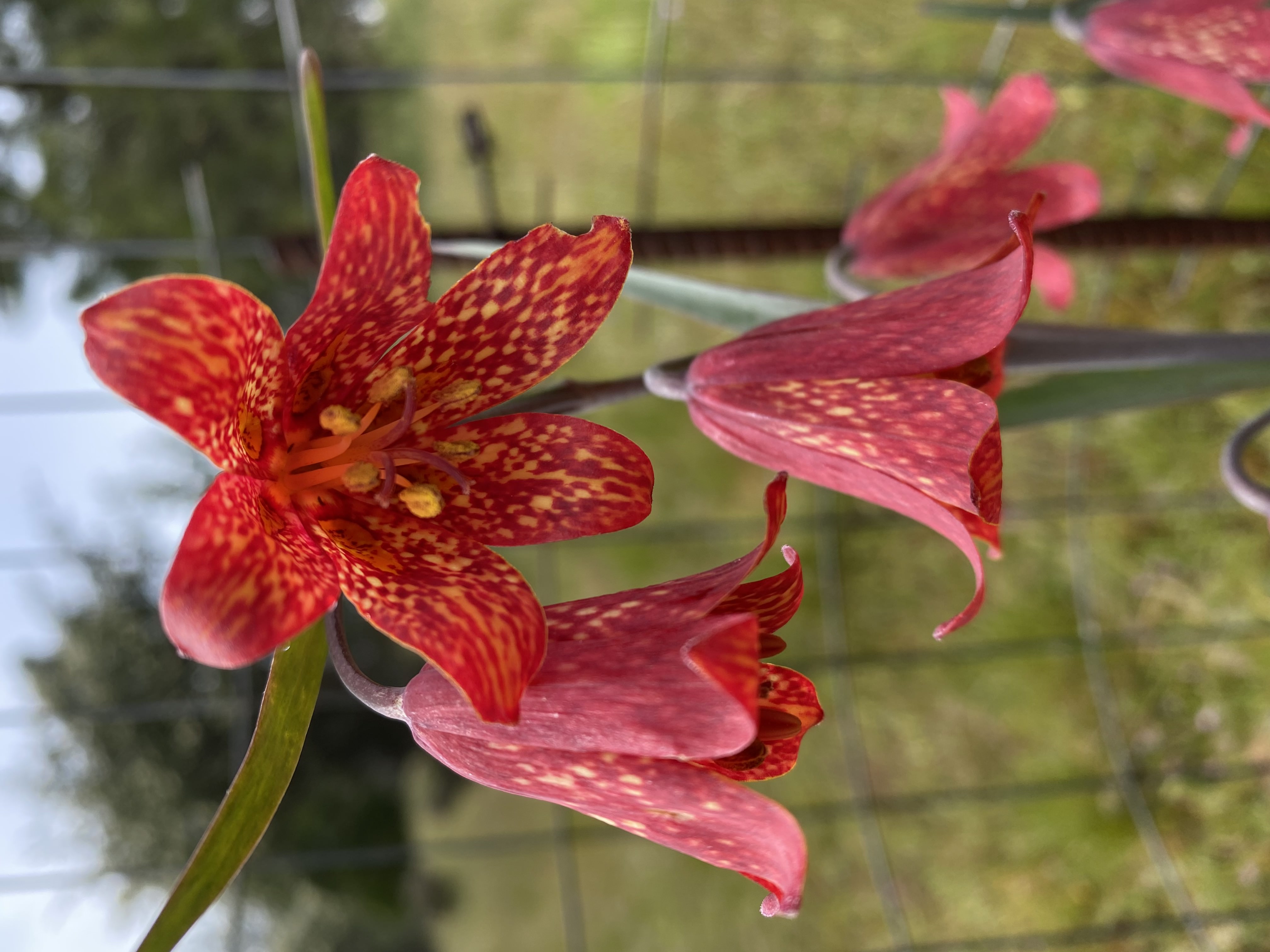
ODA continues to lead the recovery of the endangered Gentner's fritillary (above) through the cultivation and collaborative transplanting of bulbs and bulblets.
Gentner's Fritillary (Fritillaria gentneri) – Endangered, Showy Lily of Jackson and Josephine Counties
- Partnerships with Medford District BLM and USFWS continued as the NPCP tracked and monitored Gentner's fritillary transplants that have been returned to the wild. Continued monitoring show the prospects for Gentner's fritillary are improving, in part thanks to the NPCP's transplanting efforts that support natural populations.
- Cultivation of Gentner's fritillary transplants continued. Mature bulbs of this lily asexually produce many loosely attached grain-sized bulblets, which we can mature faster in greenhouse conditions. Flowering plants are marked during spring monitoring — the only time they can be positively identified and distinguished from the two closely related fritillary species (F. affinis and F. recurva) that co-occur across much of the range. After plants die back in late summer, marked individuals are excavated and the rice-grain-sized bulblets that form on the surface of the main bulb are collected for off-site cultivation; the main bulb is replanted. Bulblets are cultivated at J. Herbert Stone USFS Nursery in Central Point, Oregon for several years before being returned to the wild. In 2025, bulblets were collected from three populations for future outplanting.
- A pilot study to better understand true population sizes is nearing completion. Because immature plants emerge as a single leaf indistinguishable from co-occurring fritillary species, only flowering individuals have historically been counted, resulting in significant underestimates of how many Gentner's fritillary plants actually exist in the wild. Partnering with Dr. Aaron Liston, renowned plant genomics researcher and retired Director of the OSU Herbarium, the NPCP developed and applied DNA-based identification methods at several key populations across the species' range. While the complexity of the habitats placed some constraints on broad applicability, the methods also yielded important innovations and an expanded understanding of the species. Critically, the study demonstrated that many thousands of Gentner's fritillary plants previously undetectable are present in the wild—meaning the species is in better shape than population counts previously indicated.
Over the next few years, NPCP looks forward to conducting a comprehensive assessment of the recovery transplanting program to quantify how much it has contributed to securing the status of Gentner's fritillary, as the species' federal listing status is currently under reconsideration. Results from both the transplanting program and the DNA pilot study provide a meaningful foundation for that evaluation.
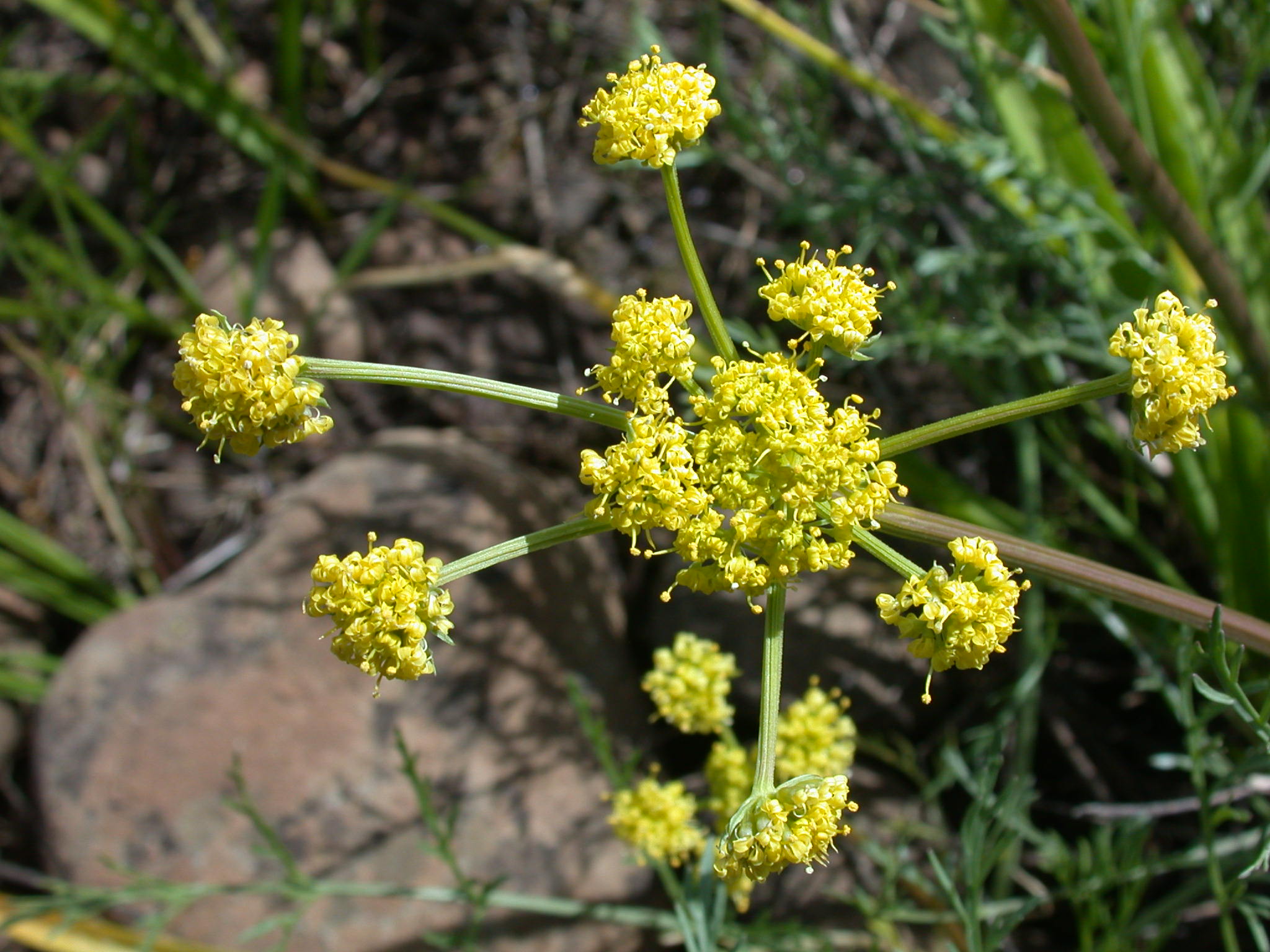 Cook's lomatium in full bloom.
Cook’s lomatium (Lomatium cookii) – Endangered, Vernal Pool Plant of Jackson and Josephine Counties
- In 2025, the NPCP continued an intensive, field-based research effort at Illinois River Forks State Park aimed at improving habitat conditions for Cook's lomatium (Lomatium cookii), a rare endemic wildflower of southwestern Oregon. One of the species' most persistent challenges is competition from invasive annual grasses, and this project is designed to evaluate practical, scalable land-management tools that address that threat directly.
- In May 2025, project staff established 36 one-square-meter plots across two habitat patches within the park to serve as experimental units. Nested within each plot, smaller monitoring areas were set up to track L. cookii individuals and surrounding plant community composition. Baseline data — including a census of L. cookii plants, spatial mapping of individuals, and detailed vegetation cover estimates — were collected prior to any management actions.
- Management treatments were implemented in Fall 2025. Mowing, raking, and selective herbicide treatments were applied to target invasive annual grasses while minimizing disturbance to native species. Prescribed fire treatments followed ~2 months later: eight plots were burned in small, contained burns conducted with assistance from ODA's Noxious Weed Control Program staff. These burns were designed to assess whether fire can reduce invasive grass cover and create better growing conditions for L. cookii.
Follow-up monitoring will occur in subsequent years to evaluate how L. cookii and the surrounding plant community respond to each management approach. By testing these tools under controlled but realistic field conditions, the project aims to inform stewardship decisions not only at Illinois River Forks State Park, but at other L. cookii sites facing similar pressures. Results will help ensure that future conservation actions are grounded in data and scalable to the broader challenge of managing invasive species in Oregon's grassland ecosystems.
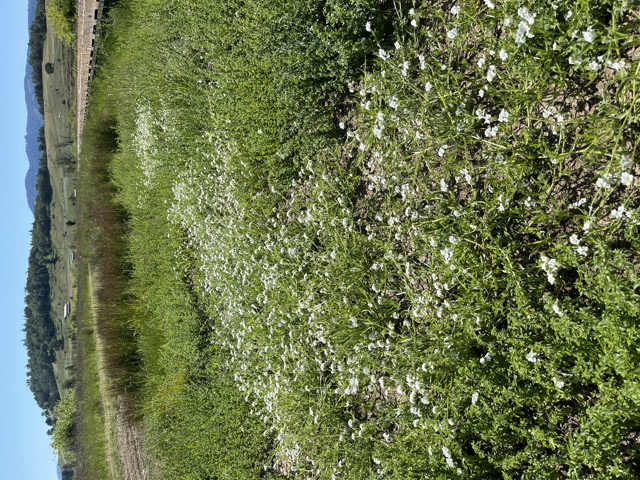 Rough popcornflower patch recently planted by the NPCP to augment the Ford's Pond population in Sutherlin, Oregon.
Rough popcornflower (Plagiobothrys hirtus) – Endangered, Wetland Plant of Douglas County
- The species is classified as endangered and the state and federal levels, but in 2024 the USFWS proposed to reclassify the plant as threatened.
- In 2025, in partnership with the USFWS Roseburg Field Office, the program carried out population monitoring and seed collection to help meet species recovery goals for rough popcornflower. More than 340,000 plants were counted and mapped across the sites, and seed was collected from approximately 3,000 plants and banked for long-term conservation at the PSU Rae Selling Berry Seed Bank.