Visual Distress Signals (VDS)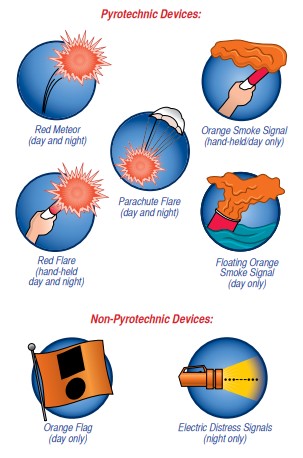
All boats operating in the ocean or coastal waters west of the line of demarcation (jetty tips) must carry U.S. Coast Guard-approved VDS.
VDS allows boat operators to signal for help in the event of an emergency.
There are three categories of visual distress signals:
1. Day signals (visible in bright sunlight)
2. Night signals (visible at night)
3. Both day and night signals
VDS are either pyrotechnic (smoke and flames) or non-pyrotechnic (non-combustible and electronic). Operators must select the appropriate devices and have the minimum quantity as referenced in
33CFR175.110, depending on the category. VDS must be U.S. Coast Guard-approved, in serviceable condition, and readily accessible.
If pyrotechnic devices are selected, a minimum of three must be carried. Any combination can be carried as long as they add up to three signals for day use and three signals for night use. Three-day/night signaling devices meet both requirements. There's a variety and different combinations of pyrotechnic devices that can be onboard to meet the carriage requirements.
The most common U.S. Coast Guard-approved non-pyrotechnic devices are an Orange Day Flag (day) and an Electronic Distress Signal (night) to meet requirements.
Engine Cut-Off Switches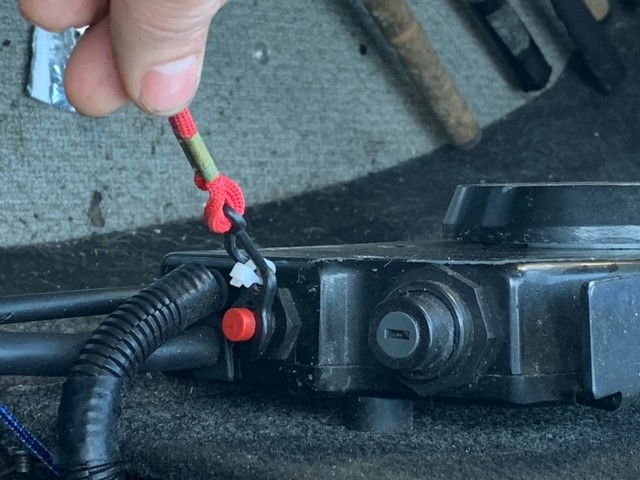
In Oregon,
OAR 250-010-0166 requires the use of engine cut-off switches while operating a motorboat at a planing speed. The rule does not apply if:
1. The boat is not equipped with an engine cut-off switch, or
2. The main helm of the boat is installed within an enclosed cabin.