Expanding Access to Short-Acting Overdose Reversal Medications
Over the past few years, drug overdoses have had a devastating impact in Oregon, and across the country. According to the
State Unintentional Drug Overdose Reporting System (SUDORS), there were 701 overdose deaths in Oregon in 2020. By 2023, that number had climbed to 1,769. There were 1,443 overdose deaths in 2024 – a slight decrease from the year prior but still alarmingly high.
Luckily, there are very tangible steps we can take to address this crisis. Naloxone is a medication that reverses opioid overdose. The
Save Lives Oregon initiative, created in 2020 to help combat the fentanyl crisis and reduce overdose deaths, has distributed more than 675,000 doses of naloxone since its founding. The ADPC aims to increase access to this lifesaving drug by clarifying available resources at state and local levels, and by providing technical assistance and guidance on distribution and administration of naloxone.
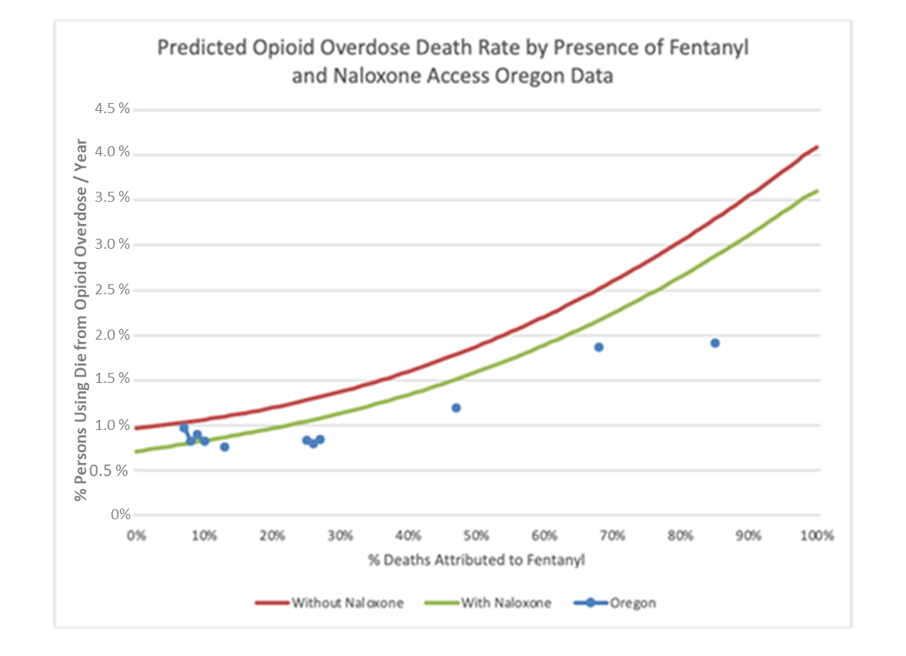 How do we know this will help? We have research showing naloxone saturation decreases opioid overdose deaths.
The graph at left illustrates the predicted opioid overdose death rate increases as fentanyl increases in the drug supply. It was modified from the Journal of Urban Health Paper “Modeling of overdose and naloxone distribution in the setting of fentanyl compared to heroin," by the author Dr. Phillip Coffin. The original predictive model was developed based on data from national epidemiological studies of overdose mortality.
In 2023, the Oregon State Opioid Response consulted with Dr. Coffin to understand why opioid-related overdose deaths continued to rise in Oregon, despite naloxone distribution. Oregon's data was modelled to deliver a better picture of the situation. The chart's red line shows estimated opioid overdose death rates without naloxone. The green line illustrates that opioid overdose death rates are lower when 80% of people who are at risk of opioid overdose have naloxone access. The blue dots are Oregon's data. The blue dots show death rates increasing with increased fentanyl – but the death rates were lower than would be predicted as fentanyl enters the drug supply.
Find the ADPC's detailed strategy below:
 Ensuring Access to Injury Prevention Services for Substance Users
Injury prevention services are often misconstrued as “enabling" or even encouraging drug use. In fact, we know that these services keep drug users and the public at large safer. For instance, a
2019 study showed that the city of Philadelphia averted more than 10,000 new HIV diagnoses over a 10-year period thanks to its investments in injury prevention services.
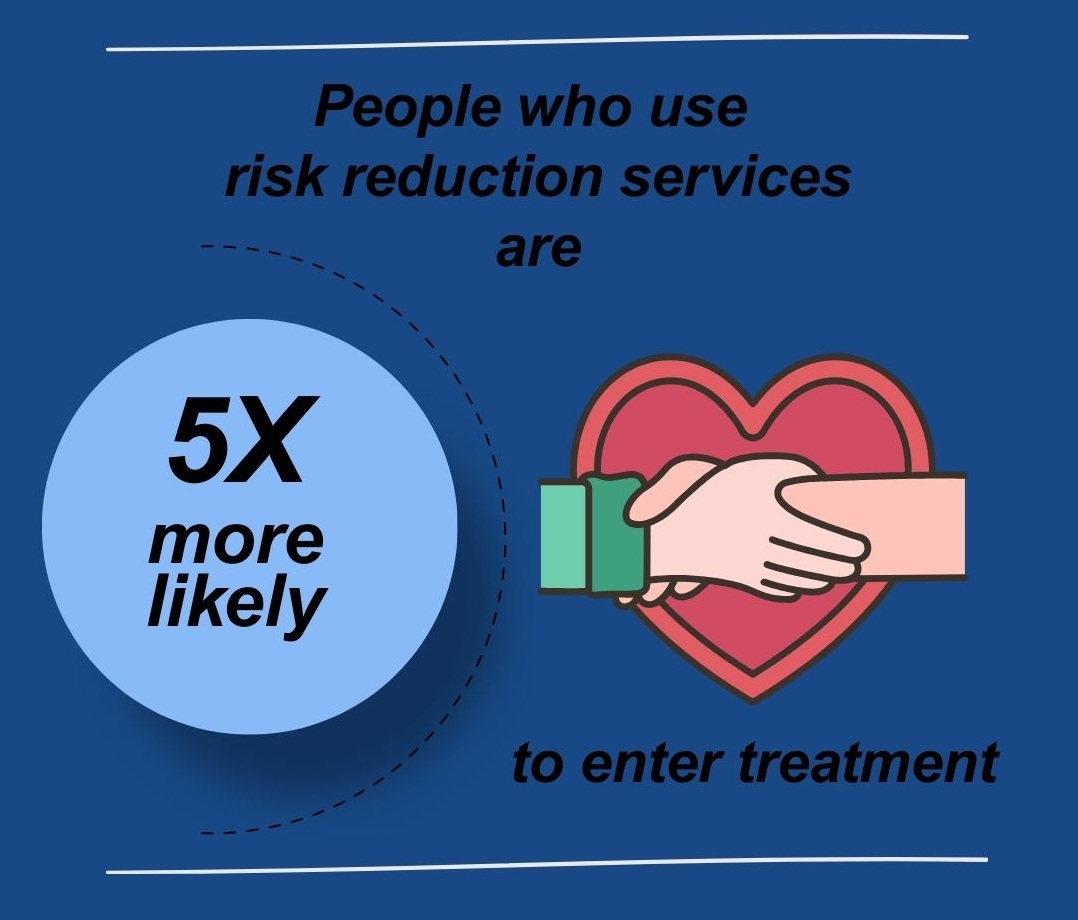
Meanwhile, reliable risk reduction services can help drug users build trusting relationships with service providers, opening up new opportunities for further care. Research has shown that people who utilize harm reduction services are 5X
as likely to enter treatment than those who do not utilize these services.
Find the ADPC's detailed strategy below:
Implementing a Statewide Drug-Checking Strategy
The ADPC intends to support a tiered, multi-level approach to drug-checking strategies. Drug checking spans a wide range of tools and strategies, accomplishing different objectives.
For instance, on one end of the spectrum, tools like test strips for certain substances can help people make informed decisions about drug use.
At the other end of the spectrum, some drug-checking strategies – such as reviews of medical examiners' reports, or wastewater surveillance — can reveal trends in drug supply contaminates and overdoses. In fact, Oregon State University is already a world leader in wastewater surveillance technology. Researchers at the university have for several years tested wastewater statewide for traces of viruses like Covid and the flu.
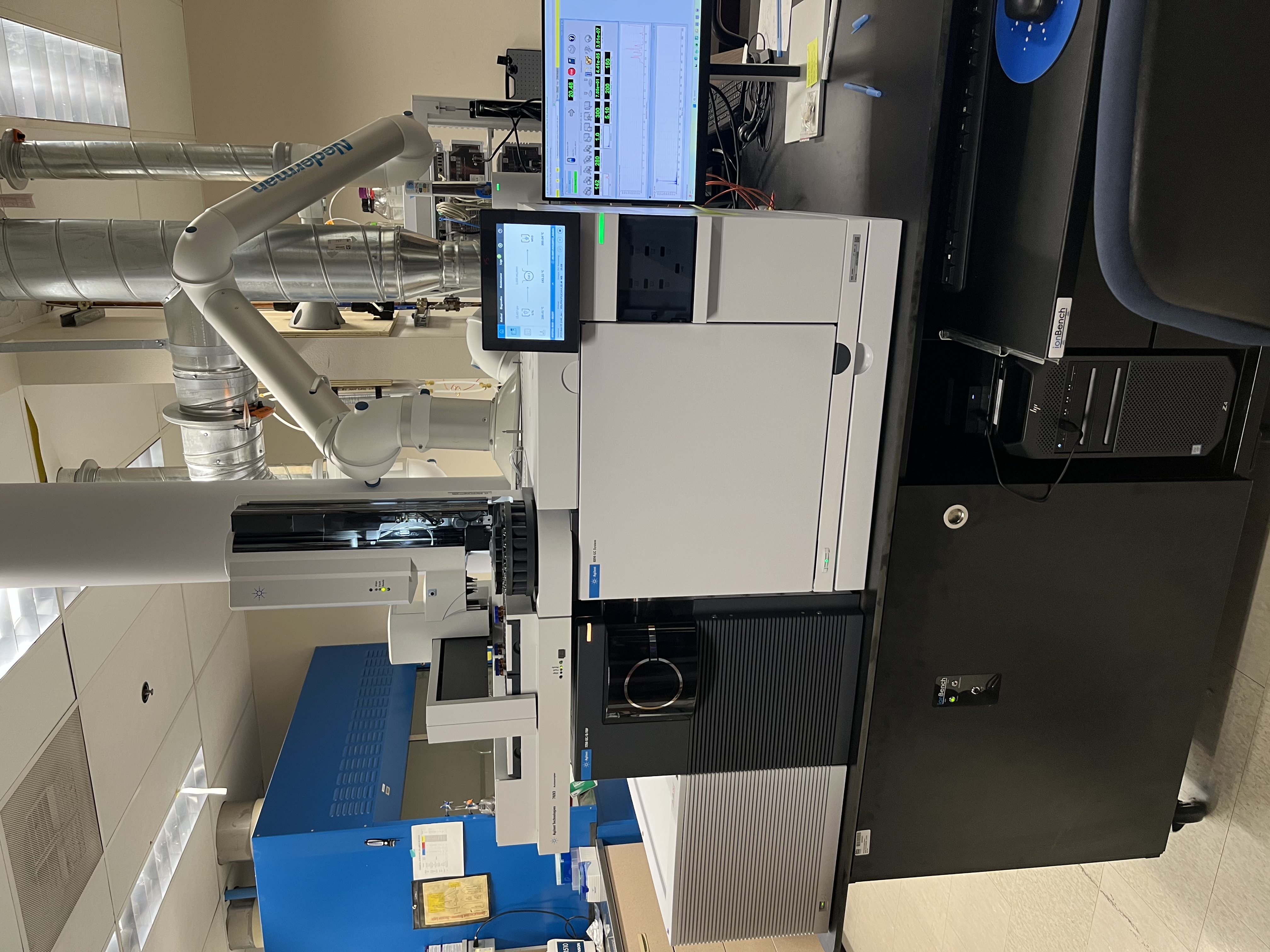
The picture at left shows some of the equipment OSU uses to analyze wastewater. The OSU Wastewater Surveillance Program spans three BSL-2 labs on the Oregon State University Campus and includes voluntary sample collection from almost 40 cities across Oregon.
Other regions in the country have successfully leveraged the strategy to tackle substance use issues. The city of Laredo, Texas, for instance, reduced its overdose rate by 52% from 2023 to 2024 by combining wastewater surveillance with public health and outreach initiatives.
These strategies are designed to help Oregonians at every level: They will equip individuals with information to assess their own risk-taking, and they will help local and state officials make public health decisions.
Find the ADPC's detailed strategy below:
Ensuring Cross-Sector Education
 In spite of the wealth of research demonstrating the benefits of risk reduction and injury prevention strategies, there's still a lack of awareness about these strategies impeding their implementation.
Training and public awareness infrastructure can be better leveraged to ensure communities and decision makers are aware of and supporting comprehensive risk reduction strategies at the local, regional and state level. By fostering a better understanding of risk mitigation strategies, the ADPC intends to facilitate the availability providers offering life saving and injury prevention services across Oregon, using culturally aware methods.
For instance, service providers may not be aware that harms related to alcohol disproportionately affect
Native American and Black communities in Oregon. For this reason, one of the ADPC's key Risk Reduction strategies is to reduce harms related to alcohol and cannabis. This will involve assessing policies that address overconsumption of these regulated substances, and subsequently providing state leadership with policy recommendations. This should ultimately help reduce substance use-related disparities, as well as deaths and prevalence.
Find the ADPC's detailed strategy below: