Watch Week 2 Recording
Panelists cover topics on how to navigate and understand employment options for people with disabilities.
Panelists
Andrew Caruana
Commissioner
Oregon Disabilities Commission
 Andrew was diagnosed with Cerebral Palsy at a young age and has been a lifelong advocate for people with disabilities, specifically working in higher education with collegiate populations, helping them navigate the accommodations process and being a peer mentor. He also advocates more broadly for disability health and employment issues as the Legislative Advocacy Coordinator for the Disability Health Equity and Employment Coalition. He graduated from Willamette University with honors and a bachelor’s degree in philosophy and Disability Studies and is currently pursuing a master’s in clinical Mental Health Counseling, hoping to work with disabled and neurodivergent people.
Cindy DeLashmutt (she/her)
Employment Manager at Living Opportunities
Credentials: OELN, ACRE, CESP, WIPC
 Cindy began her career at Living Opportunities nine years ago in the residential program. After one year, she transitioned to the employment department as a job coach, where she spent the next eight years cultivating strong relationships with employers and the individuals she supports. She actively pursued professional development, earning her OELN certification to provide pre-employment services such as Discovery, Community-Based Work Assessments (CBWAs), and Trial Work Experiences (TWPs).
During the COVID-19 pandemic, Cindy and her team strengthened community connections by expanding their Employment Path program, using it as an opportunity to creatively support both job seekers and employers.
In 2021, Cindy stepped into a management role with a focus on enhancing and expanding Employment Path services. Within her first year, she earned both her CESP and ACRE certifications and later completed Cornell University’s Work Incentive Practitioner Credential (WIPC) in 2024. She has since begun integrating benefits planning supports into the Employment Path model.
In recognition of her leadership and dedication, Cindy was named Manager of the Year at Living Opportunities in 2024 and went on to receive the ORA Works of Heart award.
Outside of work, Cindy enjoys spending time with her family and pets. When she needs to recharge, she finds joy in cooking and gardening.
Jennifer Denley (she/her)
Employment Services Manager
Premier Community Supports
 Jennifer is the Employment Services Manager with Premier Community Supports, as well as a certified Work Incentive Practitioner. Jennifer has a bachelor’s degree in psychology and a master’s degree in education. Jenifer is ACRE certified, is a certified Work Incentive Practitioner, and is a certified trainer of the ODDS Intro to Supportive Employment curriculum.
Jennifer provided support and education for students with disabilities in school and community settings for 12 years prior to coming to work at Premier Community Supports. As the Employment Services Manager, Jennifer provides both Vocational Rehabilitation and ODDS services for individuals interested in exploring employment opportunities in their community.
Jennifer has a passion for working in a teaching role and supporting other people in achieving success, no matter what barriers they may face. Jennifer is dedicated to supporting individuals in the I/DD community reach their goals and achieve success. Jennifer is an active member of her local Roseburg community and enjoys participating in community events that build connection and build success throughout the community. Jennifer enjoys spending time outside gardening, hiking with her French bulldogs, and running races around the state.
Melanie Hartwig (she/her)
Community Liaisons and Supported Employment Advocate
ODHS Office of Developmental Disabilities Services
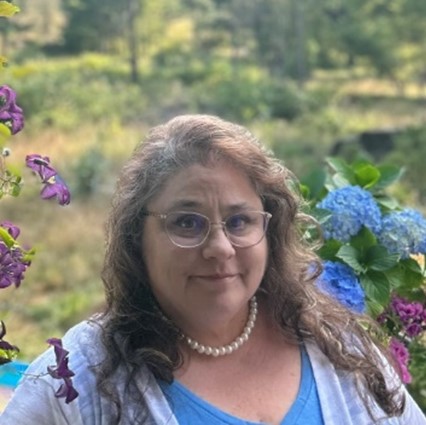 Melanie is a Community Liaisons and Supported Employment advocate for ODHS' Office of Developmental Disabilities Services. Community Liaisons work in collaboration with Self-advocates and their community partners to advance The Employment First Initiative in Oregon and to help ensure civil rights for everyone. Melanie has been working for ODDS for 9 years.
Melanie has a bachelor’s degree in psychology and fine arts with additional master’s level work in Counseling and Art Therapy through Marylhurst University. Career certifications include Supported Employment Specialist, Certified OIS Instructor, Certified Positive Behavior Support Specialist. Special Education Crisis Intervention Specialist.
Recent accomplishments, team development and implementation of the Oregon Supported Employment College Curriculum. Treasure Valley Community College and Umpqua Community College offered this course in 2024 and 2025. Facilitation of the Oregon Supported Employment Community of Practice since 2018.
Volunteer work over the last 15 years includes APSE Board Member. OIS training and certification for families and providers. Development and implementation of Positive Behavior Support Plans along with victim’s advocacy work. Melanie has had the privilege of working with people who experience Intellectual and Developmental Disabilities for 39 years. In that time, they have shared their talents, gifts, and dreams. It has been an honor to work with each person and to assist them to pursue their dreams and live the life they want.
Katie Mijares Thompson
Program Manager
Work Incentives Network
 Katie co-manages the Work Incentives Network (WIN), a benefits planning program under Oregon Department of Human Services. Prior to coming into this role in 2018, Katie provided benefits planning services for several years at an Oregon Center for Independent Living. Her additional experience includes work as a legal assistant at a Social Security disability law firm as a well as a case manager for Oregon Developmental Disability Services. In her free time, Katie spends copious amounts of energy embracing her inner cat lady and exploring the Pacific Northwest.
Kim Randle (she/her)
Operations and Policy Analyst 3
Oregon Department of Human Services
 Kim received her Associate of Arts degree from Umpqua Community College. She has over 20 years of experience with ODHS. Kim started out as an Office Support Specialist and has promoted several times over the years. She enjoys hiking, kayaking, biking…pretty much anything outdoors. Kim also loves spending time with her family, especially her grandkids.
Emily Ross
WIPA Program Manager
Disability Rights Oregon
 Emily is the WIPA Program Manager for Disability Rights Oregon's Plan for Work program. Emily joined the Work Incentive Planning and Assistance (WIPA) Program in 2017 as the WIPA Intake Specialist and within a year made the decision to become a Community Work Incentive Coordinator (CWIC). In 2022, Emily was promoted into her current role as Program Manager where she oversees a team of talented CWICs and continues to provide benefits planning and assistance to Social Security disability-based beneficiaries.
As a former recipient of SSDI and other state-based benefits, Emily uses her own personal experiences to fuel her team’s mission to assist Social Security recipients on their own paths to financial stability and independence.
Emily was born with a genetic eye condition, aniridia, which caused statutory blindness. Throughout her lifetime, she has found solutions to obstacles and barriers that she’s encountered and worked through them with the encouragement and empowerment from her family. Emily holds a bachelor's degree from Willamette University.
Emily joined the National Association of Benefits and Work Incentive Specialists (NABWIS) Board of Directors in December 2024. In her free time, Emily enjoys spending time with family and friends, baking her cranberry upside-down cake in the fall (trust me you have to try it!), playing with her dogs Cooper and Maeve, and finding creative ways to decorate her new home (a great excuse to buy more LEGOs!).
Corinne Schram (she/her)
Supervising Attorney
Disability Rights Oregon
 Corinne joined Disability Rights Oregon in January 2022 and serves as the supervising attorney for Project Independence. This initiative focuses on ensuring access to reasonable accommodations in housing, employment, health care, and public spaces.
Project Independence also oversees the Client Assistance Program (CAP), which helps resolve disputes between Vocational Rehabilitation and its clients. In her role as the CAP representative, Corinne is a member of the State Rehabilitation Council, which advocates as the consumer voice for Oregon’s Vocational Rehabilitation Services.
Before joining Disability Rights Oregon, Corinne spent 10 years practicing employment law and working as a public defender. She holds both her bachelor’s degree and law degree from the University of Arizona.
Originally from Arizona, Corinne enjoys spending time outdoors when the weather is warm, exploring new restaurants, participating in trivia nights, spending time with animals, and connecting with friends and family.
Eric Thompson
Sergeant at Arms, Oregon Self-Advocates Coalition
Mail Clerk, Rogue Credit Union
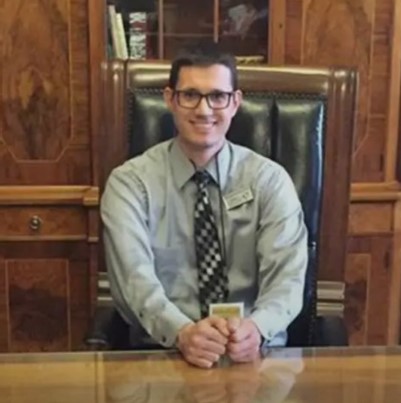 Prior to Eric’s current employment, he worked for 7 years as a mail carrier for Medford City Hall. Eric’s education in Occupational Skills Training has earned him the Occupational Skills Training Certificate.
He is an advocate and currently serving as the Sergeant at Arms in Oregon Self-Advocates Coalition (OSAC). Eric has also participated in the Transition Student Groups from OHSU including Healthcare Project, spoke at an autism awareness gala, at the Oregon Sports Awards Program, and many other advocacy opportunities.
Eric is an athlete. He has run in 21 marathons and even won the 2010 Special Olympics Athlete of the Year.
A few of Eric’s hobbies and interests include being an author, reading books, writing stories, art, and running.
John Valley (he/him/his)
ABLE Savings Account Plans Information
Policy and Outreach Director, Oregon Treasury Savings Network
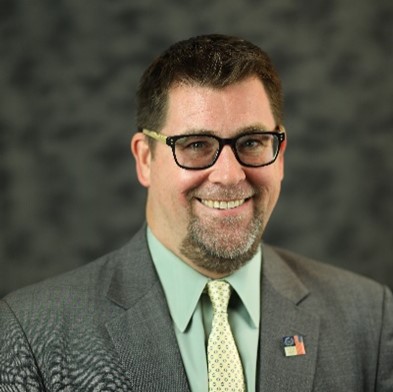 John has been the Policy and Outreach Director for the Oregon Treasury Savings Network since September 2014. John attended George Washington University to receive a Political Science Degree in 1994 and graduated from American University’s Washington College of Law to receive his law degree in 1997. John has been married to Amanda his wife for over 22 years and they have two children, Parker who is 19 and Bridget who is 16. Before working for Oregon Treasury John worked for U.S. Senator Jeff Merkley in his Portland office as his Clackamas County and Washington County field representative. Before working for the Senator, John was the Oregon Government Affairs Director both at the American Heart Association and the American Cancer Society.
Ted Wenk (he/him/his)
Operations Manager
Oregon Bureau of Labor and Industries, Civil Rights Division
 Ted Wenk is an Operations Manager with the State of Oregon Bureau of Labor and Industries (BOLI) Civil Rights Division. Ted attended Michigan State University, graduating with a degree in Communications – emphasis on Research and Statistics; he obtained his Juris Doctor (law) degree from Wayne State University in Detroit Michigan. He worked for legal aid services in Southeast Michigan for several years before locating in Oregon. Ted worked as an attorney for Disability Rights Oregon for 20 years before joining BOLI. Ted is former chair of the Oregon Disabilities Commission, the Oregon State Bar Association Disability Law Section and was a member of the State Rehabilitation Council for 15 years. Ted enjoys forest bathing as well as hiking. He is also presently and perpetually reading several books (the paper kind).