Strengthen regulatory and fiscal strategies that bolster primary prevention services
Primary prevention focuses on preventing people from developing substance use disorders at any point in their lives. Primary prevention services can occur at three levels, as defined by the National Academy of Medicine:
a. Universal Prevention: Strategies that are directed at the entire population. Examples include public awareness and education strategies, universal screening for substance use among youth, and policies regulating the availability and marketing of substances (e.g., pricing, licensing, outlet density restrictions).
b. Selected Prevention: Strategies aimed at populations that are at higher risk, such as youth in foster care, parents of youth impacted by substance use, and communities experiencing systemic barriers to health care, including LGBTQIA+ youth and racialized communities. Examples of selected prevention could include culturally tailored youth development programs, mentorship opportunities, peer support, inclusive spaces for youth to connect with trusted adults, and access to culturally relevant resources.
c. Indicated Prevention: Interventions for individuals showing signs of substance misuse but without a diagnosed disorder. Examples of indicated prevention strategies may include pre-justice engagement programs, community-based intervention programs, youth and family support, or brief intervention/school-based early intervention for youth who self-identify as misusing substances.
With this priority, the Prevention Committee affirms the NAM definition of prevention and primary prevention. As
ADPC Prevention Committee Chair Debby Jones told the Oregon legislature in 2025, “We need that definition set in stone." (Watch her testimony, at right, before the Joint Committee on Addiction and Community Safety Response).
Thanks to the work of prevention advocates like Jones and many others, the legislature passed
HB 3321, which does define prevention, laying the groundwork for the advancement of this strategic priority.
With this priority, the ADPC aims to expand equitable access to primary prevention services for people of all ages, ensuring resources are leveraged to fill service gaps, and supporting the expansion of programs, policies, and strategies that align with best practices in primary prevention.
These efforts will strengthen coordination across systems that support youth and families, ensuring more consistent and aligned prevention delivery. Addressing fiscal and regulatory opportunities will further increase the capacity and sustainability of evidence-based primary prevention strategies.
Find the ADPC's detailed strategy below:
Establish a Prevention Center of Excellence
 Schools, Community-Based Organizations (CBOs), and local leaders are more likely to adopt evidence-based practices when provided with technical assistance, capacity-building resources, culturally specific implementation support, and access to equity-driven data and evaluation expertise that help them respond to emerging needs.
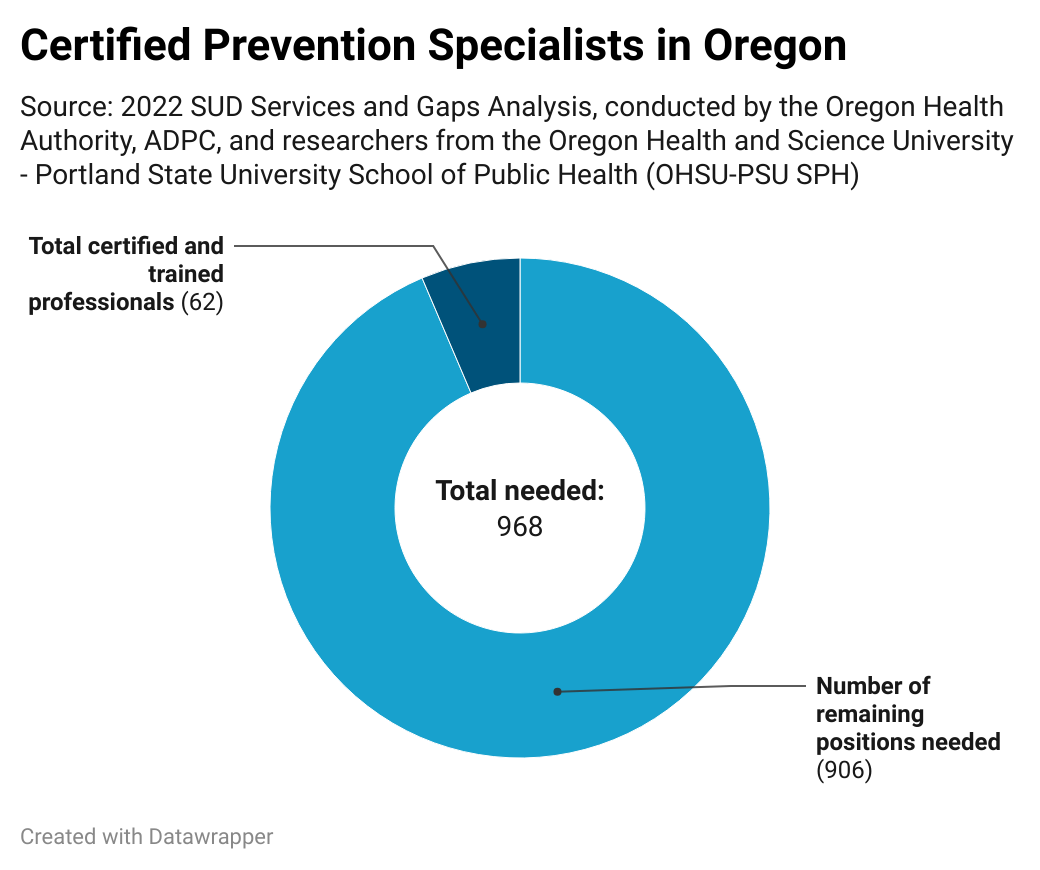
In Oregon, the most recent data suggests there's a significant workforce shortage of Certified Prevention Specialists. A
2022 SUD Services and Gaps Analysis revealed there were just 62 certified and trained Certified Prevention Specialists working in Oregon – with an estimated 906 more positions needed.
Several other states have already created technical assistance and resource centers to provide low-cost support to partners committed to expanding primary prevention services.
The Center of Excellence would serve as a one-stop shop, providing partners with access to data, evaluation tools, training, and culturally responsive technical assistance. These resources would strengthen data-driven decision making, enhance program effectiveness, and support a diverse prevention workforce.
The ADPC views the development of a center as a foundational step needed to expand access to culturally preferred and evidence-based primary prevention services in Oregon while also strengthening the prevention workforce and supporting existing organizations and partners.
Find the ADPC's detailed strategy below:
Expand Access to Primary Prevention Activities in K-12 Schools
Schools play a critical role in promoting youth wellbeing and are at the forefront of mental health promotion, suicide, and substance use prevention efforts.
Despite significant efforts across schools,
60% of Oregon schools do not use evidence-based prevention curricula or programs, according to a statewide analysis conducted by the Lund Report in 2024.
Reducing risk among Oregon youth requires a sustained, comprehensive approach to school-based policies, programs, and practices that promote well-being and enable early intervention for those at heightened risk of substance misuse and its consequences.
The ADPC is committed to collaborating with school districts, state agencies, community partners, and policymakers to increase the availability and use of evidence-based, culturally responsive prevention programs in schools. This includes advocating for sustained funding, technical assistance and professional development opportunities, and accountability structures to ensure every student in Oregon has access to effective, developmentally appropriate prevention services
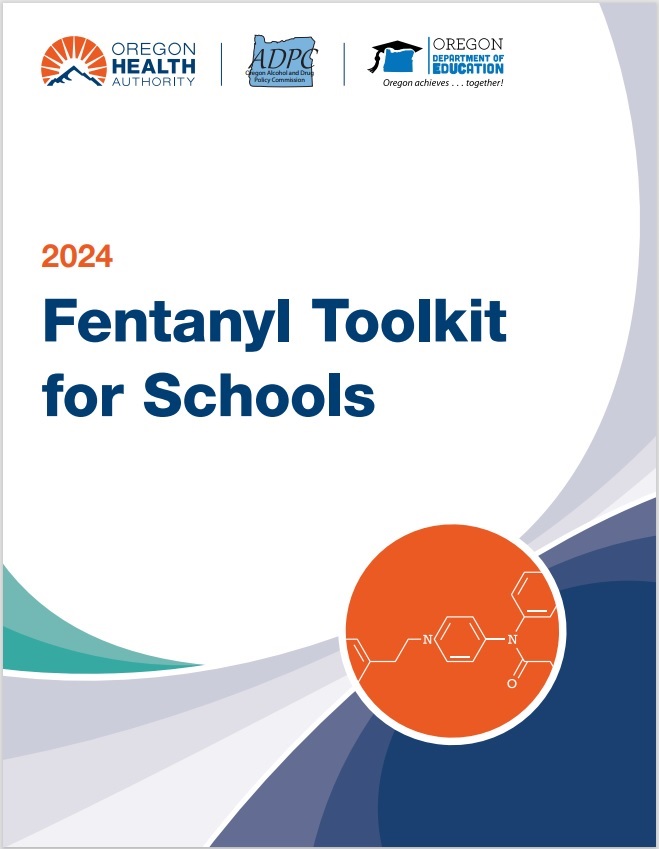
Working with partners across Oregon state agencies, the APDC is already taking steps to deliver these kinds of resources. For instance, In 2024, Oregon Health Authority (OHA) and Oregon Department of Education (ODE) updated the Fentanyl Toolkit for Schools to reflect new resources and recommendations.
The ODE, OHA, and the ADPC co-developed this toolkit in response to fentanyl and opioid use among youth and young adults in Oregon. The toolkit – designed to support school administrators, school staff, and the broader community – provides curricular supplements related to the dangers of fentanyl, counterfeit pills, and other drugs, as well as Oregon's Good Samaritan law.
Find the ADPC's detailed strategy below:
Expand Access to Primary Prevention Programs and Strategies on College Campuses
 While prevention efforts often center on K–12 settings, colleges, community colleges and other postsecondary education and training institutions are uniquely positioned to address the needs of young adults navigating increased independence, stress, and exposure to substance use.
In parallel with the growth of collegiate recovery programs, strengthening prevention on campuses can reduce risk, delay initiation, and support healthier transitions into adulthood.
Alexis Drakatos, a member of the Prevention Committee, serves as the Assistant Director of Substance Misuse Prevention and Education at the University of Oregon. She
spoke with the ADPC about the unique challenges and opportunities for substance use education that exist on college campuses and the power of leveraging peer-led conversations.
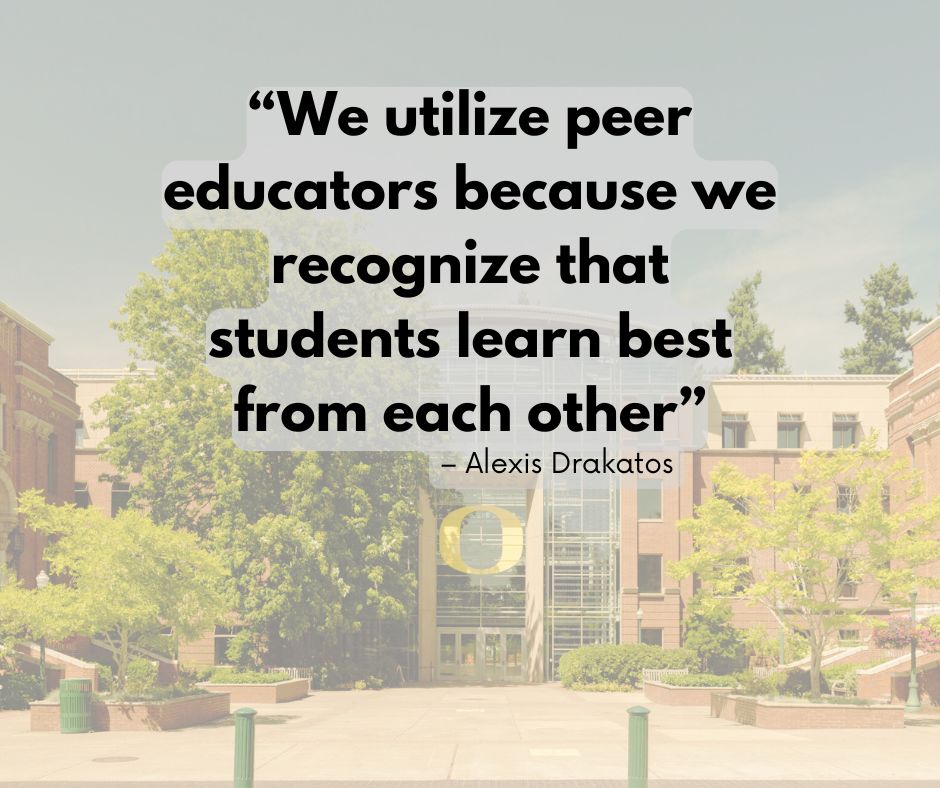
“We utilize peer educators because we recognize that students learn best from each other, and I think students are also more willing to engage with each other, especially when we're having conversations around substances, consent and things like that," she said.
The ADPC will work to increase access to evidence-based and culturally responsive prevention strategies across Oregon's diverse postsecondary institutions, supporting student well-being and long-term success.
Find the ADPC's detailed strategy below:
Expand Community-based Prevention Efforts Focused on Children, Youth, Transition-aged Youth/ Young Adults, and Families

Prevention programs focus on strengthening family relationships and enhancing social-emotional well-being for children, youth, and families. While K-12 schools and colleges play a key role, a holistic, community-driven approach is essential to addressing known root causes, reducing risk, and promoting lifelong well-being.
This was demonstrated by
Andares, the Albany-based organization that
engaged the Latinx community in Linn County in discussions surrounding substance use on behalf of the ADPC. Andares used art and other activities to elicit perspectives and points of view from both youth and adults.
One participant made the collage at left, commenting that the image is "very relatable to our lives because we all reach a point where we're offered alcohol or substances to celebrate something and we feel the pressure to receive or want to consume just for the sake of it."
Supporting families from prenatal stages through early childhood is critical, as these practices reduce long-term substance use risk. Prevention strategies must address the needs of transition-aged youth, including those in the workforce, ensuring comprehensive support beyond traditional academic settings. At the same time, prevention efforts must recognize and respond to broader environmental factors, including the ease of access to alcohol and the increasing normalization and widespread marketing of marijuana and other substances.
The ADPC will collaborate with local leaders, youth, and family-serving organizations to build prevention-prepared communities. This includes developing comprehensive strategies to address root causes, expanding evidence-based knowledge of substance use disorders, and promoting actions that reduce youth exposure and access to substances.
Find the ADPC's detailed strategy below: