Oregon State Flag An official website of the State of Oregon »

State of the System - Safety


Safety

Every traveler should be able to get to their destination safely. A safe system requires safe people, vehicles, speeds, and roads. ODOT is responsible for the safety of all users on or along the state highway system. We work to make our system safer in three main ways:

  • Engineering: Building and maintaining safe roads, intersections and other infrastructure. 
  • Education: Teaching all road users how to use our system safely, and how to keep each other safe.
  • Partnerships: Working with law enforcement and emergency medical services.  

We also manage funding programs like the All-Roads Transportation Safety (ARTS) Program and Safe Routes to School, which support safety investments on ODOT, county, and city roads. Despite the collective efforts of transportation agencies across Oregon, the state transportation system has become less safe over the last several years.

The number of fatal and serious injury crashes on Oregon’s roads has risen in recent years

While fatality rates have decreased in recent years, serious injuries from crashes have risen steeply, particulary on local roads near or at intersections. 

  • In 2022, 603 people were killed in crashes.
    • 342 on ODOT Roads, 261 on local roads.
    • Oregon ranked 28th in the U.S. for annual traffic deaths in 2022.
  • In 2023, 587 people were killed in crashes.
    • 327 on ODOT roads, 260 on local roads.
  • Initial 2024 data shows that 539 people were killed in crashes.
    • 304 on ODOT roads, 235 on local roads. 
  • Vulnerable users like pedestrians, bicyclists and motorcyclists are often involved in these types of crashes.
  • Knowing this, we focus investments on improvements like roundabouts and pedestrian crossings.

Our ARTS program targets roadways with the highest potential for safety improvements statewide, but today's funding level cannot keep pace with these trends. 
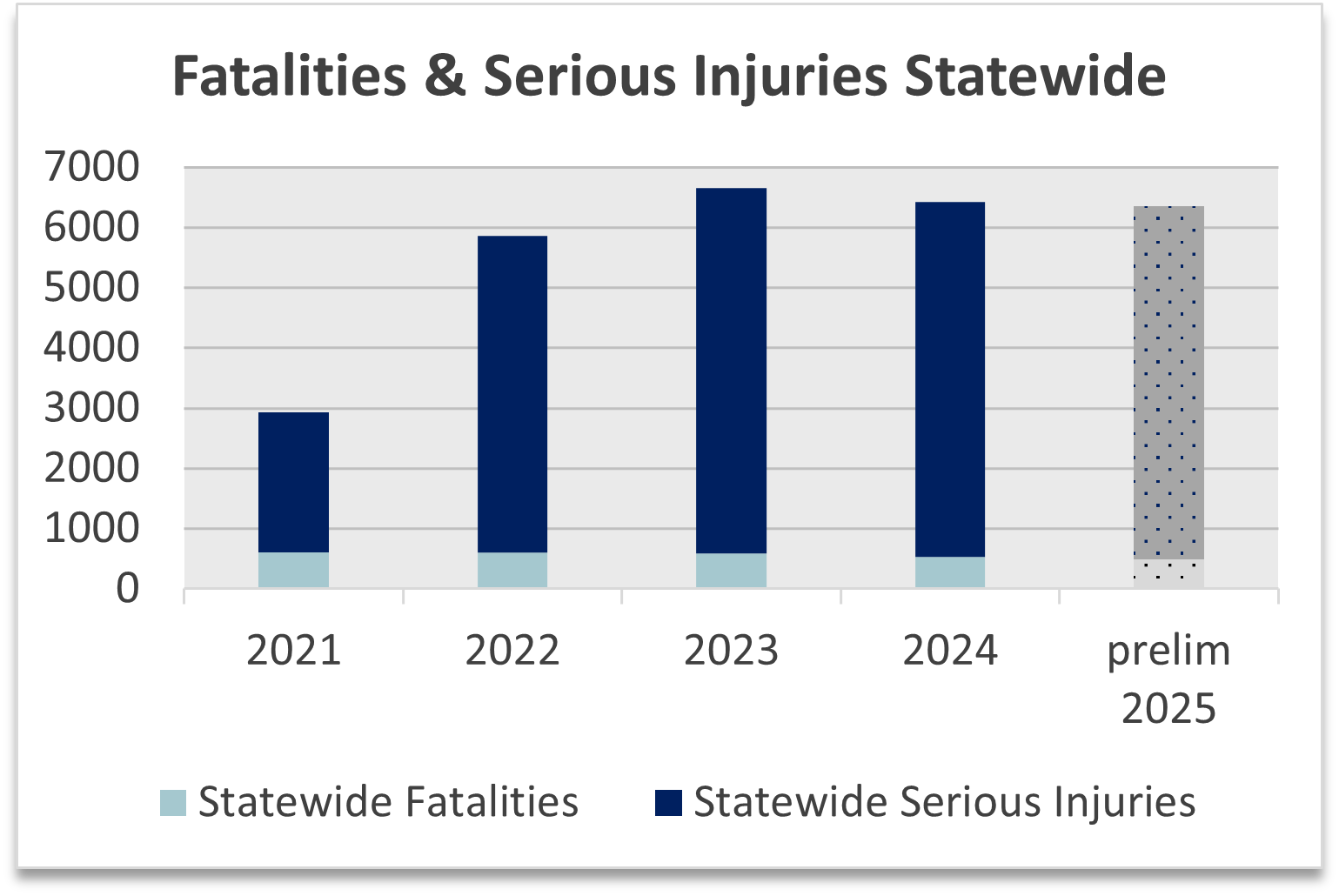

 A stacked column chart showing an increase in recent years of fatal and serious injury crashes on ODOT and local roads. 2024 preliminary data do indicate a slight decrease from 3631 in 2023 to 3419 in 2024.
Source: ODOT Crash Data Systems (CDS): Updated 06/2025

Statewide, all types of crashes have increased

47% of all crashes involve distraction, impairment or speeding.

Most crashes in urban areas occur at intersections.

  • Many involve people who walk or bike.

Most crashes in rural areas occur when a vehicle crosses the centerline or runs off the road.

  • We make system wide investments in rumble strips to help reduce these types of crashes, however roads in poor condition can't get this important safety treatment.
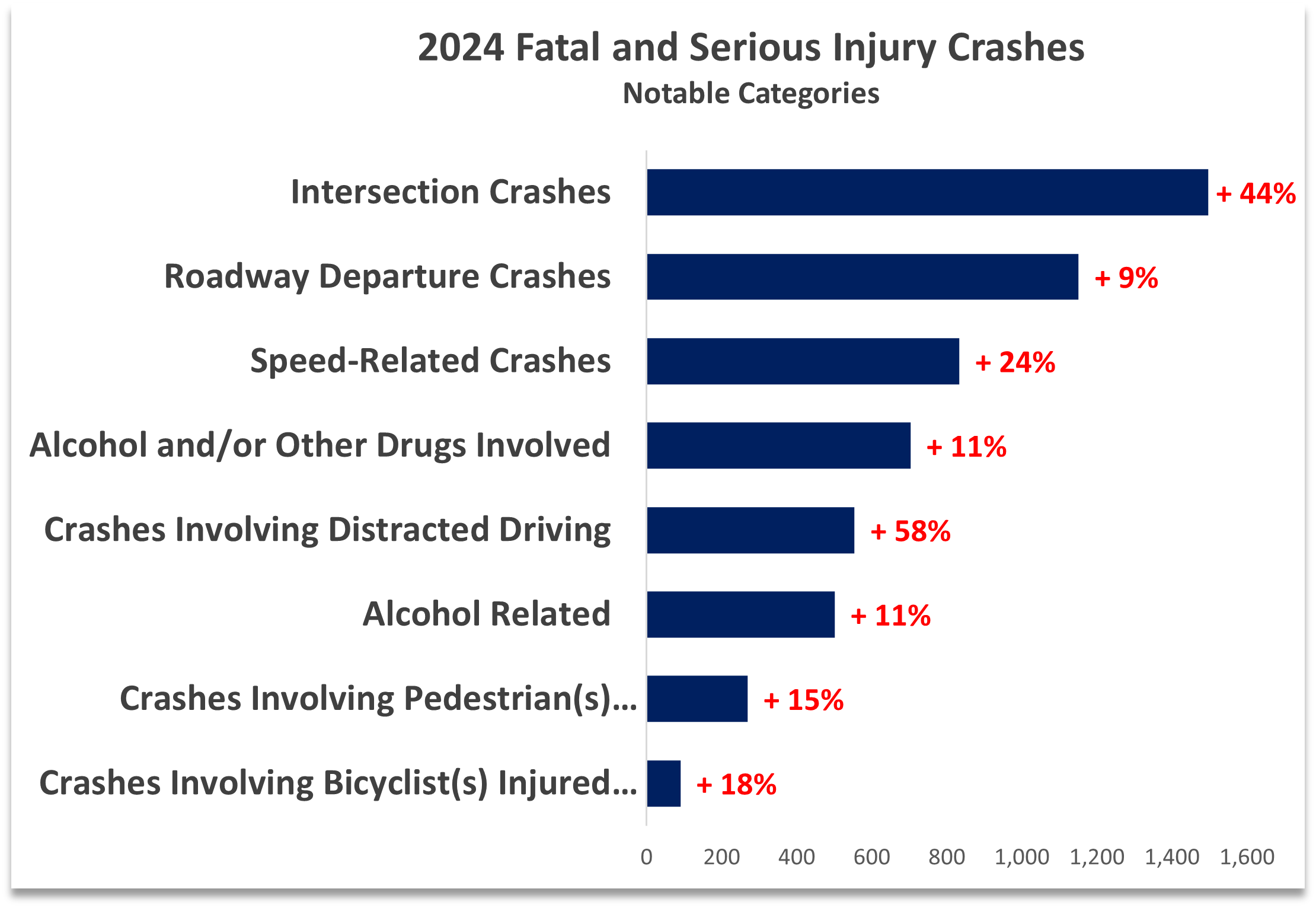
A bar chart that shows 2023 fatal and serious injury crashes in 2023 and percent increases compared to the previous 5-year average for each category. (2018-2022) Notable categories include a 66% increase in intersection crashes, a 37% increase in roadway departure crashes, a 46% increase in speed-related crashes, a 28% increase in alcohol and/or other drugs involved crashes, a 29% increase in alcohol related crashes, a 67% increase in crashes involving distracted driving, a 31% increase in crashes involving pedestrian(s) injured or killed, and a 60% increase in crashes involving bicyclist(s) injured or killed.

Click the chart to see more categories and data.

2023 Comparison of Fatal and Serious Injury Crashes by Category
 Comparison to 2018-2022 average 
Source: ODOT Crash Data System (CDS)
 

Pedestrian safety continues to be a serious issue

  • There were 1.5 times more pedestrians killed in 2022 than the previous five-year average (126 deaths vs 80 deaths).
    • We have created the Vulnerable User Crash Response program to investigate vulnerable user fatalities on state highways. 
    • We are now able to track these traffic deaths in real-time and report them on our Initial Fatal Crash Information Viewer
  • Our research finds that in Oregon, Black and Indigenous populations are more likely to be killed walking on Oregon’s roads or sidewalks than White people. This is consistent with national trends.
    • Recognizing these disparities, we are updating how we identify and select projects to close identified gaps. 

Work Zone deaths are on the rise
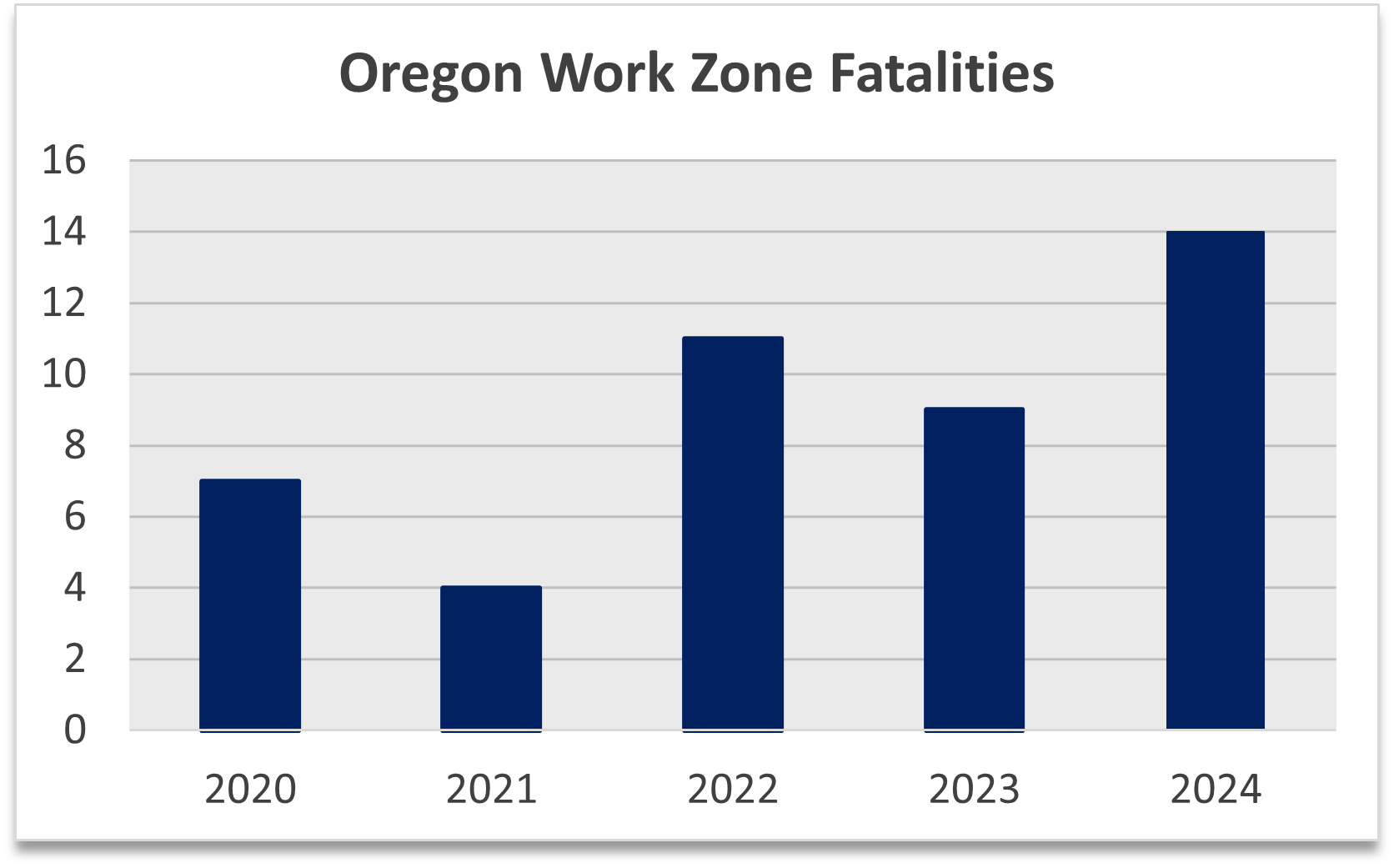
A column chart that shows the number of fatalities from crashes within work zones from 2019 through 2023. In 2019 there were 4 fatalities, in 2020 there were 7 fatalities, in 2021 there were 4 fatalities, in 2022 there were 11 fatalities, and in 2023 there were 9 fatalities. Work Zone Fatalities - Source: ODOT Crash Data System (CDS) Updated 06/2025


The number of workers killed on Oregon’s roadways has increased in recent years. This is consistent with national trends.


We are exploring automated enforcement and other tools to keep workers safe and reduce work zone fatalities.

Screening freight truck drivers and inspecting their vehicles reduce crash rates
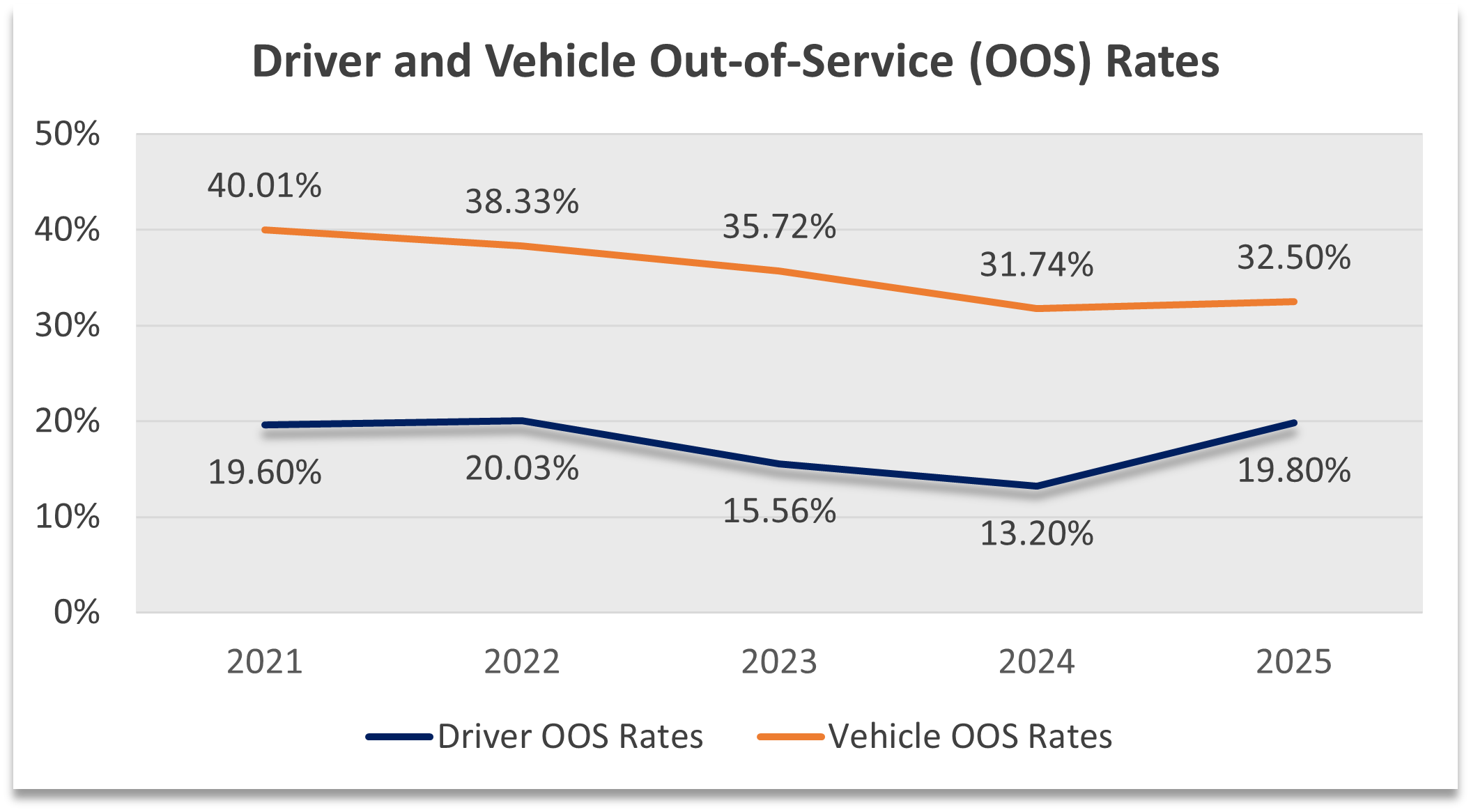
ODOT screened and inspected over 25,000 drivers and vehicles in 2023

  • On I-205, for example, vehicle inspections and driver screenings reduced truck-at-fault crashes by 60% and reduced the severity of crashes. 
  • We partner with law enforcement agencies to focus inspections and screenings on some of Oregon’s highest truck-at-fault crash areas.

  • In 2021, 40% of inspected vehicles were taken out of service due to mechanical or operational issues, and 20% of drivers were taken out of service until issues were resolved. 
  • Since that time, the "Out-of-Service" rates have decreased, meaning there are more safer drivers and vehicles on Oregon’s roads.

A line chart showing driver and vehicle out of service rates between 2020 and 2024. In 2023 vehicle out of service rate was 31.74% and driver out of service rate was 13.20%. 

Source: ODOT Commerce & Compliance Division, Updated 04/2025


Wildlife crossings are needed to reduce wildlife-vehicle collisions

  • Between 2020 and 2024 there were 26,650 wildlife-vehicle collisions reported, but these numbers are conservative.
  • Wildlife crossings can help animals get to where they need to go without crossing roads, which reduces the chances of vehicle-wildlife collisions. 
    • In 2012 ODOT and our partners constructed the first dedicated wildlife undercrossing at Lava Butte along US 97. After monitoring between 2013 and 2018, cameras detected more that 32 species including black bear, cougar, elk, marmot, raccoon, coyote, deer, skunk, rabbit, turkey and bobcat. 
    • Wildlife-vehicle collisions have been reduced 86 percent along this four mile corridor.  
  • ODOT and our partners are ready to move on additional projects to create more wildlife crossings, but currently there is no dedicated funding for that work.


Visit our Transportation Safety Office website to learn more
Transportation Safety Office Button - click to visitCrash Statistics Reports Link Button - click to visit 

To submit a question or comment:

Ask ODOT button - Click to visit the Ask ODOT form 
 

Strategic Action Plan Progress Report

Save Lives

2024-2028 Strategic Actions

2024 - Initiate a new Vulnerable User Crash Response program to implement proven bicycle and pedestrian safety countermeasures quickly where crashes are happening.

2025 - Identify opportunities to utilize technology to enforce speeds in work zones and make overall conditions safer across the system.

2025 - Engage partners and legislators in development of legislative and policy options to increase safety, focused on automated enforcement, alcohol and drug impairment laws, driver education, and motorcycle and micromobility safety.

2026 - Continue to improve both the timeliness of crash data for all modes, including people walking, biking and rolling and the utilization of that data to inform safety actions.

2027 - Identify corridors where strategic investments focusing on proven safety countermeasures and a Safe System approach can be implemented, maintained and most impactful.


2025 Efforts 

Strategic Action Plan

  • Finalize Work Zone Safety and Implementation Plan.
  • Development of a new crash data system.
  • Identify Great Streets 2.0 project locations.
  • Construct projects identified through the Vulnerable User Crash Response Program.
  • Develop Road Safety Audit guidance. 

Other Ongoing Efforts

  • Collaborating with cities and counties to advance speed management initiatives.
  • Advocating for increasing automated enforcement.