Back to Winter Travel Tips Home
Key Takeaways
- To avoid having your vehicle towed, make sure to keep up on regular maintenance and check the weather before leaving home. Successful trips happen when you and your vehicle are prepared for the road and weather ahead.
- If you have to abandon your vehicle on the highway, make sure to pull as far off the road as possible so that you are not blocking traffic and leave a note with your contact information. Vehicles that are a hazard will be towed immediately. Leaving a note on your vehicle does not prevent it from being towed if it is a hazard.
Answers to Common Questions
Q. What classifies as an abandoned vehicle?
A. A vehicle is considered abandoned when no person is physically with the vehicle. When ODOT or OSP see a vehicle with nobody around, they will put a tag on the vehicle with the time it was found abandoned, and handle according to the procedures identified below.
Q. What is the difference between hazard and non-hazard tows?
A. A non-hazard tow is for a vehicle that is on the shoulder of the road and not interfering with traffic. These vehicles are tagged giving notice to the owner that the vehicle needs to be removed within 24-hours or it will be towed. Tagging the vehicle with this green tag starts a 24-hour clock. The 24-hour timeframe is determined by legislation. After 24 hours, the agency who tagged the vehicle may have it towed.
If the vehicle is deemed a hazard, it can be towed immediately. If the vehicle is determined to be in one of these hazard categories, crews put a white tag on the vehicle and mark the reason for deeming it a hazard. The tagging agency then calls for an immediate “hazard” tow and will sometimes stay with the vehicle until the tow arrives to warn traffic that it is a hazard. Per legislation, both ODOT and law enforcement are able to deem a vehicle a hazard if it fits into one or multiple of these categories:
- Any vehicle that is parked so that any part of the vehicle extends within the paved portion of the travel lane.
- Any vehicle that is parked so that any part of the vehicle extends within the highway shoulder or bicycle lane…
- Of any freeway within the city limits of any city in this state at any time if the vehicle has a gross vehicle weight of 26,000 pounds or less
- Of any freeway within the city limits of any city in this state during the hours of 7 a.m. to 9 a.m. and 4 p.m. to 6 p.m. if the vehicle has a gross vehicle weight of more than 26,000 pounds
- Of any freeway within 1,000 feet of the area where a freeway exit or entrance ramp meets the freeway; or
- Of any highway during or into the period between sunset and sunrise if the vehicle presents a clear danger.
Q. What is different during winter storms or extreme weather?
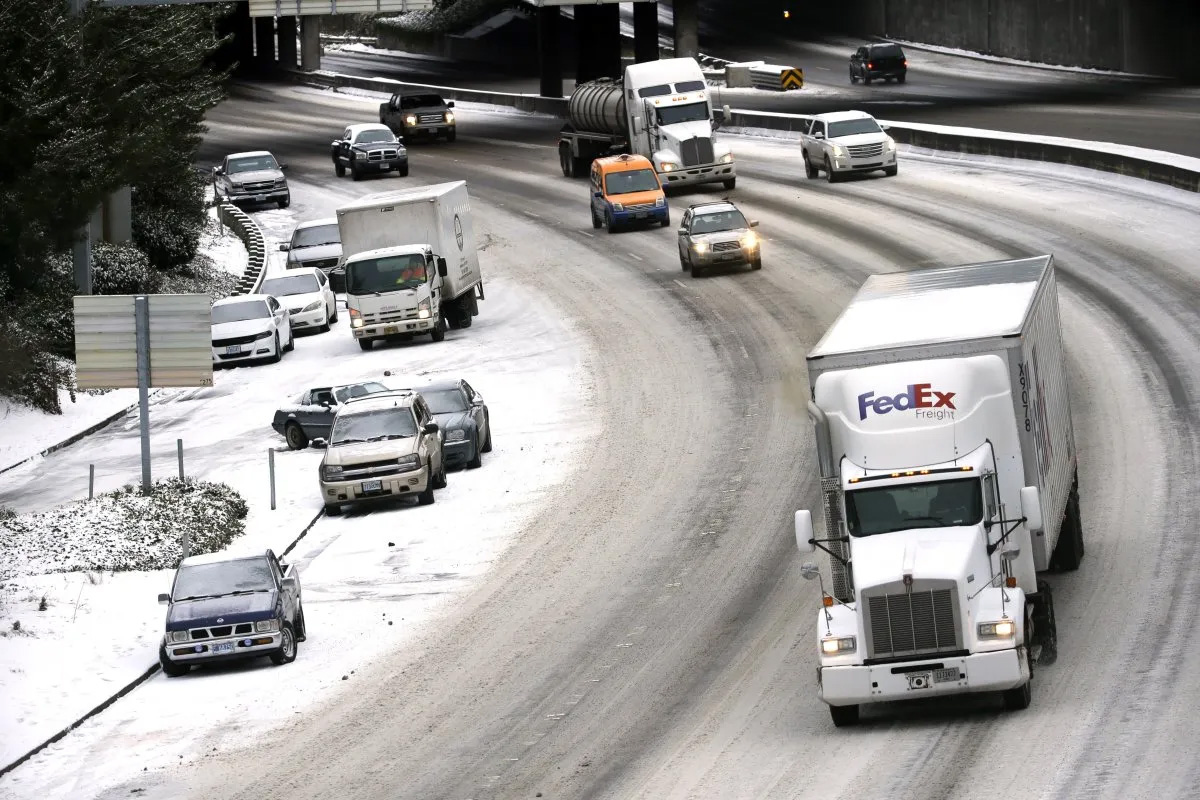
A. When severe weather hits, if there are not enough tows, and vehicles start blocking the road, crews may push, pull, or drag a vehicle off the road. When the tow companies arrive, they will essentially triage all of the abandoned vehicles and go in order of the ones with the highest impact or that pose the biggest hazard. Portland metro/Multnomah County has a different process listed below.
Q. What if my vehicle is damaged after I abandoned it?
A. ODOT is not liable for damage of a vehicle if it is abandoned. Any damage costs or liability would be the responsibility of the vehicle owner.
Q. What tow company will be used?
A. Dispatch has a rotation of tow companies in our computer system. Based on location, we use the computer-generated rotation and go with the next company on the list. This removes the chance for one company to have a preference or to receive more calls than another. Sometimes in rural areas there is only one tow in the rotation. We use the same list and tow rotation as OSP.
Q. How can I find out where my car was towed to?
A.People can call ODOT or OSP if their abandoned vehicle was towed. Dispatchers can look up the tow event in their computer system. If OSP responded and they called the tow, we refer people to OSP. If ODOT called for the tow, we will have notes on the company that responded and can share the tow companies contact information. In addition to taking calls, we also send out a certified mail letter to the registered owner of the vehicle notifying them of the tow. We use license plate information to determine who the owner is. This letter is sent out within 24 hours after the vehicle was towed and includes information on when and why the vehicle was towed.
Q. Who pays for the tow?
A. All costs of towing a vehicle and storing it at the tow companies lot are the responsibility of the registered vehicle owner. ODOT is not responsible for costs unless the owner can prove that we towed the vehicle when there was not a need, or the 24-hour non-hazard time period had not passed. If the owner challenges the reason or timing of the tow, this starts a legal inquiry process. When a vehicle is towed, the tow company charges the owner for the fee of towing and storing the vehicle. In Oregon there is no cap on what tow companies can charge for either of these fees.
Q. Is it against the law to leave a vehicle on or next to the highway?
A. Yes. We need the right of way and the highway to stay clear for everyone’s safety. If you abandon your vehicle on the highway and a crash occurs involving that vehicle, you can be liable.
Q. What are the differences to the towing process in the Portland-metro area?
A. Unlike the rest of the state, Multnomah County uses a program called AutoReturn to coordinate towing efforts and to store tow information. ODOT, Portland police and Portland parking all use this program. Instead of OSP and ODOT maintaining tow rotations and notifying vehicle owners, auto-return handles this process.
ODOT has created a protocol for the Portland metro area called call Snow-Tow. When our Emergency Operations Center (EOC) manager gets reports that many people are abandoning cars, they can activate this protocol. They can activate city wide or just for a specific corridor. Auto-return and law enforcement are also notified that ODOT has activated this protocol.
The snow-tow protocol means that when ODOT incident responders show up to an abandoned vehicle, they call in the plate to dispatch but they don’t sit and wait for each tow to arrive. They will take a red ribbon, tie it to the driver side of the abandoned vehicle meaning it has become part of the snow-tow protocol, and then they will move to the next vehicle. They do this to expedite the process of removing abandoned vehicles.
Instead of assigning one tow company to one car, a company will be assigned to a corridor, and all of the vehicles in that corridor. When tows arrive, they work left to right to tow the abandoned vehicles. The highest priority is clearing the furthest left lane so the snowplows can clear snow and traffic can start to move. Because we try to push the snow off to the shoulder, we always start on the furthest left lane and work our way right to the shoulder.
As soon as the tow company gets the vehicle to their yard, they call it in to AutoReturn so that it’s in the system and can be claimed.
If you have abandoned your vehicle in Portland and it was towed, you can go through the AutoReturn website.
Q. What advice does ODOT have for people?
A. Know before you go, and make sure you and your vehicle are prepared for your journey, especially if you decide to travel in severe weather. If you have to abandon your vehicle, try to pull as far off the road and road shoulder as possible. Leave a note with contact information and when you plan to return. It’s also helpful to leave your hazard lights on, your hood up, and/or put out warning triangles or cones to signal that you plan to return to the vehicle. It’s also a good idea to call law enforcement or ODOT dispatch to let them know that the vehicle has been abandoned, why, and when the owner plans to return. Again, doing these things does not guarantee we won’t remove the vehicle, but it will make it easier for us to contact you in this event.