Driving in the Rain
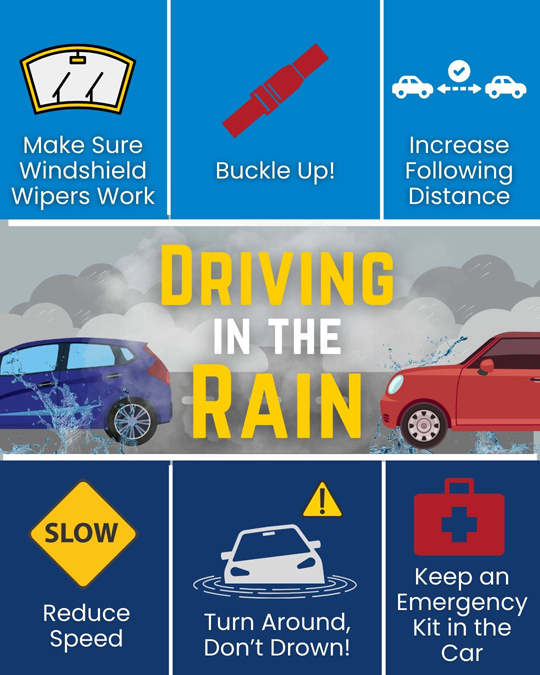
According to the National Highway Traffic Safety Administration, combining darkness and rain dramatically increases the risk of crashes due to severely reduced visibility, slick roads, and heightened driver fatigue.
Important things to consider are:
Stopping distance on wet or rainy pavement is 1.5 to 2 times longer than the distance required on dry pavement.
To improve visibility always keep your low-beam headlights turned on so other drivers can see you. Inspect and replace worn wiper blades and clean the glass both inside and out to prevent streaks and glare.
Hydroplaning occurs when water on the road (as little as 1/10 of an inch) builds up faster than your tires can push it away, lifting your car off the pavement and causing you to lose steering and braking control.
Go to
Tripcheck.com for road current information about road conditions, closures or delays.
More information is available on the following websites:
Get your car seat checked by a certified technician

School Bus Safety Reminder
Statistically, school buses are the safest way to transport school children. Yet more injuries and fatalities occur outside of or near a school bus because a motorist has failed to obey the stop-arm warning or to follow local traffic laws.
Flashing amber lights warn traffic that the bus is about to stop on the road to load or unload children. Prepare to stop. When the red lights flash, stop before reaching the bus and remain stopped until the driver turns off the flashing red lights. For more information visit the
NHTSA School Bus Safety website.
Pedestrian Safety - Oregonians Stand Out

Oregonians Stand Out - Full Size PDF
As the season changes from summer to fall, it is now dark later in the morning and getting dark earlier in the evening. Remember to look out for people walking, riding and rolling. Most pedestrian fatalities occur at dusk or at night when visibility is low.
Help prevent these tragedies by following these tips:
As a driver:
- Be extra vigilant at dusk - it's harder to see pedestrians.
- Watch out for pedestrians at corners and mid-block marked, or unmarked crosswalks.
- Slow down and look for movement in the dark.
As a pedestrian:
- Avoid wearing dark clothing that blends into your surroundings.
- Wear bright colors during the day and light, or reflective gear at night.
- Carry a flashlight or use a headlamp when it's dark, rainy. foggy or cloudy.
- Together, we can make Oregon's streets safer for everyone.
Check out our safe driving pedestrian PSA:
English /
Spanish
Safety Belts - Buckle Up Every Time.

Somebody Loves You - Buckle up, Every time billboard - Full Size PDF
Help Shape Transportation Safety in Oregon
Join us in making Oregon's roadways safer for everyone.
Your Voice Matters!
Participate in our quick survey to share your insights. Your feedback will directly contribute to improving safety measures in your community and beyond.
Your thoughts are important to our mission of enhancing transportation safety statewide. Please note: All other questions or comments that are not related specifically to safety education and outreach should be directed to
Ask ODOT (or 1-888-ASK-ODOT).
Act Now!
Have More to Say?