Terms to know
“Chains” include link chains, cable chains or any other device that attaches to the wheel, vehicle or outside of the tire that is specifically designed to increase traction on ice and snow.
“Traction tires” are studded tires, retractable studded tires or other tires that meet tire industry standards for use in severe snow conditions.
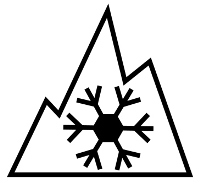
Tires designated by the tire industry as suitable for use in severe snow conditions are marked with a symbol of a three-peaked mountain and a snowflake on the sidewall.
“Retractable studded tires” are tires with embedded studs that retract to at or below the wear bar of the tire and project not less than .04 inch beyond the tread surface of the tire when extended.
Studded tires” are tires with studs that are made of a rigid material that wears at the same rate as the tire tread. The studs must extend at least .04 inch but not more than .06 inch beyond the tread surface. Studded tires are only legal for use in Oregon from Nov. 1 through March 31.
Using Chains
Cars and light trucks must use chains on one tire on each side of the primary drive axle. Chains also must be on one tire on each side of one axle of a trailer or vehicle being towed if it is equipped with a brake that operates while in tow. Traction tires may be used in place of chains when the car or light truck is rated less than 10,000 GVW and is not towing or being towed.
In most winter conditions, four-wheel and all-wheel-drive vehicles are exempt from the requirement to use chains if the vehicle is not towing, has an unloaded weight of 6,500 pounds or less, is carrying chains, has mud and snow, all-weather radial or traction tires on all its wheels, is being operated to provide power to both the front and rear wheels, and is being operated in a safe manner.
Conditional Road Closures
In very bad winter road conditions, all vehicles may be required to use chains regardless of the type of vehicle or type of tires being used. This is known as a “conditional road closure.” A conditional road closure may occur on any of Oregon’s highways.
Drivers who disobey the signs requiring that chains or traction tires be carried are subject to a class C traffic violation. Not using chains or traction tires when signs indicate they are required could result in a specific fine traffic violation with an $800 fine. More information about Oregon’s chain and traction tire laws is available on TripCheck.com.