Why this matters
Updating the IT classification structure ensures state agencies can attract, retain, and grow a modern IT workforce that aligns with current industry roles and emerging technologies.
History
The Information Systems Specialist (ISS) classification series was originally developed in 1997. Over time, the series has become outdated as technology, security requirements, and workforce expectations evolved. The series no longer accurately reflects the work in state agencies and throughout Enterprise Information Services.
Scope of the study
The Information Systems Specialist (ISS) classification series, through the process of this study, will be modernized to include domains and disciplines. Agencies are completing a workforce survey to provide high-level information that will inform us which domains and disciplines should be created that meet the State's business need. In this process, we will also learn about the different levels of work.
The goal is to create structures that ensure clearer career pathways and align state IT roles with industry practices. This modernization effort ultimately laid the foundation for the IT Redesign Study.
Out of scope
The CHRO recently worked on the Business Analyst and Business Systems Analyst classifications. The Oregon Management Project (TOMP) created the Information Technology management classifications in 2022. Positions that have duties in more than one domain or discipline (aka hybrid or mixed duty jobs).
Study process
The IT Classification Study follows a phased approach to ensure accurate, consistent, and equitable results. These phases will be applied to all domains and disciplines.
Phase 1: Data Collection and Analysis
- Gather job surveys, position descriptions, organizational charts, and employee/manager input.
- Review market data and industry standards of practice.
Phase 2: Specification Development
- Conduct job analysis to understand duties, responsibilities, skills, and competencies.
- Develop draft class concepts, typical essential functions, knowledge and skills, supervision received, interactions with others, and levels.
- Hold SME and IT management focus groups to validate role expectations.
- Align roles with industry standards and career pathways.
- Validate drafts with agency HR partners, IT leadership, and labor partners.
Phase 3: Job Evaluation
- Complete job evaluations (Central Evaluation Team (CET) presentations and evaluations).
- Draft allocation guidance.
Who will be involved
This comprehensive class study will engage Chief Information Officers, Human Resources leadership, Human Resources analysts, labor partners, and subject matter experts (employees and management).
Impacts to employees
The updated IT classification structure will include multiple domains and disciplines, each with its own level progression. Because the new structure consolidates some ISS levels and reorganizes roles, a simple crosswalk from current ISS levels to new levels may not be possible. CHRO will develop and provide allocation guidance to HR analysts and post all materials on the CHRO Class Study website.

Under ORS 240.190, employees will not experience any reduction in wages as a result of this study.
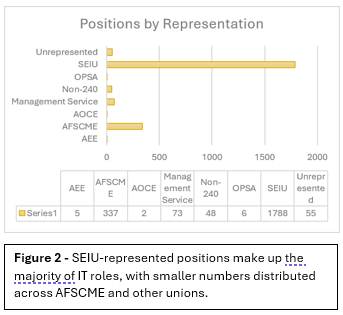
To support accurate classification decisions, managers should ensure position descriptions clearly reflect the actual work performed, including duties, decision-making authority, level of responsibility, and reference materials or resources used. This is especially important for positions where roles tend to be more distinct. Managers are responsible for keeping position descriptions current, accurate, and signed by appointing authorities.
Authority of CHRO to conduct study
The IT Classification Study is authorized under ORS 240.190, which directs the State of Oregon to maintain equity between the value of work and the state's compensation and classification structures. The statute requires a neutral, objective method for determining comparability, prioritizes equity for undervalued classifications, and ensures no employee's wages are reduced in the process. This authority guides CHRO's responsibility to review and modernize classification structures, including the IT series.
For additional information:
https://www.oregon.gov/das/HR/Pages/Classification-studies.aspx
Email: CHRO.ClassStudies@das.oregon.gov
Frequently Asked Questions