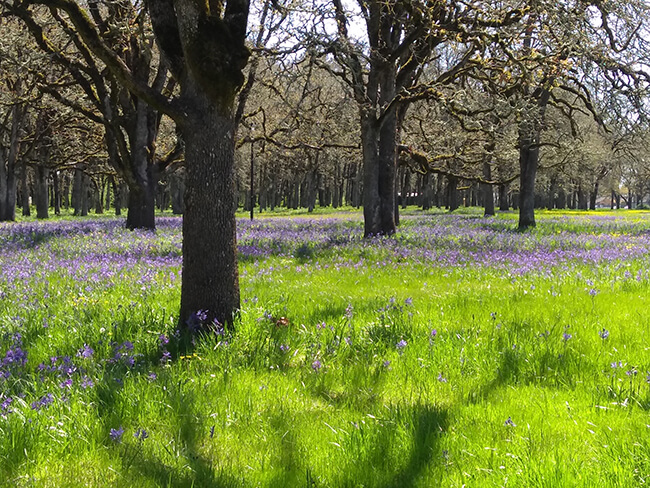
 Wetlands, streams, rivers, lakes, and other waters provide important
benefits to Oregon's environment and communities. Because of this, they are protected under Oregon's removal-fill laws. Most work that adds or removes materials in wetlands or waters
requires a removal-fill permit, even on private land. Before beginning work, it's important to determine whether wetlands or waters are on your project site.
Wetlands, streams, rivers, lakes, and other waters provide important
benefits to Oregon's environment and communities. Because of this, they are protected under Oregon's removal-fill laws. Most work that adds or removes materials in wetlands or waters
requires a removal-fill permit, even on private land. Before beginning work, it's important to determine whether wetlands or waters are on your project site.
While waters are often easy to recognize, wetlands can be much harder to identify. Some wetlands are only wet during part of the year, while others have been altered by past activities such as farming and may no longer look like a typical wetland. Wetlands can include tidal marshes along the coast, seasonal prairie wetlands in the valleys, and fens and bogs along the coast and in the mountains.
Follow the strategies below to help you determine whether wetlands or waters may be located on a property:
Look for Wetlands or Waters on the Property
First, look around your property as you may be able to observe wetlands or waters firsthand. Indicators can include natural drainage channels, ground that is soggy at certain times of the year, seeps on or near the base of slopes, depressions in the ground where water pools, or plants that typically are found in wetlands.
See a checklist in this wetland fact sheet for more information.
Check Maps and Wetland Inventories
Maps and inventories available through DSL can help you identify whether there are potential waters, wetlands, or places with soil characteristic of wetlands on a site.
Please note, these tools are for planning purposes only. They display the approximate location and represent the conditions that exist at the date they were published and are subject to change. There may be unmapped wetlands and other waters present that are subject to regulation.
Request a Preliminary Determination from DSL
As staff capacity allows, DSL wetland ecologists can provide an offsite determination at no cost. By using existing maps, aerial photographs, and other information, our staff are usually able to determine if there are wetlands or waters on your property without visiting onsite.
DSL staff are only available to help determine if a wetland or waters
may be present. If they are detected on the property, you will need to work with a qualified wetland consultant to do a full onsite investigation and delineate the boundaries of these resources.
Wetland determinations from other agencies do not meet DSL requirements, and relying on them could accidentally lead to a removal-fill violation.
Other local or federal agencies may offer services with similar names, but their wetland determinations are created for their own programs or zoning requirements. A DSL wetland determination is the only determination that can confirm whether Waters of the State are present in Oregon and whether the State Removal Fill Law applies.
Hire a Wetland Consultant to Delineate Wetland Boundaries
If exact wetland or waters boundaries are needed to develop a project site, the next step is to work with a wetland consultant to identify where they're located. Delineating boundaries helps determine where a project could potentially impact a resource.
Consultants assess the boundaries of wetlands or waters on a site, submit delineation reports to DSL, and can help guide clients through the removal-fill permitting process.
While DSL cannot recommend a specific consultant, we recommend reviewing:
It's normal to interview several consultants before finding someone who is a good fit for your project. DSL recommends hiring someone who:
- Has an educational background in science or ecology, with wetland-specific training, including wetland delineations.
- Has a good working relationship with DSL and proven track record of approved delineation reports.
- Has a certification as a “Professional Wetland Scientist" or as a “Wetland Professional in Training" by the Society of Wetland Scientists' Professional Certification Program.
It may be helpful to ask a consultant about:
- Their knowledge of local, state, and federal permit requirements and processes, as well as development standards and options.
- Their experience in assisting applicants with
Oregon's removal-fill permitting process.
- An estimate of how much it will cost to complete an approved delineation report and/or complete a removal-fill permit application.
Submit a Delineation Report to DSL
When wetlands or waters are located in your planned project location, a delineation report needs to be submitted to DSL for review and approval. The report combines site mapping with other information, like site history and characteristics, and is prepared and submitted by your wetland consultants who assess the site.
Plan well in advance of when you want to start your project. Wetland delineation reviews typically take several months from submission to approval.
To submit a delineation report, consultants can visit this page for forms, fees, instructions, and other resources.
DSL staff will review completed reports within 120 days of receipt and respond with an approval, a request for additional information, a site visit confirmation, or a rejection.
If the report is approved, DSL will issue an approval letter. Approved delineations are generally
valid for five years, unless site changes require revision.
The approval letter will also describe the criteria under which a removal-fill permit is required. First, work with your consultant or builder to see if the project can be designed to avoid or minimize impacts to the identified wetlands and waters. If impacts must occur, then the next step is to work with the consultant to submit a removal-fill permit application.
Learn more about removal-fill permits.