Overview - Crash Data System
ODOT's statewide Crash Data System is an essential tool that supports transportation safety decisions across Oregon. We're modernizing the system to provide faster access to high‑quality crash data, improve reporting, and ensure Oregon meets future federal and state requirements.
Why replace the Current Crash Data System?
Data about vehicle crashes, including when and where they occur, injuries, weather conditions, and much more play a critical role in transportation decision-making across Oregon. Crash data helps identify and solve engineering problems, provides information to the public and insights for researchers, and guides investments in roadway and safety improvements. Crash data is critical for designing safer roads, prioritizing engineering improvements, and supporting federal and state safety reporting.
Our current Crash Data System is built on old technology, is cumbersome to use, and hard to update for modern needs and requirements. These issues have made it harder for us to manage data efficiently and serve our data customers.
To overcome these challenges, we're replacing the existing Crash Data System with a modern, reliable application built to meet today's needs and adapt to future ones. The new system will:
- Make the data faster to process and easier to access.
- Connect more directly with DMV driver and vehicle records.
- Allow law enforcement and drivers to submit crash reports electronically.
- Comply with updated federal crash reporting guidelines.
Updating the Crash Data System is federal grant funded and part of a larger system upgrade called the Statewide Electronic Data Collection Program.
Benefits of the new Crash Data System
Faster data availability
- Data partners receive traffic crash data faster for analysis and reporting.
- Better data exchange between ODOT, Oregon State Police, and DMV.
- Citizens and law enforcement may submit crash report forms online.
Improved access to crash data
- Self‑service access options will make data easier to obtain.
- Online reporting tools provide geo-located crash data and safety insights to plan improvements and reduce crashes.
Easier to use
- Search, view, and pull crash data directly through modern, user-friendly tools.
- Automated workflows and reduced duplicate data entry.
Enhanced reporting and data integration
- Modern dashboards and improved visualization tools.
- Crash, driver, and vehicle data connected in a single platform.
Enhanced security and scalability
- Stronger protections for sensitive data.
- Infrastructure designed to support future updates and capabilities.
Crash Data System project status
Completed actions to date
- Contract negotiations with the selected vendor.
- Reporting requirements for the system.
- Project management documents and planning materials.
- System security plan.
What’s happening now
- Key documents are under review with the Department of Administrative Services.
- Enterprise Information Services approval process underway.
- Final contract sign‑off with the new system provider, Citian, is anticipated soon.
- Stakeholder analysis and engagement sessions are in progress.
Upcoming milestones
- System requirements gathering.
- Interface definition and design.
- Building, testing, and phased rollout of the new Crash Data System in early 2028.
Schedule
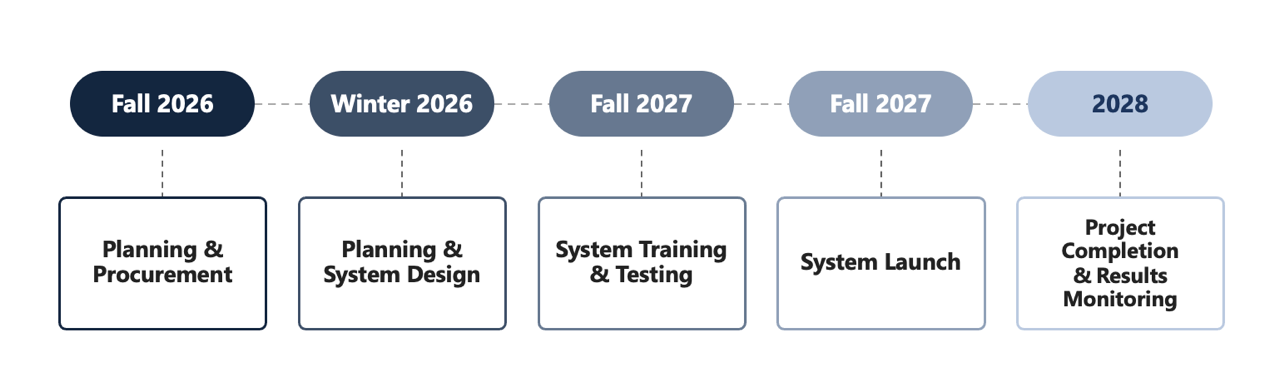
Timeline
| Item |
|---|
| Fall 2026 | Planning and procurement |
| Winter 2026 | Planning and system design |
| Fall 2027 | System training and testing |
| Fall 2027 | System launch |
2028
| Project completion and results monitoring
|
About the Crash Analysis and Reporting Unit
The Crash Analysis and Reporting Unit is responsible for Oregon's official motor vehicle crash data. When a crash happens, law enforcement and drivers submit crash report forms, The unit reviews those reports, verifies the details, and enters the information into the state's Crash Data System. This includes crashes on city streets, county roads, and state highways.
ODOT Crash Analysis and Reporting Unit processes 50,000–60,000 crash reports each year and maintains historical records going back to 1985. The unit shares this crash data with a broad range of users inside and outside ODOT, including law enforcement, local governments, researchers, safety advocates, planners, legislators, the media and members of the public who need accurate crash information for their work or research.
Additional resources
One-page project summary
Contacts
Curious about the project? Reach out to the project team at cdsr@odot.oregon.gov for more information.
News media:
Matt Noble, (503) 779-9868.
Frequently asked questions
Why is ODOT updating the Crash Data System?
The current system is outdated, difficult to maintain, and does not integrate well with other systems. The new system ensures faster, more accurate, and more accessible traffic crash data that will inform decisions to create a safer transportation system for everyone. The new system is supported by many programming experts and is designed to scale with future needs.
Will there be any disruption to crash data access during the project update?
No. The current system will continue to run while we transition to the new platform. Regular crash data collection, reporting, and analysis activities will not be disrupted.
Will crash data be easier for the public to access?
Yes. The new system includes self‑service tools designed to make accessing crash information more straightforward. Users will see improved dashboards and quicker turnaround times. The new system will make the data easier to access and faster to process, connect more directly with DMV driver and vehicle records, and will allow law enforcement and drivers to submit crash reports electronically.
Will training be provided before the new system launches?
Yes, training material will be provided before the new system launches. The learning tools may range from a brief instructional guide to simple demonstrations to help users run queries and navigate key features.
How will data quality improve?
The new system will have better workflows that reduce manual data entry (reducing errors) and better data validation tools. From the user perspective, this will produce more consistent and reliable crash records.
Who will have access to the new system?
All users will be able to access the online system and explore crash data through modern dashboards, standard reports, and custom query and analytic tools designed for public use.
How long will the project take?
Design, configuration, and implementation run from late 2026 through early- to mid-2028. Ongoing maintenance and support from new system provider will continue after it’s up and running.
How will the system replacement affect engineers and safety analysts?
It will make their experience better. Data analysts, planners, and engineers will have access to modern tools, improved data integration, and more options to query crash data for custom reports. This supports better decision‑making and allows for more effective safety analysis.
Will the new system include historical data?
Yes. Data will be migrated into the new platform, and historical crash data will continue to be maintained and accessible.
How will this replacement impact reporting to federal agencies?
The new system is designed to meet current federal reporting standards, improve data accuracy, and strengthen ODOT’s ability to meet deadlines for national safety reporting.