Expanding Recovery Community Centers (RCCs) and Recovery Spaces
The ADPC believes that expanding access to RCCs and recovery spaces is critical to providing appropriate long-term levels of recovery support -- no matter where someone may be on the continuum of care.
The Recovery Committee defines RCCs as peer-run drop-in centers for people in recovery from substance use disorder (SUD). The centers maintain daily community-based and peer-run recovery supportive activities and one-on-one peer support services provided without the need for participants to pay.
RCCs are a powerful, effective tool because, as RCC leader Stephanie Mendenhall and others doing Recovery work will tell you, “The opposite of addiction is connection." Mendenhall is the founder and executive director of the
Recovery Café, an RCC in Medford. As of mid-2025, there were officially 335 people enrolled in the Café's “recovery circles." (Watch the video at right for an introduction to the Medford Recovery Café)
The Recovery Café model – offering a place for meals, coffee and activities, along with a commitment to recovery meetings – began in Seattle about two decades ago. The model works: According to Recovery Café Seattle's 2024 Annual Report, 98% of Recovery Café members said in a survey that the program increased their desire to be in recovery. Among members who said they had a challenge with drug use, 87% said the Café helped prevent a recurrence of use.
The ADPC will work with local, regional, and statewide leaders to implement a strategy that ensures the sustainability of the RCCs while focusing on financing, service array, geographic distribution, culturally responsive practices, and applying the latest evidence of effectiveness in the field.
Find the ADPC's detailed strategy below:
Ensuring Adequate Recovery Housing
Recovery housing can play a vital role in the lives of people seeking support and recovery from substance use disorder. Dustin Blake is an Oregonian who knows this well: When he moved into an Oxford Recovery House, he was coming straight from prison, unsure of where life would take him next. He told the ADPC:
“The group of guys in my very first Oxford House, they welcomed me with open arms. They helped me fill my cupboards with food, gave me clothes because I had nothing. Taught me what recovery looked like and how it could be a fun situation from where I was coming from."
(Watch the video at left for a tour of the Tillamook Oxford House, which opened in 2025.)
As an Outreach Worker for Oxford House, Dustin has directly helped dozens of other Oregonians get back on their feet.
Oxford Houses are residences that employ the “Oxford House Model" – they serve as a shared residence where people in recovery from alcohol and other substance use can live together and support each other in a substance-free environment. The Oxford House Model is supported by Oxford House, Inc., a separate national nonprofit organization that provides technical assistance and training to these homes.
There are more than 240 Oxford Houses in Oregon and more than 4,000 nationwide. There's a lot because the model works: More than 80% of Oxford House residents remain sober for the long term, according to Oxford House, Inc. There's a significant body of research documenting the effectiveness of the Oxford House Model, since – unlike recovery programs that prioritize anonymity – Oxford Houses have allowed researchers to track their residents' time in recovery. In one study that followed 897 residents in 219 Oxford Houses across the country for 27 months, the DePaul University research found that only 13% relapsed.
Part of the ADPC's plan is to promote a regulatory framework that ensures recovery residences operate under nationally recognized standards. Oxford House, Inc. is one of two nationally-recognized recovery residence certifying organizations, along with the National Alliance for Recovery Residences (NARR). By certifying that recovery houses meet the standards set by these organizations, we can ensure Oregonians receive the support they need. The certification process can weed out bad actors who may provide subpar services, abuse their authority, or attempt to commit financial fraud.
Meanwhile, ensuring adequate recovery housing is vital for Oregonians seeking support across a wide range of substance use disorder (SUD) acuity levels -- especially for certain populations like individuals with higher mental health needs. This point surfaced during
the ADPC's community engagement sessions in Coos County and around the state.
"Individuals with higher mental health needs are often turned away from recovery housing due to the level of care needed, insufficient resources, and provider availability," one person in Coos County said. The ADPC is committed to developing clear and recognized definitions for distinct recovery housing categories that align with varying levels of care needs. The definitions for these recovery housing categories will be essential to securing state funding, establishing consistent service standards, and expanding supportive recovery housing models statewide.
Find the ADPC's detailed strategy below:
Standardizing Peer Recovery Support Services (PRSS)
Establishing a strong and sustainable peer recovery support services (PRSS) system requires clear definitions, core competencies, responsive peer supervision, and alignment across health care and recovery settings. The ADPC and Recovery Committee also understand and appreciate of the power and encouragement that can be achieved through people in recovery becoming trained as peer specialists.
Insights from carceral settings reinforced that understanding. During the ADPC's engagement with youth and adults in custody, several participants highlighted the critical role of peer-led recovery supports and skill-building opportunities, like
Lifers Unlimited and
CRM mentorship. These opportunities, they said, help create authentic support networks behind the walls. Yet they also described systemic constraints, such as inconsistent access to services and a lack of certification pathways.
For instance,
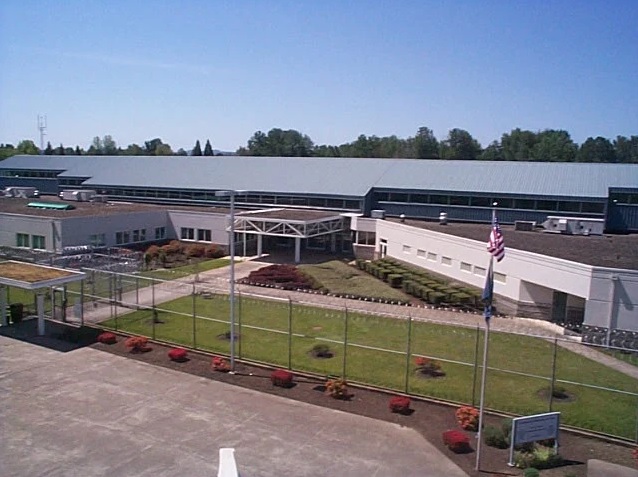
Columbia River Correctional Institution (pictured at left) is a minimum security Department of Corrections facility meant to support people with one year remaining on their sentence and transition them back to community. On July 3, 2025, the ADPC held focus groups with the two Substance Use treatment units that exist with CRCI: The Alterative to Incarceration Program (AIP) and the Co-Occurring Diagnosis Program. Within AIP, program participants voiced their desire for more opportunities to support their peers. One listening session participant suggested that “teach backs" or other opportunities to support peers would be meaningful. The ADPC recognizes a potential opportunity here for peer mentorship training.
The ADPC will collaborate with stakeholders to create a unified approach to building a PRSS system that ensures consistency, effectiveness, and long-term integration of PRSS into Oregon's recovery community and health care systems.
Find the ADPC's detailed strategy below:
Supporting Recovery Friendly Workplaces
 A Recovery Friendly Workplace is a business or organization that has adopted a plan to create a culture more accepting of people in recovery or seeking to learn more on recovery. Other states have created such programs. Several states across the US have adopted initiatives to support Recovery Friendly Workplaces, and the ADPC intends to do the same for Oregon.
According to the 2023 National Survey of Drug Use and Health, 17.9% of people aged 18 and older have a substance use disorder (SUD), and nearly two-thirds are employed. Meanwhile,
the National RFW Institutereports that
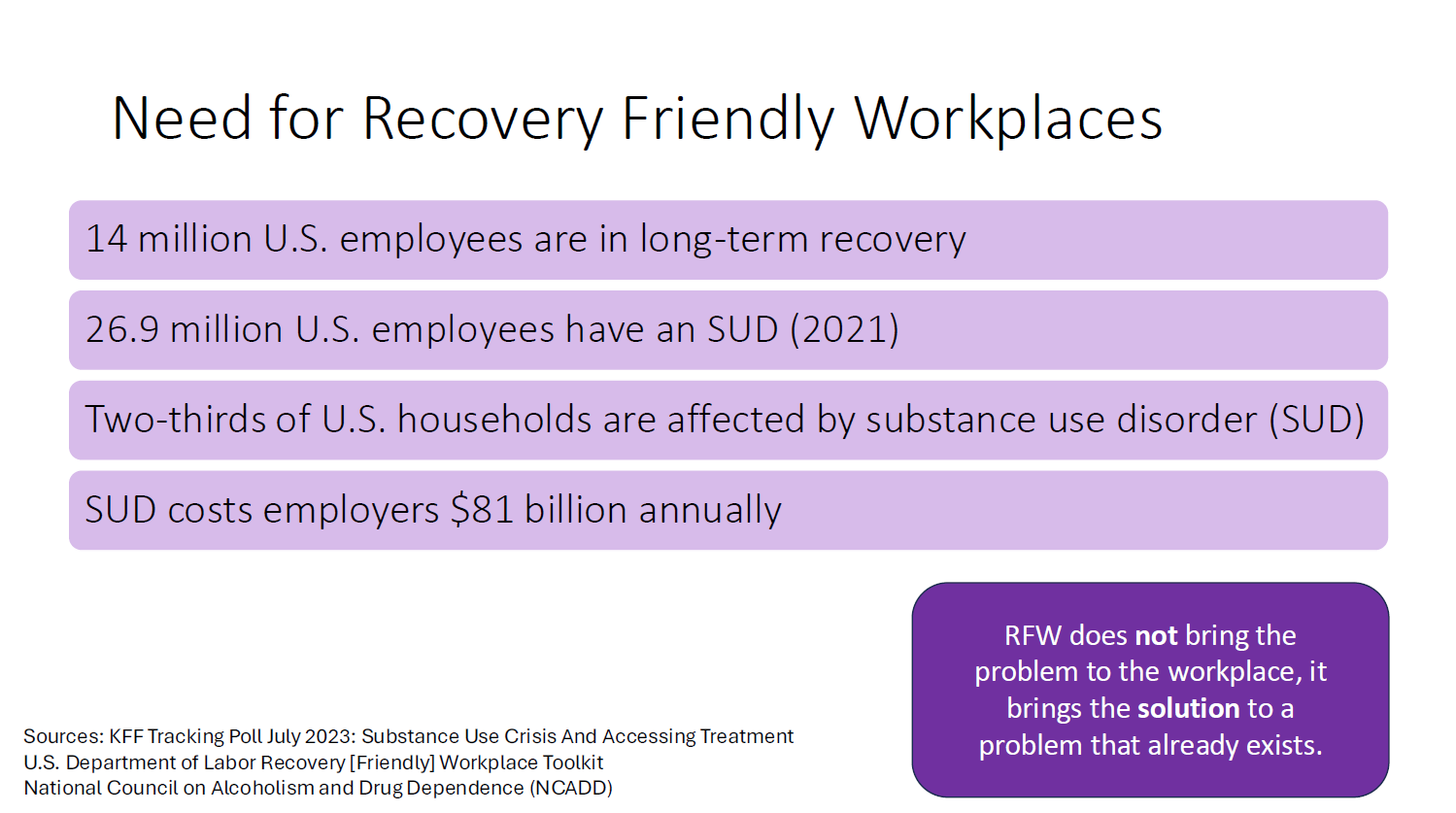
14 million US employees working full time are in long term recovery with an additional
27 million US employees with an active SUD. As
noted by the Oregon Health & Science University's Institute of Occupational Health Sciences, “This makes SUD not only a public health challenge but also a workplace concern that touches all industries, organizations, and communities."
The slide at right, presented by the National Recovery Friendly Workplace Institute's Eliza Zarka during an OHSU webinar, explains the need for Recovery Friendly Workplaces.
According to the National RFW Institute, untreated SUD costs employers $81 billion annually, making this issue not only a moral imperative but a financial issue as well.
The ADPC aims to collaborate with the OHSU, as well as chambers, non-profits and the business community, to generate interest in Recovery Friendly Workplaces and establish tools to support them.
Find the ADPC's detailed strategy below: