Global temperatures are rising largely due to pollution from human activities. Climate disruption already affects Oregonians. Temperatures are rising and extreme weather events are growing more frequent and severe. Snowpack is declining. Summer streamflow is lowering. Wildfire activity is increasing. Sea level is rising. Coastal waters are acidifying. The future is likely to have:
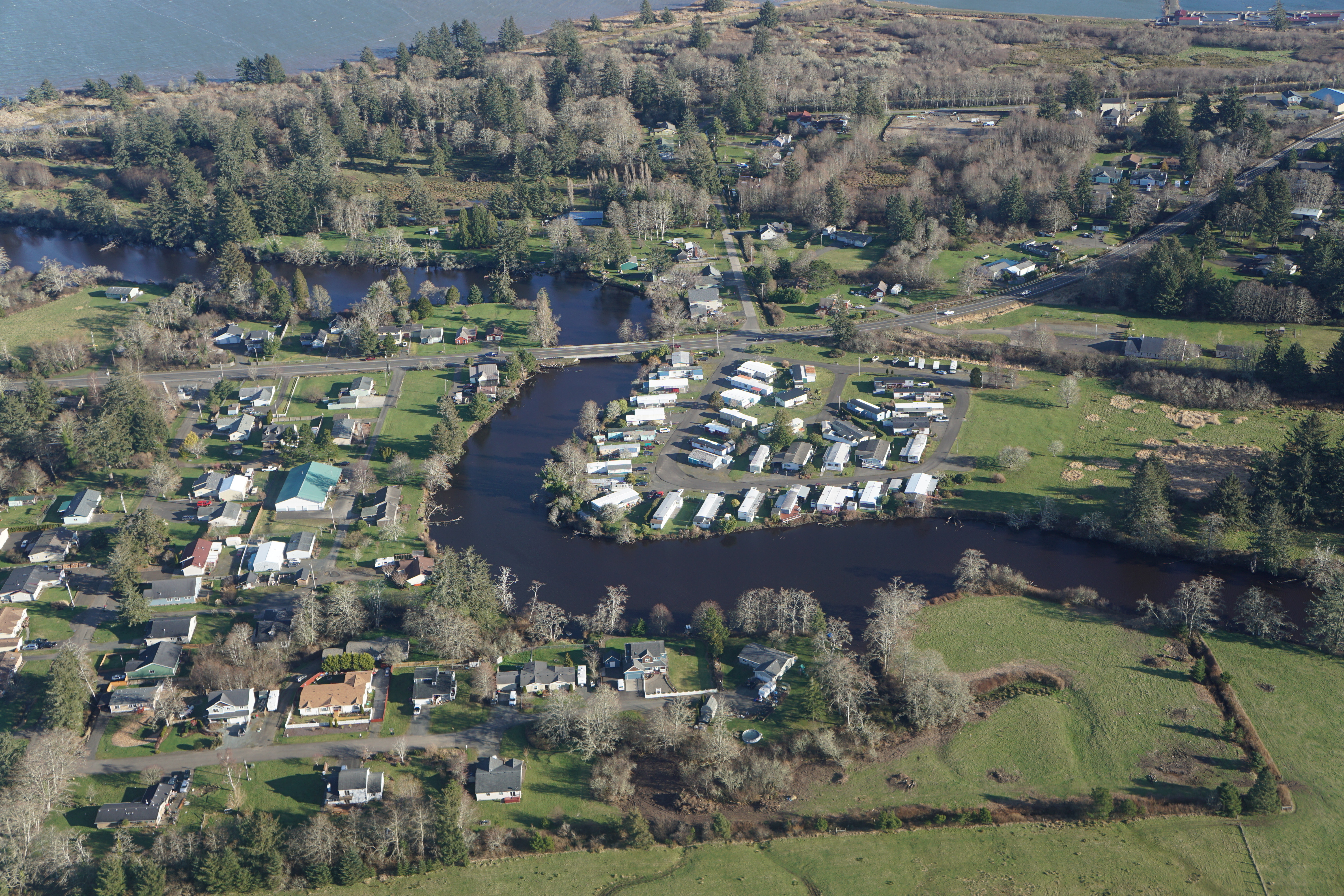
- More summer droughts
- More frequent extreme heat days
- More frequent and longer forest fires
- Greater vulnerability of forests to insects and disease
- Water resource conflicts
- Longer and more intense allergy seasons
- Decreased water quality and quantity
- More stress on fish, including salmon
- Higher sea levels and more erosion in coastal areas
- More frequent and harmful floods
These conditions impact public safety, increase health risks, threaten energy reliability, damage infrastructure, and disrupt key industries like agriculture and fishing. (Sources:
Oregon Climate Change Research Institute, Oregon Climate Change Adaptation Framework)
Tools and Resources
Handbook for Analyzing Greenhouse Gas Emission Reductions
Communities are increasingly experiencing the effects of climate change and, in response, are developing strategies to mitigate and adapt to those effects. To accurately assess and quantify greenhouse gas emissions, and to design effective methods to reduce emissions they need tools and resources. In response to this need, Oregon, in conjunction with five western states, created the Western States Handbook to provide methods to quantify greenhouse gas emission reductions, primarily focused on project-level actions.
The Western States Handbook is aimed at supporting the efforts of communities in addressing greenhouse gas emissions through their planning efforts and review of new projects. The handbook includes a wide range of strategies that are frequently used to reduce greenhouse gas emissions.
Blue Carbon Calculator
Coastal wetlands are among the most powerful natural carbon sinks in the Pacific Northwest. These habitats house “blue carbon”—carbon captured and stored in coastal and marine ecosystems—helping reduce net carbon emissions while buffering communities from flooding, improving water quality, and supporting fisheries and wildlife.
The Pacific Northwest Regional Blue Carbon Calculator enables users to estimate greenhouse gas emissions reductions from actions, including:
- Tidal wetland restoration, conservation, and enhancement
- Tidal wetland excavation and filling
- Tidal wetland diking and draining
- Tidal wetland impoundment
Download zipfile to use a spreadsheet version of the Calculator
Coastal Hazards Resilience Clearinghouse
Oregon's Coastal Hazards Resilience Clearinghouse website is designed to act as a repository for hazards and resilience resources that can help local jurisdictions better understand and prepare for the various risks that face our coastal communities. The website houses links to data viewers, websites, funding sources, and publications related to hazard issues including sea level rise, tsunamis, landslides, coastal flooding, and wildfires.
Visit the Clearinghouse.
DLCD’s Climate Change Social Vulnerability Assessment summarizes results from a statewide survey, interviews, and workshops to discover how climate change is impacting Oregonians. Results will help develop regional climate change adaptation measures. The assessment also provides a set of statewide strategies for improving coordination between state agencies and the usage of climate change adaptation measures.
Transportation is the largest source of climate pollution in Oregon, about 40%. DLCD works to increase transportation choices and reduce how often Oregonians must drive.
Well-designed communities allow Oregonians to choose public transit, biking, or walking for errands, outings, work, school, and worship. Oregon's urban growth boundaries and planning framework are a proven way to cut greenhouse gas pollution from transportation.
Through grants and technical assistance to local governments, DLCD and our partner agency, the Oregon Department of Transportation (ODOT), help communities create shorter and less frequent car trips by implementing Oregon's planning goals related to transportation, housing, and urban growth. Land use plans that mix housing with employment and other uses mean families no longer need to drive as much — saving them money and reducing pollution. DLCD also works with communities to increase housing near transit so that residents are not dependent on driving.
DLCD helps cities increase housing and transportation choices through ODOT and DLCD's Transportation and Growth Management Program (TGM) including through planning grants. TGM supports community efforts to expand transportation choices by linking land use and transportation planning. We work in partnership with local governments to create vibrant, livable places in which people can walk, bike, take transit, or drive where they want to go.
For more detailed information about land use, transportation, carbon emissions, and greenhouse gas reduction, see the
Climate Change in Transportation Planning webpage.
Climate change makes natural hazards more frequent and severe. DLCD works with the Oregon Department of Emergency Management and the State Interagency Hazard Mitigation Team to update and maintain the
Oregon Natural Hazards Mitigation Plan (Oregon NHMP). It addresses twelve natural hazards: coastal erosion, dam failure, drought, earthquakes, extreme heat, floods, landslides, tsunamis, volcanic hazards, wildfires, windstorms, and winter storms. Climate change influences most of these hazards. The Oregon NHMP includes a description of each hazard, an assessment of the vulnerabilities to each hazard statewide, and actions that would reduce long-term risk to life, property, and resources. The
Oregon Climate Change Adaptation Framework and Equity Blueprint is part of the Oregon NHMP.
DLCD helps counties, cities, special districts, and tribes develop or update their own natural hazards mitigation plans and community wildfire protection plans. Like the Oregon NHMP, local and tribal plans describe hazards, analyze vulnerabilities, assess risks, and prioritize actions to reduce long-term risk.
DLCD also encourages counties and cities to include climate change and other information from their NHMPs in their
Goal 7 comprehensive plan policies, and to use it to inform their implementing regulations. Contact
DLCD’s Natural Hazards Mitigation Planning Program Coordinator and your
Regional Representative when your city or county receives new hazard information. We can help with the process for any new or revised comprehensive plan policies and implementing measures.
The Oregon coast will experience increased hazards, including sea level rise, increasing extreme storms and wave heights, and ocean acidification.
Sea level rise means waves will break closer to the coastline, increasing erosion to dunes and bluffs. With increased levels of erosion and flooding, the threat to oceanfront communities will increase. Beach accessibility will also decline as the beach shrinks.
Coastal waters are also experiencing increased acidity, making shellfish and other marine species more vulnerable. DLCD staff participate on the
Oregon Ocean Acidification and Hypoxia Task Force and help maintain its website.
DLCD’s coastal staff provide ongoing support, education, outreach, and technical assistance to local governments, agencies, and organizations on coastal resilience topics at the national, state, and local level.
Read more about the programs, resources, and support for coastal communities and resources here:
Stay Up-To-Date on DLCD's Climate Work
Sign up for GovDelivery email notices about DLCD's climate work.