Community Engagement
The ADPC's Comprehensive Plan is directly informed by Oregonians who need SUD services and supports, as well as the broader communities impacted by substance use. To ensure this happens, the ADPC has worked with different organizations to seek out input from a range of communities.
Additionally, ADPC staff work with community partners, the Oregon Department of Corrections, and the Oregon Youth Authority to gather diverse input from youth and adults in custody. The ADPC has also continuously engaged with representatives of tribal communities.
As feedback is collected, it is reviewed by the ADPC and the five ADPC committees working on the different components of the Comprehensive Plan. The committees and the full ADPC are incorporating this feedback into the Comprehensive Plan and the ongoing implementation process.
Below, you can find a sample of the feedback the ADPC has received, with the help of our community partners:
Regional Diversity with Oregon Recovers
In May, we heard from Oregonians across the state during meetings hosted by
Oregon Recovers, a statewide organization that advocates for increased access to SUD services. Oregon Recovers gathered groups in six communities: Pendleton, Bend, Medford, Corvallis, Seaside, and Portland.
The meetings allowed the ADPC to gather powerful testimony and insight from community leaders, service providers and people with lived experience. Each meeting underscored the way Oregon's impressive diversity -- its range of geographical, economic and cultural differences -- impacts the need and delivery of SUD services and supports. To read a recap of the feedback we heard during the Solutions Engagement Tour, check out this
ADPC blog post.
Read the Solutions Engagement Tour statewide report.
Voices of Recovery with Bay Area First Step
 Bay Area First Step (BAFS) offers peer-run outpatient substance use disorder treatment programs as well as services. For its collaboration with the ADPC, BAFS convened those who know addiction and recovery best: the peer workforce and people with lived experience of alcohol and substance use in Coos and Curry counties. “Voices of Recovery” are vital. Only those who have faced addiction firsthand can truly speak to what recovery requires and how services can better support real change.
By centering their lived experience, these recommendations reflect what is genuinely needed and effective. “Nothing about us without us” guided every step of this project. The Voices of Recovery are not just recipients of care-they are leaders, advocates, and experts whose insights can transform our community's approach to prevention, treatment, and recover.
Read the "Voices of Recovery" report.
Nuestras Voces with Andares
 Andares is a nonprofit committed to building resilience and community building in the Latinx community of the Oregon Central Willamette Valley and Lincoln County. Andares used art and self-expression to engage both youth and adults in the Latinx community of Albany in conversations around substance use and substance use disorder. This action-research approach helped participants share their perspectives and points of view, and it also helped them learn about resources available.
Read the "Nuestras Voces" executive report.
The Clackamas County Youth Action Board (YAB)
The
Clackamas County Youth Action Board (YAB) includes individuals ages 14 to 25. YAB supports organizations in empowering young people and supporting youth voice and choice. Our group has lived experience with substance use disorder and houselessness. Some YAB members are currently in high school. To inform the ADPC Comprehensive Plan, YAB discussed a few key topics:
- Access to methadone clinics and medication assisted treatment services for youth (14-17) and young adults (18- 25) in recovery & seeking services.
- Youth and family advocates for youth ages (13-18).
- Prevention messaging that target youth ages 13-18 and young adults 19-25.
The ADPC Road Show
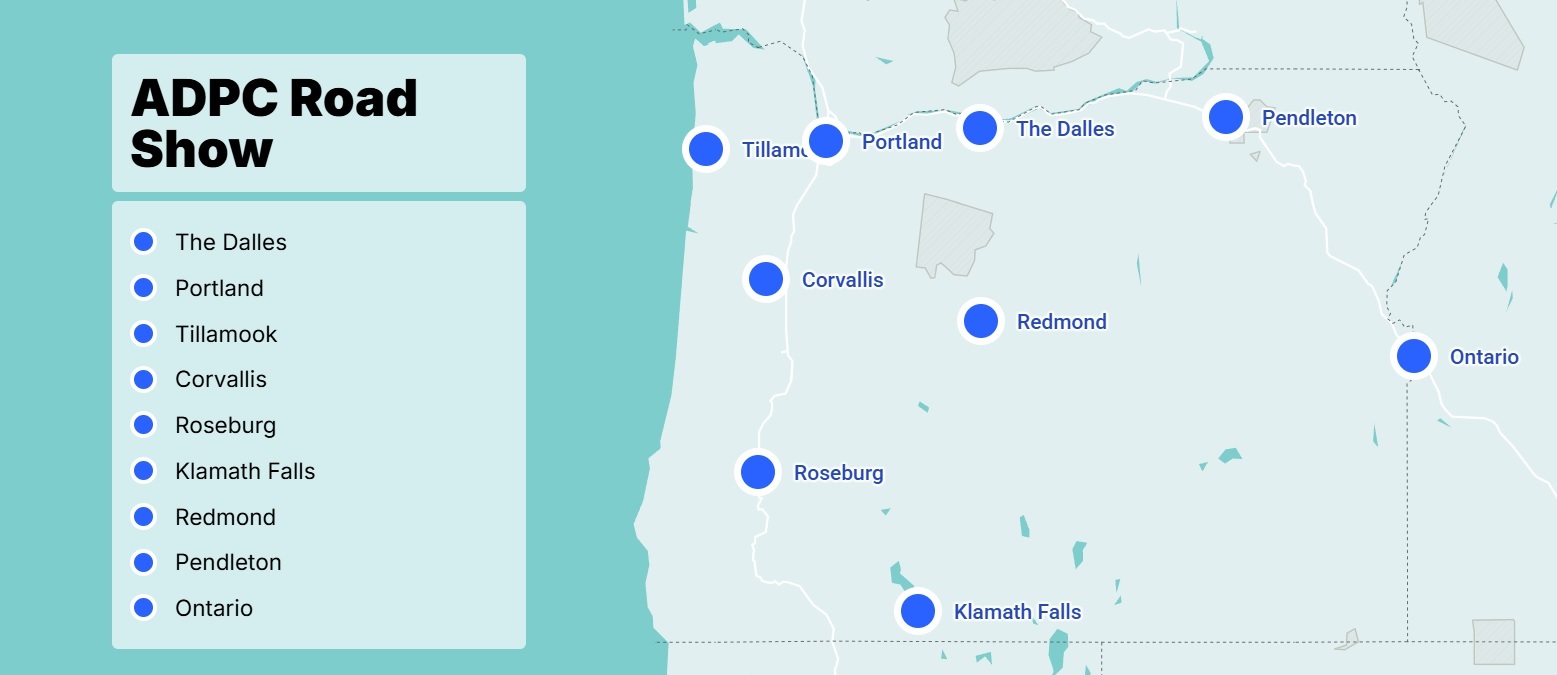 Over the course of two weeks in October, the ADPC hosted a “Road Show" to facilitate region-specific conversations about the Comprehensive Plan. Road Show meetings were held in The Dalles, Portland, Tillamook, Corvallis, Roseburg, Klamath Falls, Redmond, Pendleton and Ontario.
The ADPC spoke with local leaders to discuss what it will take to implement the Comprehensive Plan in their respective communities. The Commission is interested in supporting and enhancing local efforts to achieve equitable access to substance use services and supports.
Specifically, the ADPC used the Road Show to gather input from a range of constituencies involved in the delivery of substance use services: health care providers and other health industry professionals, public health officials, elected leaders, behavioral health specialists, peer support specialists, preventionists, educators, community leaders, community corrections and carceral officials, and others.
Review the  ADPC Roadshow Deck
Community Engagement Findings: Final Report
To synthesize and analyze all of the information from our community engagement partners mentioned above, we collected their final reports, as well as their notes, presentations, and other summary materials. Our partners at Third Horizon, a health care advisory firm that's supporting the ADPC's work, reviewed these materials using human and AI-based analysis.
Below, you can find Third Horizon's summary of the community engagement feedback.
Read the ADPC Community Engagement Report.pdf