This page covers answers to common questions about cyanobacteria harmful algae blooms (cyanoHABs) in lakes or ponds on private property. To see answers to other questions about cyanoHABs, visit our
Frequently Asked Questions page.
How can I tell if the bloom is producing toxins?
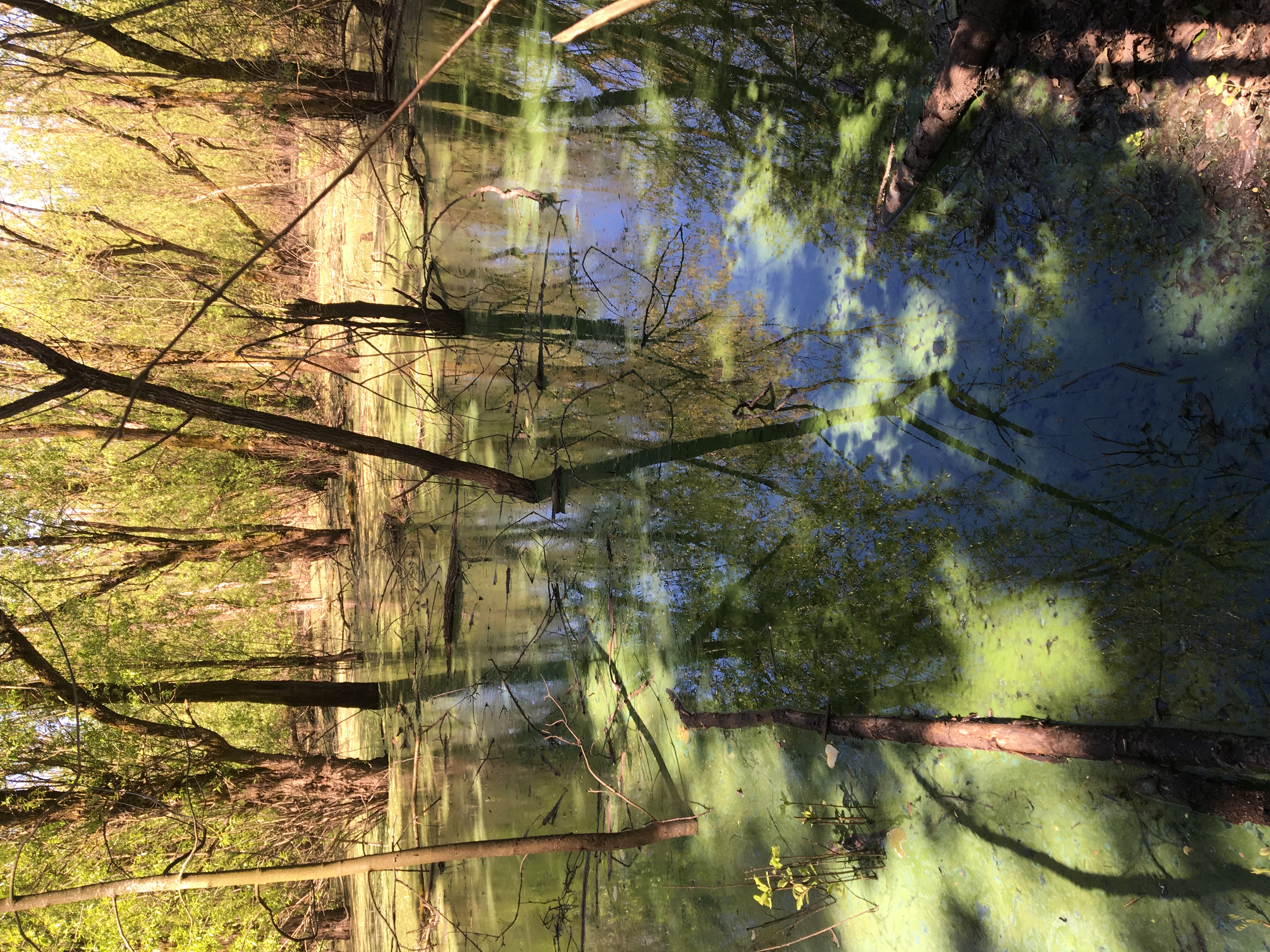
You can't tell if a bloom is toxic just by looking at it. Taking a water sample and having it analyzed by a water testing laboratory is the
only way to be sure.
As a precaution, OHA recommends avoiding water that looks:
-
Foamy
-
Scummy
-
Thick like paint
- Like there are bright green globs or particles floating in it
Colors to watch out for include:
-
Pea-green
-
Blue-green
-
Brownish red
-
White
Blooms can also form mats that attach to rocks or sand at the bottom of the water. These mats can separate and float to the surface of the water, or build up along the shore. In these cases, the water may otherwise look clear.
To see examples of different types of blooms, visit our photo gallery.
When should I have the water tested?
If people or animals use the water as a
drinking water source, or it's used for
recreation like swimming or water skiing, it is recommended to test the water.
What is the sampling process?
Taking a water sample is something you can do yourself, or you can hire a consultant to do it for you. If you have decided on a lab to send samples to, we recommend contacting them for sampling instructions. Guidelines for taking a sample can also be found on our website:
Sampling Guidelines: Cyanobacterial Harmful Blooms in Recreational Waters.
Who pays for testing?
As the property owner, you will be responsible for paying for testing. Costs can range from $100 to $350 depending on the type of test you request and the fees the laboratory charges.
How can I find a qualified laboratory?
The Oregon Environmental Laboratory Accreditation Program (ORELAP) has a list of accredited laboratories that can test cyanobacteria samples. The Environmental Protection Agency (EPA) also has a list of laboratories by state.
What should I ask the lab to test for?
"Toxin testing" is the
most accurate way of knowing if the bloom is harmful. This test identifies the type and amount of toxins present in the bloom. If you're interested in knowing which cyanobacteria species is in the water, another test called "identification and enumeration" will be able to tell you. This test is less expensive than toxin testing, but it won't show if a bloom is toxic.
How do I get the water sample to the lab?
Page 9 of OHA's Sampling Guidelines covers shipping methods depending on the test you request. OHA also recommends contacting the lab to ask them how they want the sample packed and shipped.
How long does it take to get test results, and what should I do while I’m waiting?
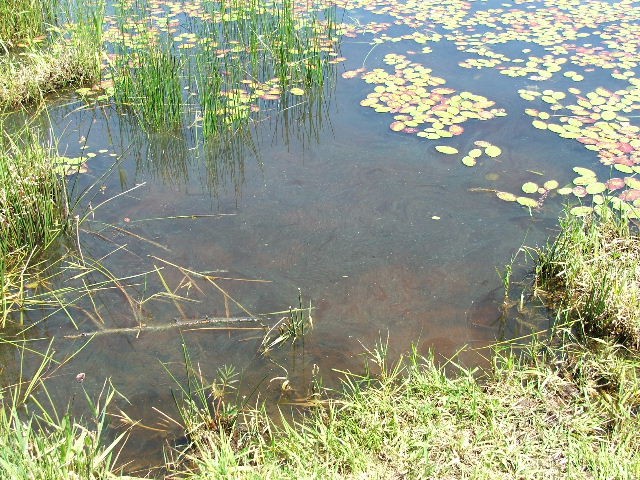 The wait time depends on the type of test you've asked for:
- Toxin testing takes 1-2 weeks total - this includes the time it takes for shipping and analysis
- Identification and enumeration can take anywhere from several days to 1-2 weeks
While you wait, it's recommended that you post a warning sign to alert people that a bloom and toxins may be present. If livestock, small animals or pets are likely to get into the water, consider putting up a temporary fence.
You can contact our program if you need any support with understanding your results once you receive them.
Is it safe to eat fish caught from my pond or lake during a bloom?
The health risks of eating fish from water with a bloom are unknown. Because of this, OHA does not recommend eating fish caught during a bloom. If you do decide to eat the fish, remove the fat, skin and organs before cooking. Toxins tend to collect in these tissues.