Education
 Research shows that
90% of adult addiction begins with use between the ages of 12-18. Furthermore,
96% of youth with a substance use issue
still attend school. For these reasons, the ADPC's Comprehensive Plan prioritizes school-based early intervention, treatment and recovery school programs. These programs are evidence-informed interventions that can offer broad access and prevent adult SUD.
Research shows that
90% of adult addiction begins with use between the ages of 12-18. Furthermore,
96% of youth with a substance use issue
still attend school. For these reasons, the ADPC's Comprehensive Plan prioritizes school-based early intervention, treatment and recovery school programs. These programs are evidence-informed interventions that can offer broad access and prevent adult SUD.
One young person in Curry County, speaking with
Bay Area First Step (BAFS) for the
ADPC's community engagement efforts, explained it this way:
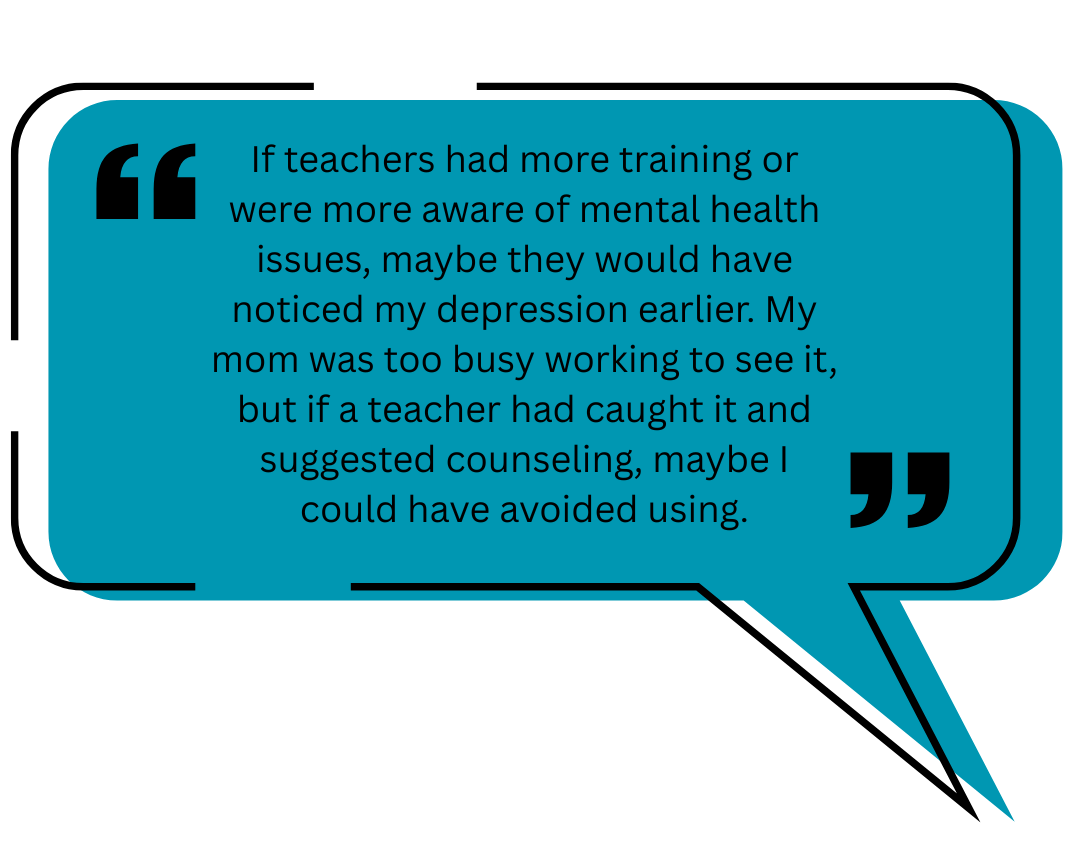
“If teachers had more training or were more aware of mental health issues, maybe they would have noticed my depression earlier. My mom was too busy working to see it, but if a teacher had caught it and suggested counseling, maybe I could have avoided using."
Oregon has already made important strides in this space. In 2024, the Oregon Department of Education announced
the first state-funded recovery high schools in the nation. Recovery high schools have been shown to
improve school attendance and lower rates of substance use and misuse for adolescents treated for SUDs.
It's time to build on this important work and ensure that
all schools have access to the resources they need to deliver robust primary prevention and early intervention services and strategies. This should include resources such as toolkits, as well as stronger guidance on best practices and policies, that are low- or no-cost, aligned with community needs, and implementable with limited administrative or staff burden.
Find the ADPC's detailed strategy below:
Improve the ability and capacity of schools to provide resources and respond to co-occurring behavioral health concerns
Non-clinical Recovery Spaces
Prioritizing peer-led youth recovery and community spaces allows communities to design youth and family centered programming that meets their needs – it allows services to be steeped in cultural context and mutual support.
Gio Dillanes, a founding member of OYAA,testified before the state legislature in March 2025 about the powerful impact that a community organization – his high school track team – had on his substance use recovery.
"After I was released from the hospital, I signed up for a local rehabilitation service, but it didn't help at all. I found myself surrounded by people 20 or 30 years older than me... My true healing began the moment I joined the Beaverton High School track and field team, which became a catalyst for success in all areas of my life. One and a half years later, I am fully recovered."
Dillanes continued, "My motivation for my attendance here today is to speak on behalf of the youth whose personal and unique needs are not accounted for when these prevention [systems] and interventions are created…The current system, the current system of care, is too broad and too impersonal to meet the unique needs of each young person."
(Watch Dillanes' testimony, at left, before the Joint Committee on Addiction and Community Safety Response).
The Commission recommends engaging culturally-specific organizations to provide recovery-oriented services and support to develop a model that includes recovery-friendly places where youth and families can seek resources and connection.
Find the ADPC's detailed strategy below:
Support communities to expand peer led youth recovery organizations using community spaces and drop sites that offer recovery services
Legal and Carceral
Given that youth SUD treatment services are not well financed and are unevenly distributed in carceral settings, the APDC prioritizes shoring up services at the Oregon Youth Authority (OYA) and
Oregon Department of Corrections (DOC), particularly evidence-based, life-saving interventions such as Medications for Opioid Use Disorder.
Members of the ADPC staff engaged with incarcerated youth and staff at youth correctional facilities (MacLaren Youth Correctional Facility, Oak Creek Youth Correctional Facility, and Eastern Oregon Youth Correctional Facility), gathering powerful insights into how treatment and recovery supports are working there – and where they fall short.
For instance, at Oak Creek (pictured in this section), a girls correctional facility in Albany, Oregon, youth pointed out that while recovery materials are evidence based, in the past the materials supplied were neither gender nor culturally specific. That includes reading materials meant for older men, one incarcerated youth
explained:“Scenarios are like 'when you come home to your wife,' and I am like, 'I am 16.'" As part of the Plan, OYA and ADPC are already working together to update curriculum to be more gender and age appropriate.
The ADPC also supports keeping youth with behavioral health needs out of incarceration when possible. Specifically, the Plan calls for developing a model to help county juvenile departments provide diversion programs, so that youth with behavioral health needs can stay in their communities and connected to support.
Find the ADPC's detailed, 2-part strategy below:
I. Divert youth with behavioral health needs from custody while keeping them in their communities and connected to supports
II. Expand and improve treatment, recovery, and training/certification offering at Oregon Youth Authority
Home
 With the support of OYAA, the ADPC recommends in-home and home-based models of care that support whole-family needs.
Evidence suggests intergenerational links in use and substance use disorder – in other words, parental and caregiver use and substance use disorder – may increase risk for youth.
With the support of OYAA, the ADPC recommends in-home and home-based models of care that support whole-family needs.
Evidence suggests intergenerational links in use and substance use disorder – in other words, parental and caregiver use and substance use disorder – may increase risk for youth.
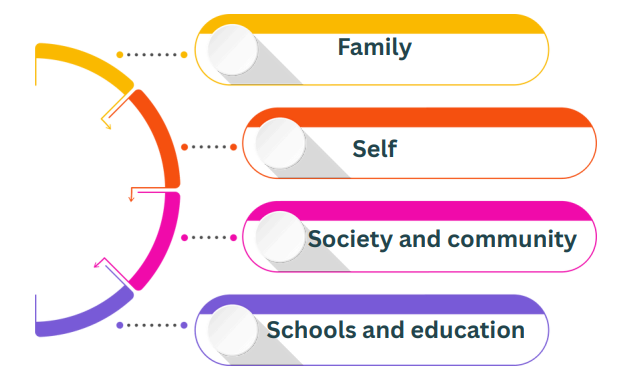
Andares is a nonprofit committed to building resilience and community building in the Latinx community of the Oregon Central Willamette Valley and Lincoln County. Andares used art and self-expression to engage both youth and adults in the Latinx community of Albany in conversations around substance use and SUD. The graphic at left identifies the four themes that emerged from this project, including family.
There are clear steps to take, such as increasing access to in-home co-occurring treatment with therapists and Certified Alcohol & Drug Counselors (CADCs), as well as peer-delivered services. Currently, youth with severe mental health needs can receive home-based support from the Intensive In-Home Behavioral Health Treatment (IIBHT) services offered by the private nonprofit, Oregon Community Program.
Meanwhile, Oregonians need more treatment and recovery housing designed for youth, parents and families. The 2024
PCG Residential+ Facility study surveyed the number of SUD-focused residential facilities in Oregon, but the analysis focused only on the adult population. In other words, we're starting from scratch – the first step is to conduct a landscape assessment of youth and family-oriented recovery housing models and regulations.
A focus on home-based care also makes the ADPC's partnership with the Oregon Department of Human Services (ODHS) critical. We need to support youth engaged with the ODHS by having mental health and SUD services located within licensed child caring agencies and housing intervention partners.
Find the ADPC's detailed, 3-part strategy below:
I. In collaboration with the ADPC Recovery Committee, expand prioritization of single parents (including/especially fathers and LGBTQIA+ identifying single parents), grandparents, and youth parents in access and development of supportive housing and residential programming
II. Expand In-home treatment & Recovery services, including Treatment Foster Care or In-Home Addiction Treatment models: co-occurring treatment, team-based support, connection to family-based support, and use of peer delivered services - ensuring smooth communication between multi-agency comms.
III. Support youth engaged with Oregon Department of Human Services by having Mental Health and Substance Use Disorder services located within licensed child caring agencies and housing intervention partners and Support ODHS Recovery Support Teams with Youth SUD training and capacity
Clinical Treatment
Some youth struggling with SUD need clinical treatment. However, the options can be hard for their families to navigate, especially given the limited resources that exist expressly for youth.
This experience was reflected in the
ADPC's community engagement. Bay Area First Step (BAFS), which offers peer-run outpatient SUD treatment programs and services, interviewed the peer workforce and people with lived experience of alcohol and substance use in Coos and Curry counties. Participants in Curry County described feeling alone and unsupported, with long waitlists, confusing referral systems, and a lack of options close to home.
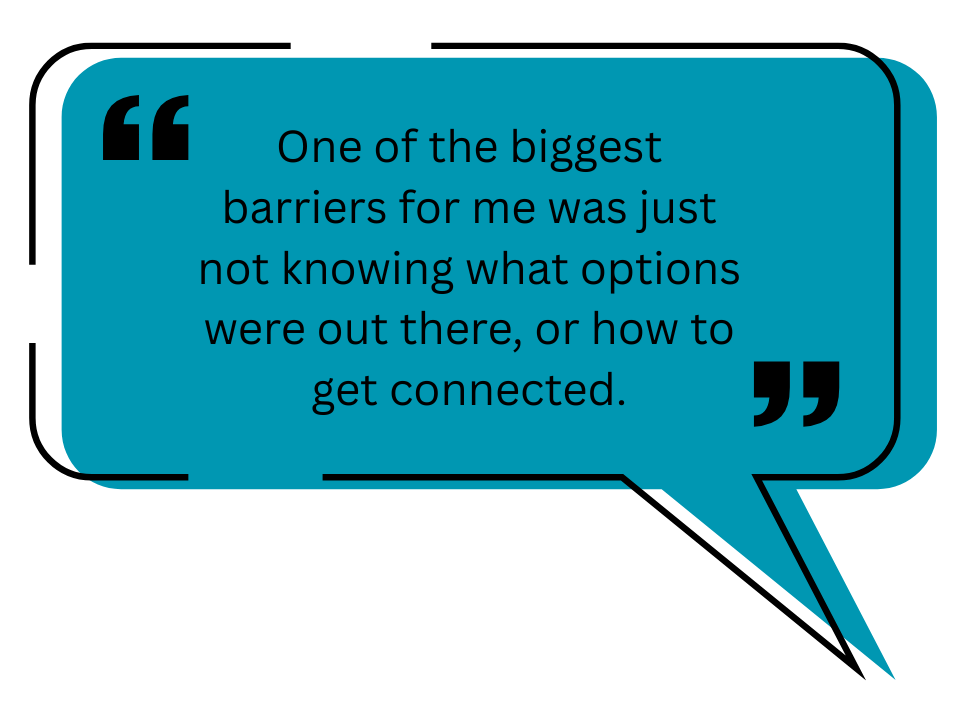
“One of the biggest barriers for me was just not knowing what options were out there, or how to get connected," one person in Curry County shared.
Find the ADPC's detailed strategy below:
Support youth and families to find and enter clinical treatment through the use of a centralized resource that provides timely information about available treatment options and decreases waitlist times