Master plan reviews are often used by homebuilders that build several model homes – for example, floorplan #1, floorplan #2, and floorplan #3. Potential buyers come and tour these model homes, then make a purchase of a given floorplan. This common business case is the best for understanding how the Master Plan process works and what fees are indicated.
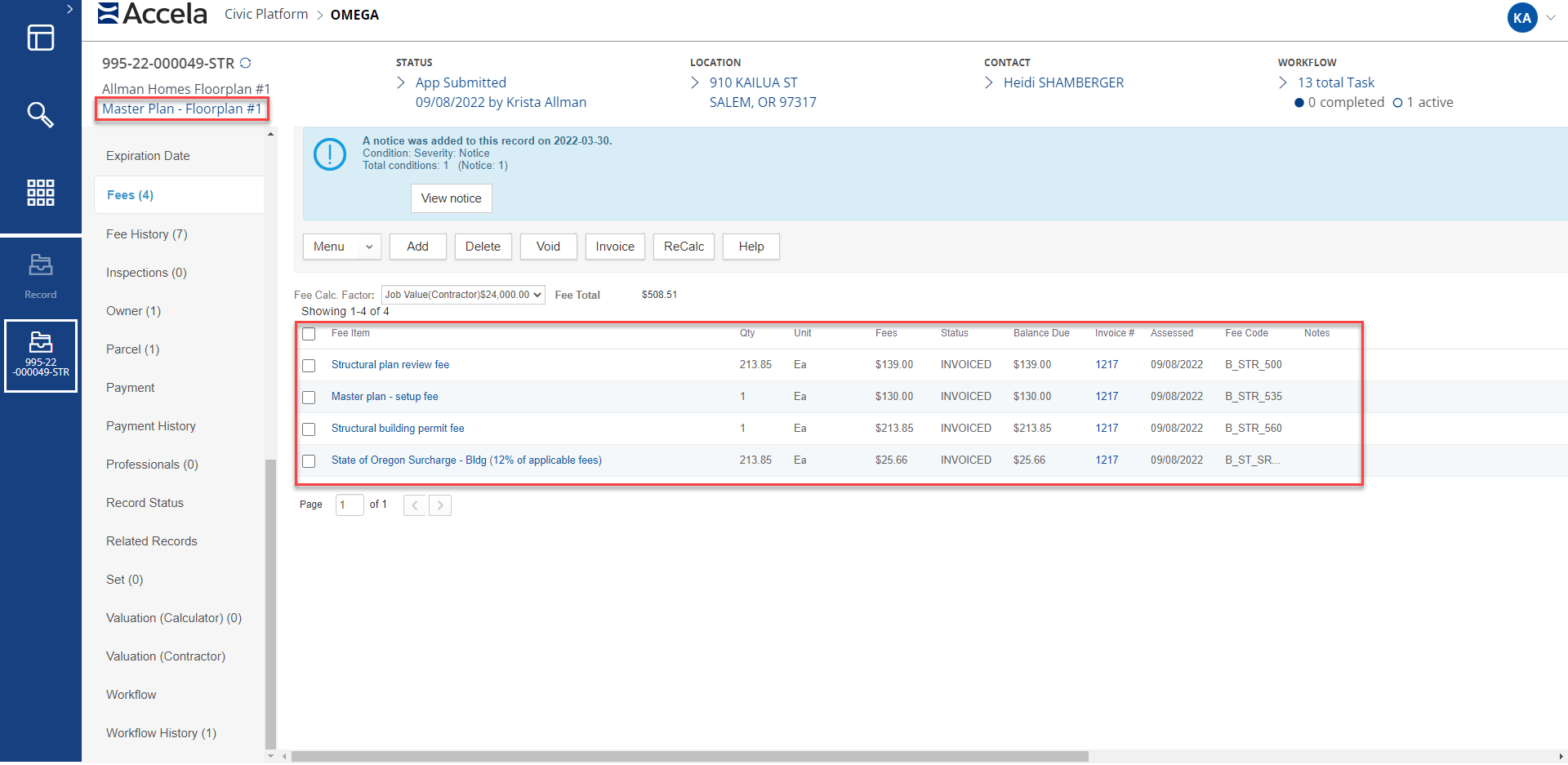
In this example, the builder brings in the first/original plan submittal for floorplan #1 to build that actual model home and they declare it a Master Plan which means they intend on repeated building of this floorplan exactly as submitted.
When designating this plan as a Master Plan, you will treat this submittal the same as any new home submittal, charging Structural Plan Review fees, etc. But because the Applicant declared it as a Master Plan, you will also charge the Master Plan setup fee. This fee is for staff time to store, track, and care for this plan in an exceptional way as a retained Master Plan (this fee is administrative).
The next time the builder is going to build floorplan #1 from a Master Plan (again, repeatedly building additional homes exactly as submitted originally), they will still submit a plan for floorplan #1, but this time your Plans Examiner will pull the Master Plan (previously reviewed, approved, and stamped plan) and only compare it to the plan they just submitted. These two plans should be exactly the same, given it’s set to be built from a Master Plan.

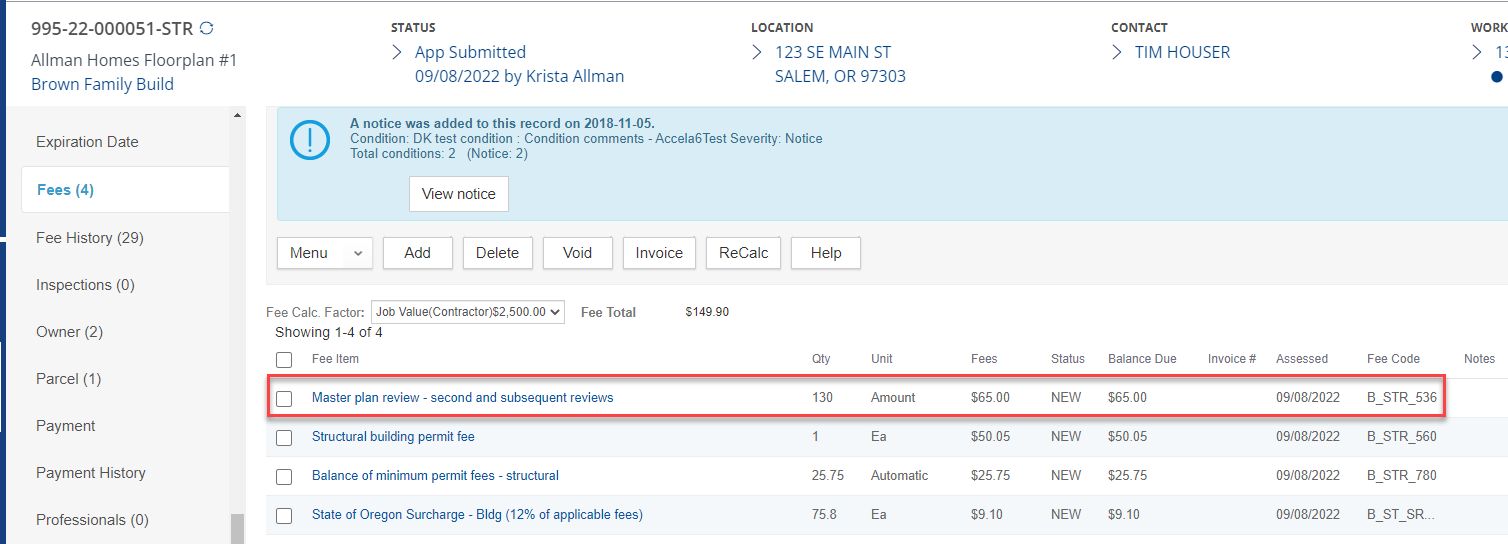
The plan review time and effort spent is much less and the process much less involved, as a result of the Master Plan having been approved previously - the plans examiner is only doing a comparison to verify it’s exactly the same. On the second and subsequent submittal(s), you will not charge standard Structural Plan Review fee, instead you will delete that fee item, and charge the ‘Master Plan review - second and subsequent reviews’ fee. The second and subsequent plan review fee is recommended as a percentage and will ask you to enter the original plan review fee from when the Master Plan was originally reviewed – effectively reducing the plan review fee for this submittal.
In the example below, the plan review fee is reduced by half at 50% or original given that the plan review time spent is much less.