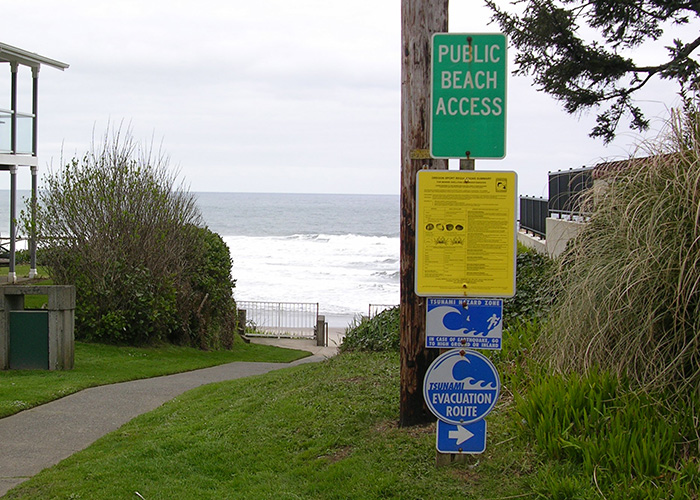
 Statewide Planning Goal 7: Areas Subject to Natural Hazards requires cities and counties to address natural hazards in their comprehensive plans with inventories, policies, and implementation measures. The goal lists six natural hazards to plan for: floods, landslides, earthquakes, tsunamis, coastal erosion, and wildfires. However, cities and counties may choose to plan for other hazards. The
2025-2030 Oregon Natural Hazards Mitigation Plan addresses additional hazards including dam failure, droughts, extreme heat, volcanic hazards, windstorms, and winter storms. DLCD encourages cities and counties to plan for all hazards that could affect the community.
Statewide Planning Goal 7: Areas Subject to Natural Hazards requires cities and counties to address natural hazards in their comprehensive plans with inventories, policies, and implementation measures. The goal lists six natural hazards to plan for: floods, landslides, earthquakes, tsunamis, coastal erosion, and wildfires. However, cities and counties may choose to plan for other hazards. The
2025-2030 Oregon Natural Hazards Mitigation Plan addresses additional hazards including dam failure, droughts, extreme heat, volcanic hazards, windstorms, and winter storms. DLCD encourages cities and counties to plan for all hazards that could affect the community.
Goal 7: Natural Hazards recommends that cities and counties:
- Consider nonregulatory implementation strategies
- Develop site-specific reports for high-hazard areas
- Go beyond National Flood Insurance Program minimum requirements
Goal 7 requires state agencies to coordinate their natural hazard plans and programs with cities and counties and provide them with hazard inventory information as it changes. State resources help cities and counties keep their natural hazards plans up to date, such as:
Contact DLCD’s
Natural Hazards Mitigation Planning Program Coordinator and your
Regional Representative when your city or county receives new hazard information. We can help with the process for any new or revised comprehensive plan policies and implementing measures.
Original Adoption: 12/27/74; Effective: 1/25/75
Amended: 9/28/01; Effective: 6/1/02
Read full text version of Goal 7
Administrative Rules that implement Goal 7:
None
Related: