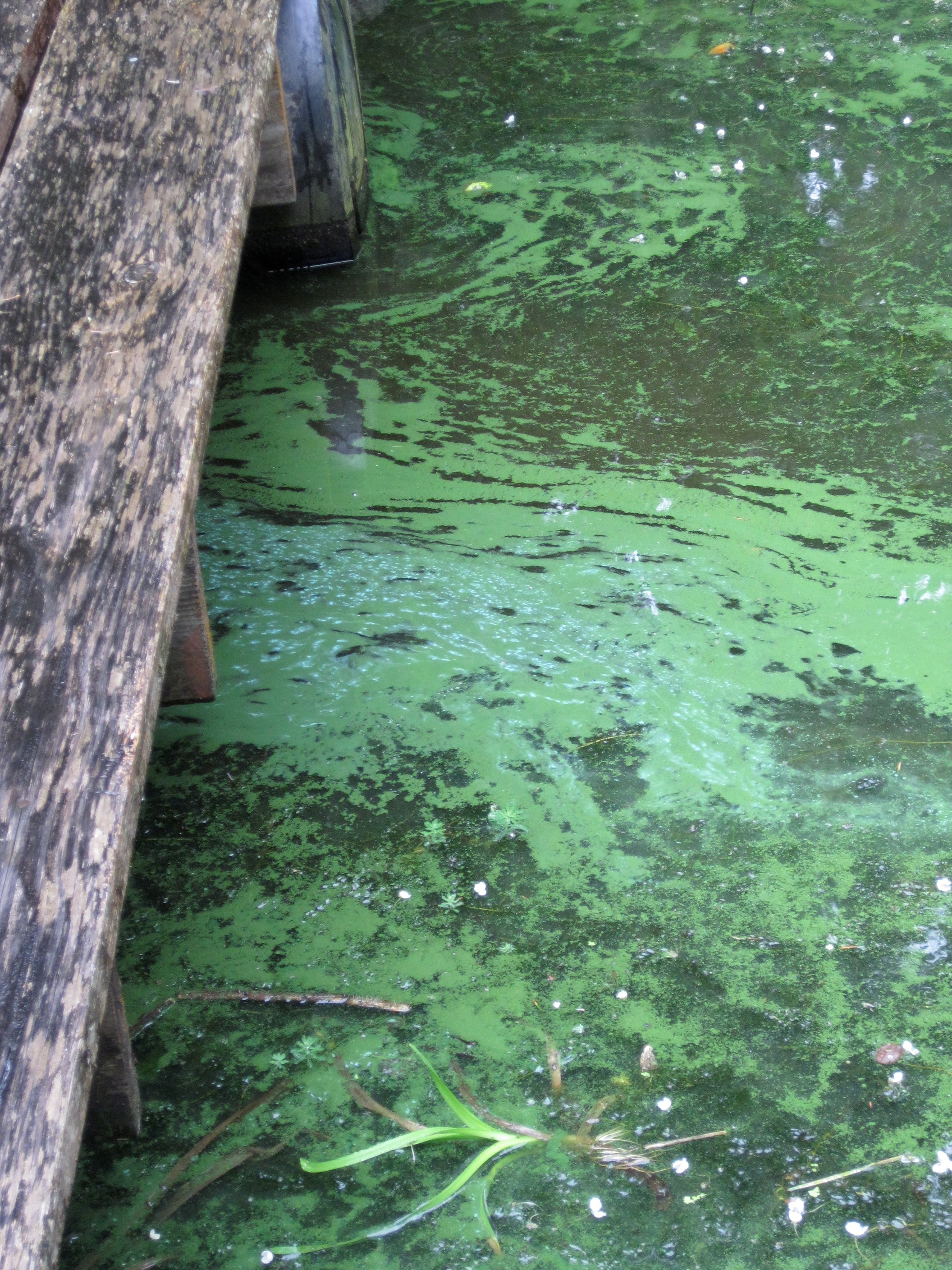
Planktonic Blooms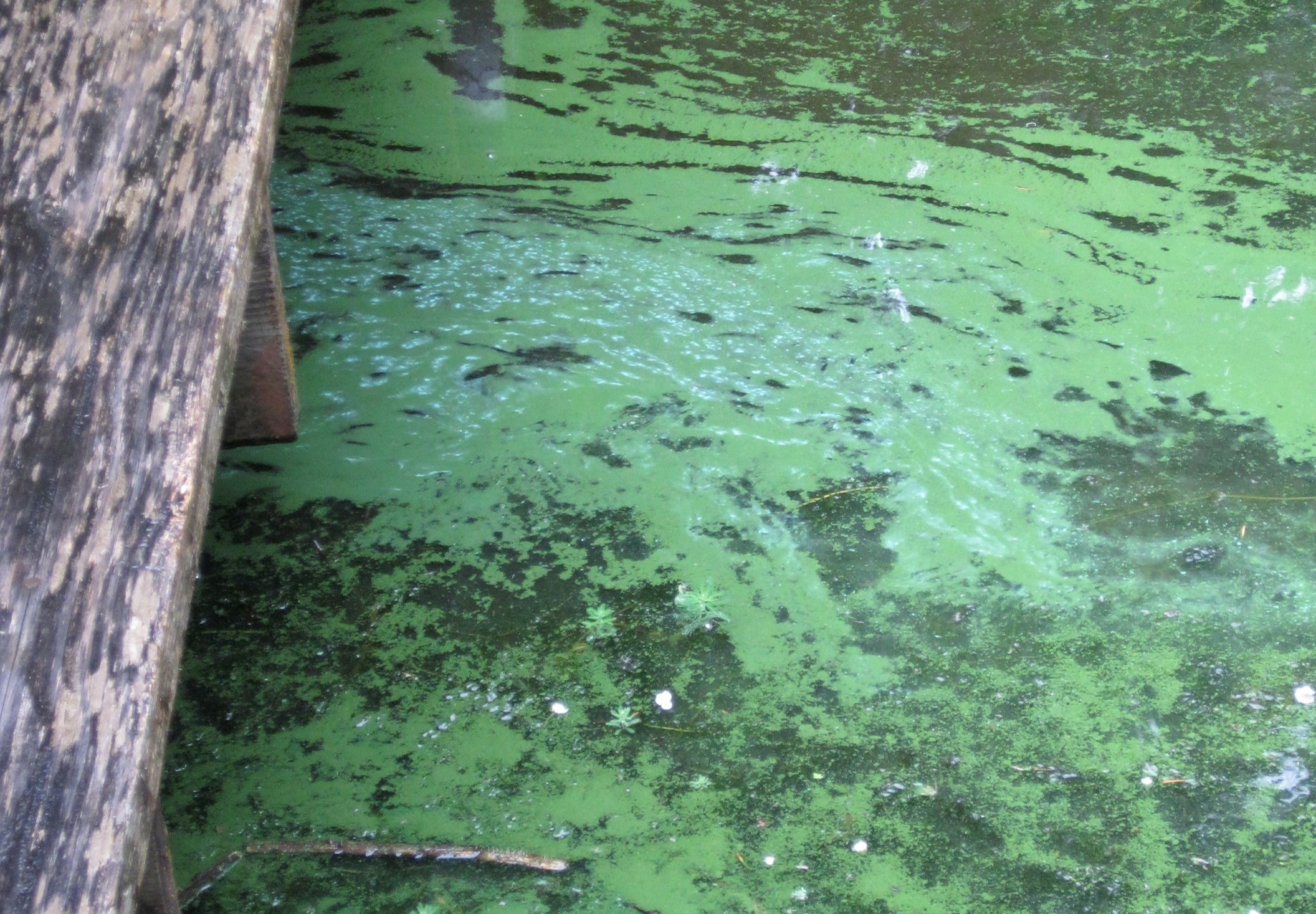
Planktonic blooms can look foamy, scummy or thick like paint. They are often green, blue-green, pea green, brownish red, or white in color. Sometimes the water may look bright green without a layer of visible scum.
The name "cyanobacteria" comes from the colors of these blooms - "cyan" means blue-green.
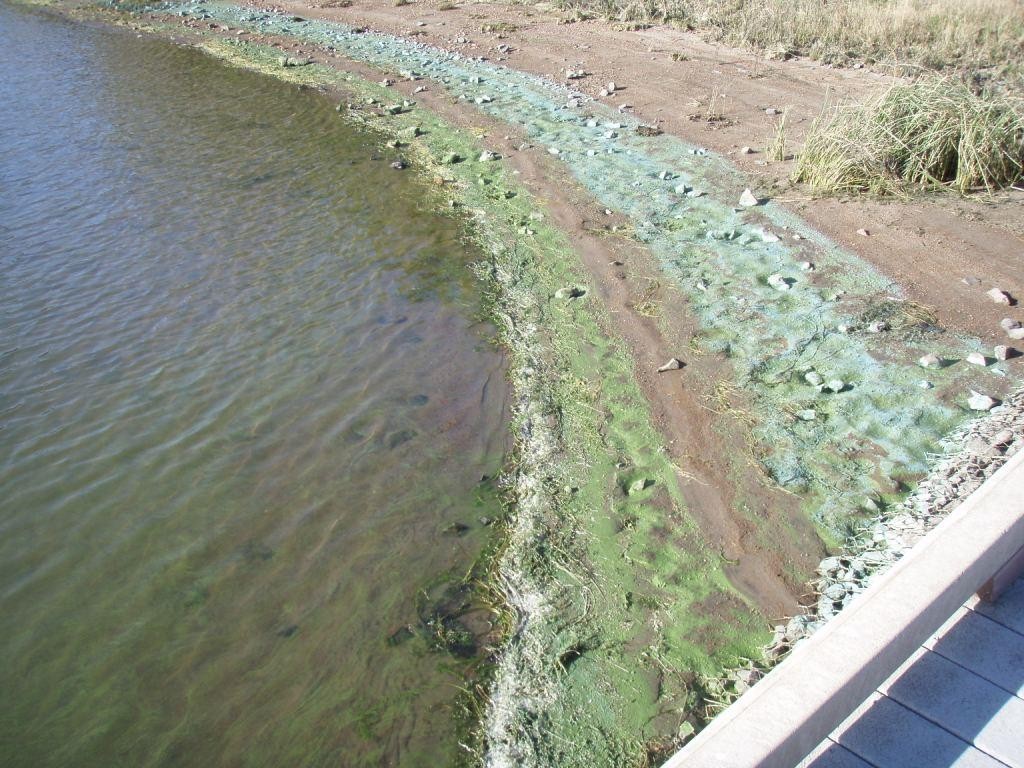
Benthic Blooms
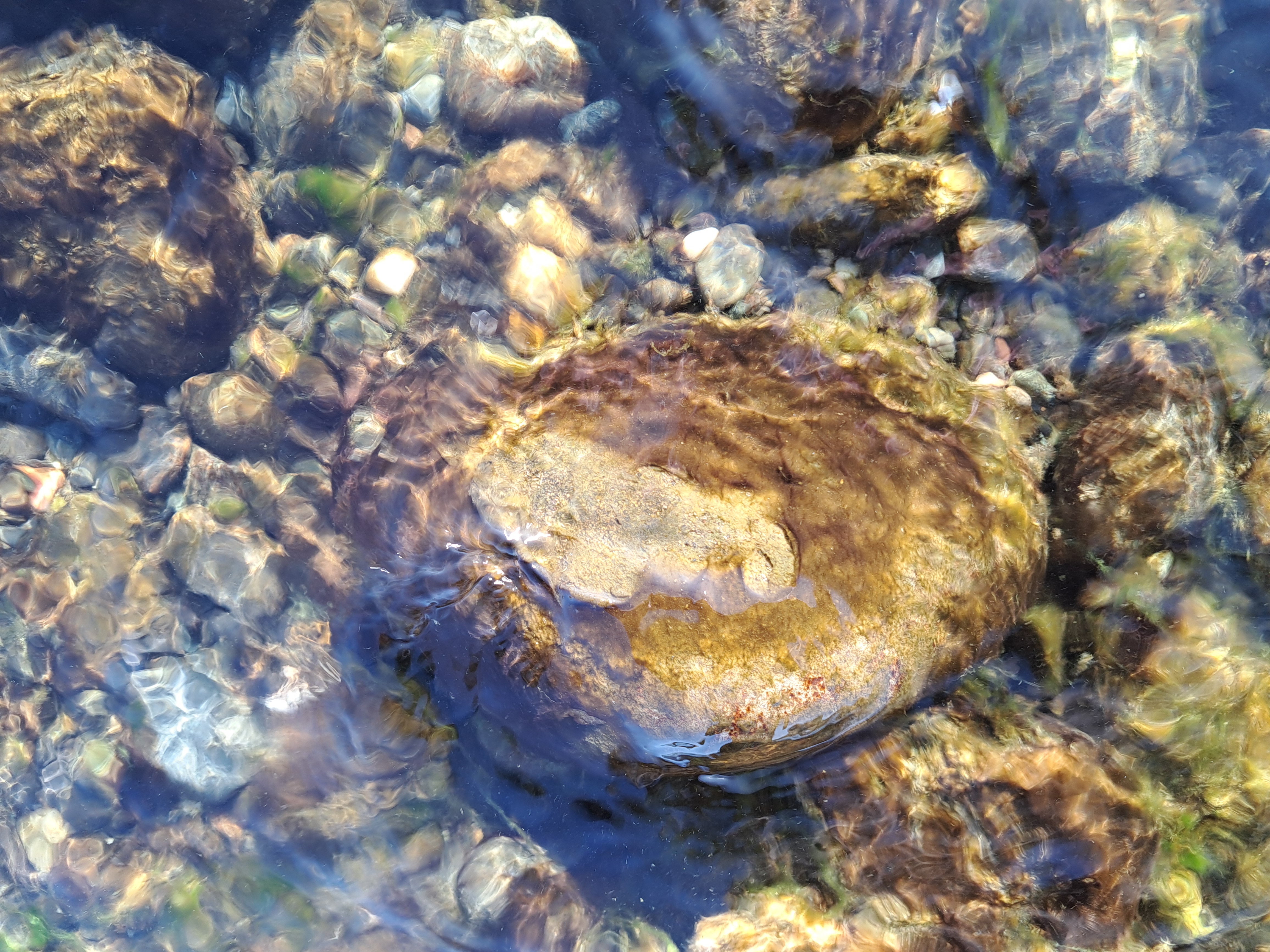
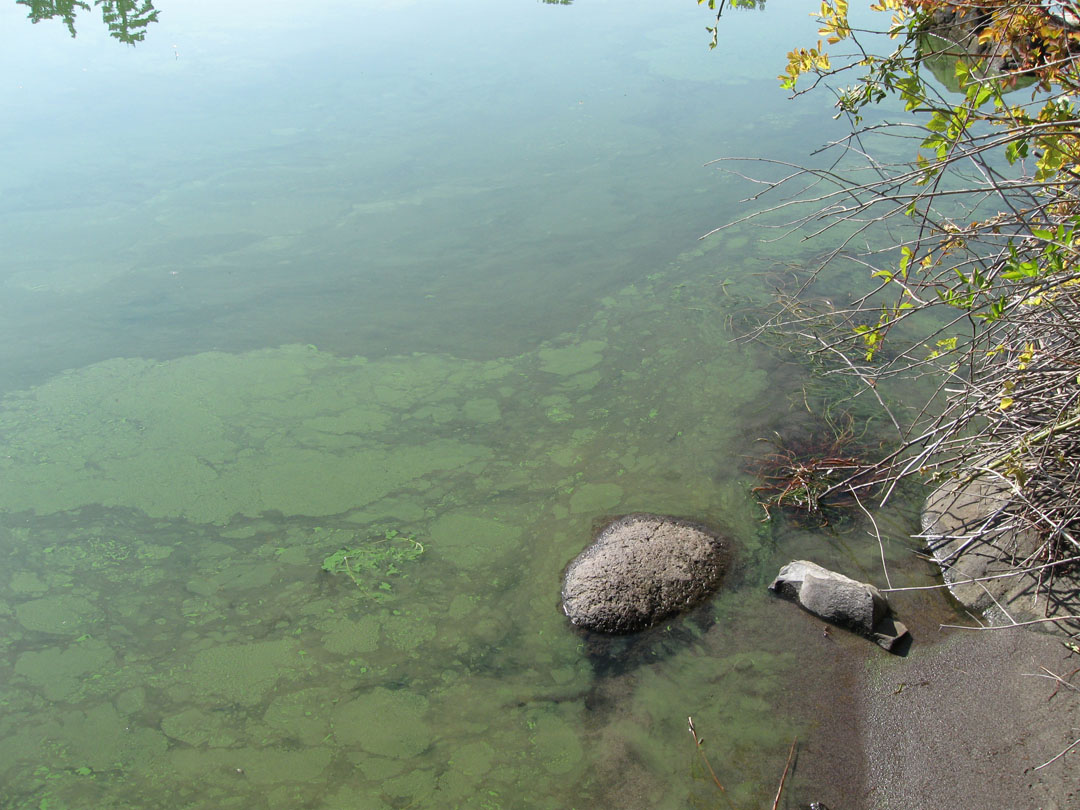
Benthic cyanobacteria are attached to the bottom of the lake or river, often to rocks or sand. They form "mats" that are typcially green or brownish red. They are sometimes found in waterbodies where the water otherwise looks clear. Benthic mat material can detach from the rocks or sand and float in the water. It can also accumulate and dry along the shore.
Benthic blooms can be harder to see than planktonic blooms. Knowing what mats look like and how they differ from surface water blooms can help reduce possible exposure to cyanotoxins.
Both planktonic and benthic blooms may have a bad smell.
For more information about cyanobacteria blooms and benthic mats, OHA recommends watching the Interstate Technology and Regulatory Council's (ITRC) video "Learn to Identify Cyanobacteria Blooms."
Benthic bloom photo credit:
Benton-Franklin Health District
How will I know if a bloom is toxic?
Unfortunately, you can't tell if a bloom is toxic just by looking at it. It isn't known why or when cyanobacteria produce toxins, so it's not possible to predict when
they are in the water.
The size of the bloom is not connected to the amount of toxins
it
may be producing. This is why water sampling and testing is important.
What causes cyanobacteria blooms?
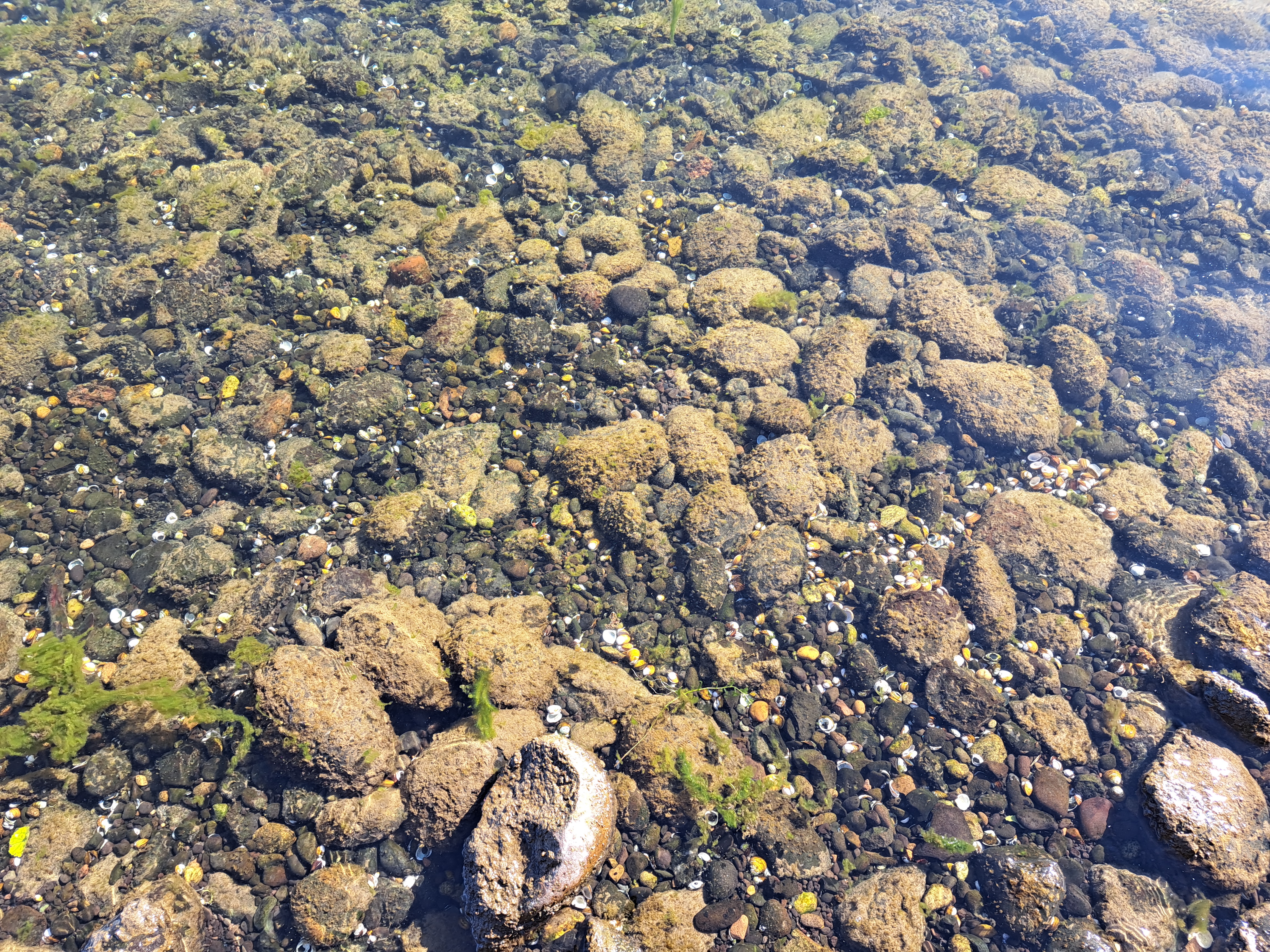
While it is difficult to know the specific cause of each individual bloom, these factors can play a role:
-
Sunlight
-
Warm water temperatures
-
High amounts of nutrients (nitrogen and phosphorus). These nutrients can be natural (from wildlife and decaying vegetation) or come from human activities (fertilizer runoff, manure, failing septic systems, or forest management activities)
Cyanobacteria blooms have been happening since early in earth’s history, but climate change is likely to increase the factors that encourage them to grow. This means that blooms will continue increasing in frequency (how often they happen) and duration (how long they last).
Photo credit: Benton-Franklin Health District
Is OHA investigating specific sources that cause cyanobacteria blooms?
OHA’s role is to share information about how to reduce exposures once a bloom has been identified. Natural resource agencies, like the
Oregon Department of Environmental Quality (DEQ), are able to investigate the causes of blooms. They also work on actions that may reduce the conditions that make it easier for blooms to grow.
Why do blooms seem to appear overnight?
Most cyanobacteria evolved to be able to control their buoyancy (whether they float or sink in water). By being able to sink and rise, they can move to where nutrient and light levels are best.
During the day, cells get more dense and less buoyant as they create food reserves for themselves using photosynthesis.
They often sink into deeper water in the late
afternoon, where they can scavenge for nutrients.
As cells
use up their food reserves at night, they become less dense and more buoyant. This allows them to float to the water's surface. For this reason, we often seen scums and dense blooms early in the day. Cyanobacteria cells can also be moved around by wind and waves, and may show up in specific parts of a lake as a result.
How big can blooms get, and where are they most likely to happen?
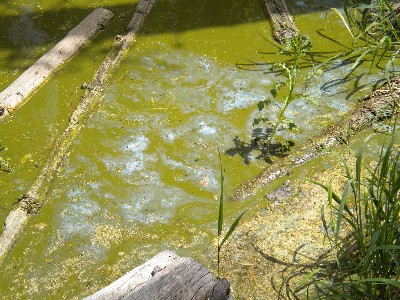
Cyanobacteria blooms change quickly over the course of days and weeks. Because of this, it is difficult to determine the size of the bloom in terms of acreage or the volume of water affected. Not all areas of a lake or other water body may be equally affected.
Blooms are often found:
-
At the water’s edge
-
In coves
-
In backwater areas
-
In the arms of lakes and reservoirs
How can I stay safe when there is a bloom?
Following these tips can keep you, your family, and your pets safe during a bloom:
- Stay out of the water in or around a bloom. Be sure to keep children and pets away.
- Never drink or cook with affected water, and do not let your pet to drink water from the area.
- Avoid recreational activities that cause water to splash onto your face or become aerosolized (when the water becomes tiny drops in the air). Examples include water skiing and motarized or non-motarized boating activities that cause you to swallow or inhale water. Other outdoor activities, like hiking or picnicking, are still safe to do.
-
Although toxins are not absorbed through the skin, it's still a good idea to wash off if you or your pet come in contact with a bloom. Wash your skin or your pet thoroughly with a clean source of water and soap if available.
Is it safe to use power boats during a bloom?
High-speed water activities like water skiing, wakeboarding or power boating should be avoided during an active bloom or in places with health advisories. These activities spray tiny water droplets into the air, which makes them easier to breathe in. It is possible to get sick from inhaling toxins, though the risk is lower than if the water is swallowed.
Can I eat the fish or shellfish I catch during a bloom?
Researchers are still learning about the health risks of eating fish and shellfish caught during a bloom. Because the risks are unknown, OHA recommends not eating fish or shellfish from areas with an active cyanoHAB bloom.
If you do choose to eat the fish you catch during a bloom, the safest action is to remove all fat, skin and organs before cooking. This is because toxins are more likely to collect in these tissues. Fillets should also be rinsed with clean water.
What should I know about camping during a bloom?
It is possible for the drinking water at campgrounds to be impacted by a bloom. Knowing where the water comes from is important:
Public Water Systems
Domestic (Private) Wells
Many campsites use domestic wells, which are not usually impacted by blooms. If you have questions about the safety of the drinking water at a campsite, contact the campground host or the agency responsible for the campground.
Private Intakes
If drinking water is pulled from the waterbody through a private intake and treated on-site, there could be issues. Check with the campground host or the responsible agency to learn more. You may need to use an alternative source of water unless the system has been tested to ensure the water is safe to drink.
No matter where you are camping, be sure to check for health advisories issued by OHA. Information on cyanoHAB advisories can be found on our
recreational advisories page.
Can I treat cyanotoxins in the water to make it safe to drink?
Personal water filtration devices for camping or hiking are not able to remove cyanotoxins. Most home filtration systems used to treat water from private intakes are also not able to get rid of cyanotoxins. For more details, visit our "Private Drinking Water Intakes and In-Home Treatment Systems" page.
It's important to know that
boiling water will not remove cyanotoxins. Boiling will split cyanobacteria cells open - this means they will release their toxins and make the problem worse.
Can I get rid of a bloom?
Unfortunately, many methods that can be effective against cyanobacteria growth will also harm a waterbody's beneficial aquatic plant and animal life. Blooms naturally die when the conditions that helped them grow are no longer there. The following things all contribute to blooms ending:
- Cooler water temperatures
- Higher water flow
- Low sunlight
- Lower nutrient concentrations (nitrogen and phosphorus)
People can also help to reduce blooms by using good management practices around waterbodies.
Are blue-green algae supplements safe to use?
Blue-green algae (another name for cyanobacteria) is harvested from Upper Klamath Lake in Oregon and used in dietary supplements and other food products. It is possible for these products to become contaminated with cyanotoxins. For more information, visit the US Food and Drug Administration’s
Blue-Green Algae Products and Microcystins webpage.
Who does the sampling, testing and reporting of results for recreational waterbodies?
The
Oregon Department of Environmental Quality (DEQ) samples for cyanotoxins in approximately 40 Oregon waterbodies between May and September each year. These sampling sites were chosen based on factors like a waterbody's bloom history and the amount of recreation that happens at the location. To see the sample sites and learn more about DEQ's monitoring for cyanoHABs, visit our
"CyanoHAB Monitoring" page.
For the 40 sample sites, the DEQ Laboratory analyzes water samples for cyanotoxins. They report the results to the
AWQMS database. For waterbodies that are not on DEQ's list, waterbody managers can
contract with laboratories to do their own cyanotoxin testing. Waterbody managers include, but are not limited to, U.S. Army Corps of Engineers, U.S. Forest Service, Oregon Parks and Recreation Department, cities and counties. OHA’s
recreational sampling and advisory guidance documents provide information on best practices for waterbody managers.
When are health advisories issued?
A recreational use advisory is issued when cyanotoxins have been confirmed through testing and are above OHA's recreational use values (RUVs) or when cyanotoxin results are below RUV or cyanotoxin results are not available yet and any of the following extraordinary factors indicate and increased risk to human health.
- OHA has recieved human or animal illness reports and following investigation, OHA has classified them as "suspect", "proabable", or "confirmed" according to Center for Disease Control's case definitions
- Bloom intensity in increasing or expected to increase due to hot weather or other environmental factors such as wind pattern or presence of fire
- The waterbody has a history of cyanotoxins above OHA's RUVs.
RUVs for Cyanotoxins in Recreational Water (in μg/L)
- Microcystin: 8
- Cylindrospermopsin: 15
- Anatoxin-a: 15
- Saxitoxin: 8
OHA also issues "precautions" - this happens when we don't have enough data to put out an advisory, but it is possible that a toxic bloom is present. Our
"CyanoHAB Monitoring" page has more information on advisories and precautions.
Even if an advisory or precaution is not in place, it's important to know that there can still be a bloom. This means that the toxins that can harm human and animal health can still be in the water. Dogs can become sick or even die from very low levels of toxins. If your pet shows any unusual symptoms after being in a waterbody, you should contact a veterinarian as soon as possible.
How often is sampling done to determine whether an advisory can be lifted?
 After an advisory is issued, OHA works with our partners to schedule follow-up sampling. The timing of the follow-up sampling depends on factors like:
- The duration (length) of the bloom
- The remoteness of the location where the bloom is happening
- Available financial and staff resources
OHA recommends that sampling and analysis for cyanotoxins be done every other week after a bloom has been identified. OHA’s role is not regulatory, which means we cannot require waterbody managers to sample. However, if an advisory is issued based on data submitted to OHA, it is helpful if waterbody manager can provide information, such as, when the bloom has ended, so that DEQ samplers can plan to resample.
Why do recreation and drinking water advisories use different health safety limits?
Health advisory values are different for recreational and drinking water. Drinking water advisories are based on concentrations of cyanotoxins in water that has gone through treatment. Cyanotoxin concentrations are typically much higher in the waterbody than in treated water. However, the amount of water people swallow while swimming, water skiing, etc. is a lot lower than when people use it as a primary drinking water source. Because of this, the health advisory values for drinking water are much lower than for recreational use advisories.