 SB 1567
directed the Oregon Department of Energy to prepare an
Energy Security Plan
for the state. As part of the plan, the ODOE has developed geospatial
screening tool to assess the viability of existing fuel storage sites as
potential candidates for fuel diversification and increased storage.
SB 1567
directed the Oregon Department of Energy to prepare an
Energy Security Plan
for the state. As part of the plan, the ODOE has developed geospatial
screening tool to assess the viability of existing fuel storage sites as
potential candidates for fuel diversification and increased storage.
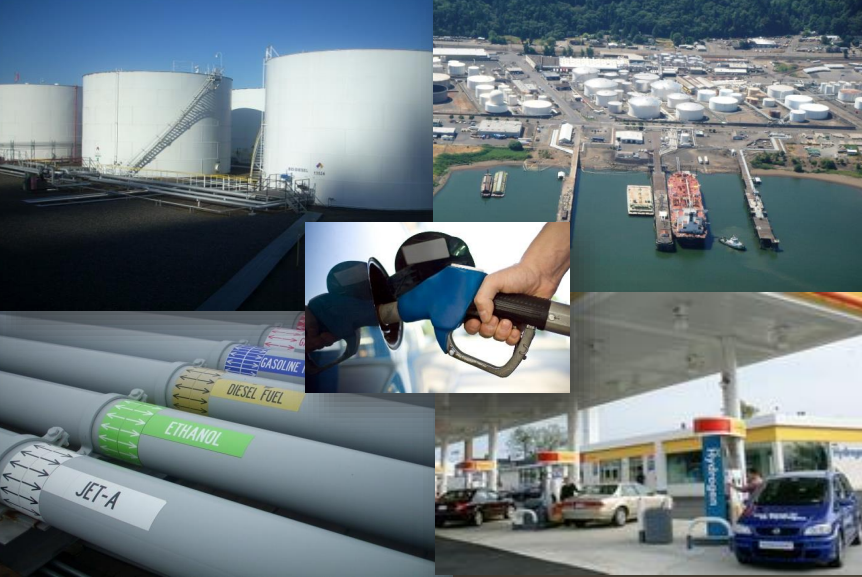
ODOE and a contractor team collaborated to develop a Fuel Site Screening
Tool to assess the viability of existing fuel storage sites as potential
candidates for fuel diversification and increased storage. Every regulated
fuel storage tank in Oregon was mapped in a GIS database using permit data
from DEQ and the Oregon State Fire Marshal's office.
Underground fuel storage tanks are permitted and regulated by DEQ, while
aboveground fuel storage tanks are permitted and regulated by OSFM. The tool
includes specific factors such as mapped hazard areas as well as
interpretive ranking, which allows the analyst to preferentially weight
factors such as prioritizing government-owned facilities. A detailed report
describing the tool is
available for download.
Background
In 2022, the Oregon Legislature passed Senate Bill 1567. This legislation
resulted from recommendations identified in an
Oregon Seismic Safety Policy Advisory Committee fuel report, published in 2019. The bill has two major components: 1) directs the
Oregon Department of Energy to prepare the
Energy Security Plan
in accordance with federal requirements, and to also evaluate additional
fuel resilience strategies; and 2) directs the Oregon Department of
Environmental Quality to regulate seismic resilience of certain large fuel
tanks. DEQ has largely completed its requirements, and the
adopted rules are available online.
Fuel storage capacity across the state, whether owned by the private or
public sector, is adequate to meet regular operational needs. However,
during emergencies, if fuel resupply is impacted, fuel shortages can arise
and hamper emergency response functions. Furthermore, the fuel storage
capacity that currently exists - specifically fuels available for emergency
response and recovery operations - is expected to be severely affected in
the case of a Cascadia Subduction Zone earthquake. The risk is most acute in
western Oregon, but Central and Eastern Oregon will also be affected by a
major earthquake due to impacts to fuel distribution systems and supply
lines, as most fuel in Oregon is delivered from the Portland or Eugene fuel
terminals.