Why do adults need vaccinations?
Adults may be at risk for certain vaccine-preventable diseases and related complications if they were not vaccinated against these diseases during childhood. These include measles, mumps, rubella, diphtheria, tetanus, varicella (chicken pox), polio and others.
Other diseases may pose a higher risk to adults in certain age, occupational, environmental and life-style groups, as well as those with certain health conditions. These diseases include hepatitis B, pertussis (whooping cough), influenza, mpox, pneumococcal disease, RSV (respiratory syncytial virus) and others.
Some examples of these populations include:
-
Pregnant people should receive certain vaccines to protect themselves and their newborns. Visit our
Immunizations During Pregnancy webpage for more information.
-
Adults preparing to attend a college, university or vocational school should ask the school what vaccinations are required for full-time and part-time students. Visit our
Immunization Requirements for Colleges webpage for more information.
-
Travelers to some countries may also be exposed to vaccine-preventable diseases such as measles, malaria and yellow fever. If you're traveling abroad, learn what the
recommended and required vaccinations are for your destination country. See OHA's
Travel Vaccinations page for more information.
-
International students, immigrants and refugees who may be susceptible to these diseases.
-
OIder people may be at increased risk for some vaccine-preventable diseases such as RSV, shingles and pneumococcal disease.
Uninsured adults and those receiving Oregon Health Plan (OHP) and Medicare benefits
People who are uninsured, or who are covered by Medicaid (OHP) or Medicare, will have better access to vaccines at clinics enrolled in Oregon's Vaccine Access Program (VAP). There are hundreds of these clinics across Oregon. They can include local county health departments, school-based health clinics,
Federally Qualified Health Centers,
Rural Health Clinics and more. Most pharmacies
are not enrolled in VAP.
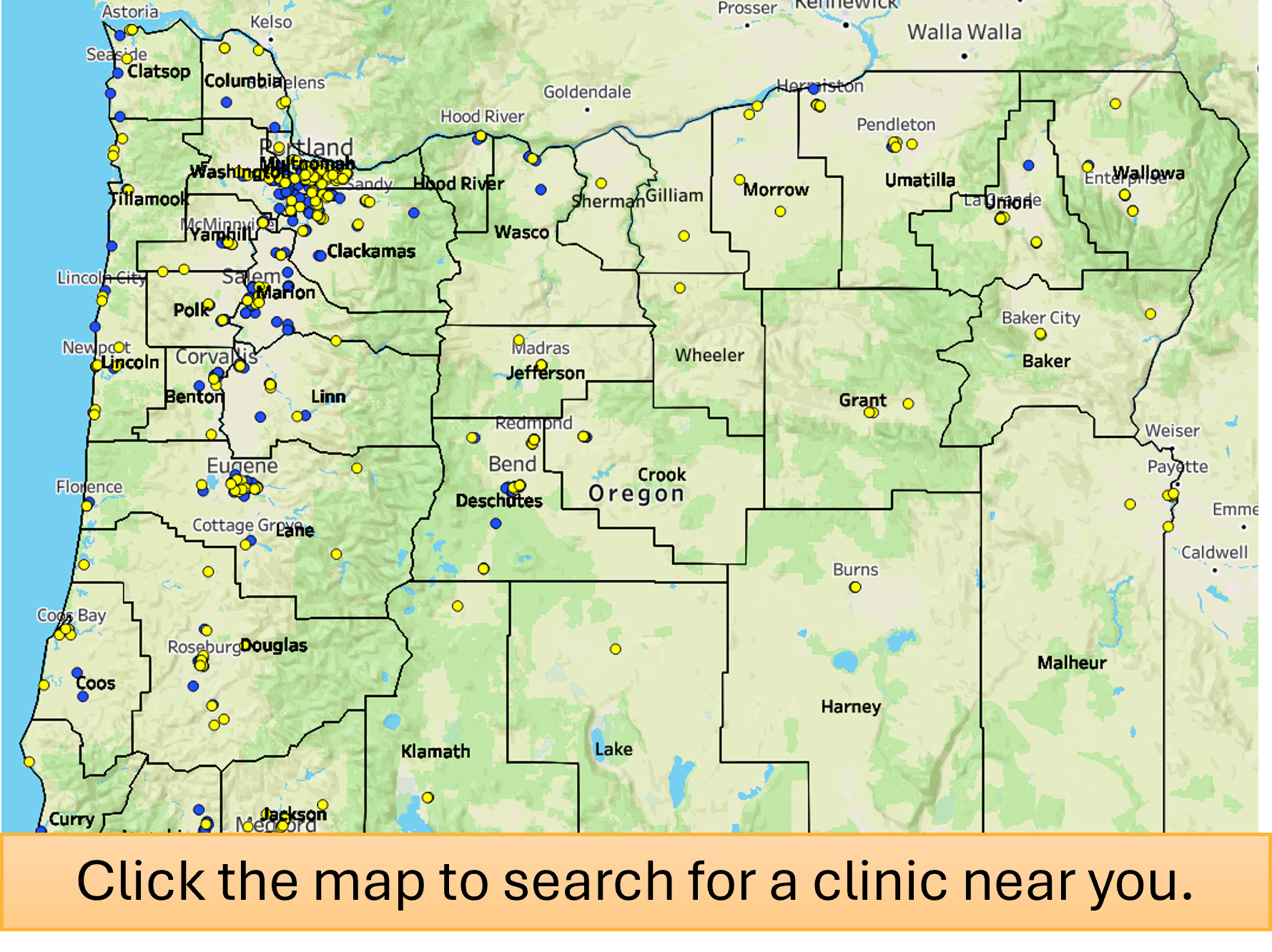
To receive vaccines at VAP-enrolled clinics, you must fall into one of the following categories:
- Children and teens under age 19 who are eligible for the
Vaccines for Children program.
- Uninsured adults ages 19 or older with certain risk factors.
- Adults ages 19 and older who are enrolled in Medicare or Medicaid (OHP).
Note: People of all ages who are privately insured (by employer or Marketplace plans, for example) can also receive vaccines at clinics enrolled in VAP.
Oregon Health Plan (OHP) is Oregon's Medicaid program whose members can receive recommended vaccinations at no cost at any location that accepts OHP.
OHP is open to all people and their families in Oregon who meet income and other criteria, regardless of immigration status. This includes adults who have undocumented status or Deferred Action for Childhood Arrivals (DACA) recipients.
Learn more about OHP and how to find out if you or your family members qualify.