Energy Facilities
Before a large energy facility is built in Oregon, the developer must
apply for a site certificate
from the Energy Facility Siting Council. The types of energy facilities subject to Council
jurisdiction are defined in
Oregon Revised Statute 469.300. Some types of energy facilities that would otherwise need a site certificate are
exempt from Council jurisdiction
(Listed under Status column).
The following types of energy facilities must have a site certificate from the Council
before construction:
-
Electric power plants with a nominal electric generating capacity of 25 megawatts or
more from thermal power, a combustion turbine power plant or a solar thermal power
plant.
-
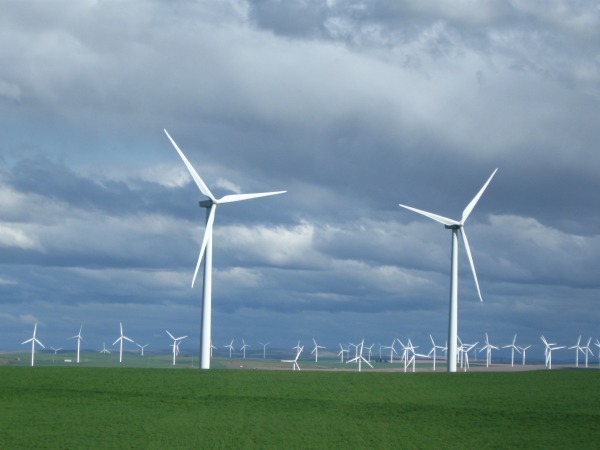
- Wind energy power generation facilities with an average electric generating capacity of 100 megawatts or more, or a combined nameplate capacity of 300 megawatts or more.
- Geothermal energy generation facilities with an average electric generating capacity of 50 megawatts or more, or a nameplate capacity of 55.5 megawatts or more.
-
A solar photovoltaic power generation facility using more than:
- 240 acres located on high-value farmland as defined in ORS 195.300;
-
2,560 acres (4 square miles) located on land that is predominantly cultivated or
composed of soils in capability classes I to IV;
- 3,840 acres (6 square miles) located on any other land.
-
Transmission lines of 230 kilovolts or more that are more than 10 miles in length and
constructed in more than one city or county in the state.
-
Surface facilities associated with underground natural gas storage facilities with
capacity greater than 50 million cubic feet per day.
-
Liquid fuel pipelines that are 6 inches or larger in diameter and 5 miles or more in
length.
- Liquefied natural gas storage facilities with capacity of 70,000 gallons or more.
-
Intrastate natural gas pipelines that are 16 inches or more in diameter and 5 miles or
more in length.
-
Synthetic fuel plants that produce gas, liquid or solid fuel capable of being burned to
produce the equivalent of 2 billion Btu of heat per day (except plants that use biomass
as the raw material).
-
Plants that convert biomass to gas, liquid or solid fuel products if any one product is
capable of being burned to produce the equivalent of 6 billion Btu of heat per day.
-
Small generating plants within an energy generation area if the accumulated effects of
development are similar to a single plant with an average electric generating capacity
of 35 megawatts or more.
- Radioactive waste disposal sites and nuclear installations.
Definitions
Nominal electric generating capacity means the maximum net electric power output of an
energy facility based on average temperature, barometric pressure and relative humidity at
the site during operation periods.
Average electric generating capacity means the peak generating capacity of the facility
divided by one of the following factors:
- For wind or solar energy facilities, 3.00
- For geothermal energy facilities, 1.11
- For all other energy facilities, 1.00
Standby Generators
Senate Bill 1525
(2024) adjusted statute to allow standby generators over 25 megawatts to connect to the grid
to provide emergency dispatchable power without obtaining a site certificate from the Energy
Facility Siting Council. Public utilities are required to report to ODOE on operation
annually. Submitted reports are available below.