
Oregon State Flag An official website of the State of Oregon »

Oregon.gov Homepage

November 2025 Education Update

Oregon Achieves... Together!

A Message from Oregon Department of Education Director Dr. Charlene Williams

ODE Director Dr. Charlene Williams 

Dear Education Community,

Autumn is in full swing: leaves are changing colors and crunching under our feet, the fog and rain help us appreciate the rare sunny periods that much more, and planning has begun for a busy holiday season with family and friends. It’s a season of transformation, gratitude and unity.

Transformation

I want to start by naming what we all see and feel — there’s a lot happening right now. We’re seeing several major fiscal and policy shifts happening at the same time: Congress passing H.R. 1, the federal government shutdown, and Governor Kotek’s direction to slow state spending to maintain state revenue stability. Each one of these has its own process and purpose, but together they can create a feeling of uncertainty. And it’s okay to acknowledge that — it can feel heavy, especially when the work we do is already so complex.

What I want you to hear from me today is this: ODE is steady, focused, and on it. We’re responding quickly and thoughtfully. We’re working with our state partners. And most importantly, we’re protecting the work that matters most — supporting Oregon’s students, families, and schools.

The Oregon Department of Education is in its own transformation as we strategically align our efforts under a unified plan that clarifies goals and outcomes, defines measurable objectives, and strengthens internal alignment. At the same time, we are deep in the work of implementing the 2025 Education Accountability Act (SB 141) that will bring shared accountability to Oregon’s education system — from the Capitol to the classroom. This work does not stop, because our scholars cannot afford for us to pause.

Gratitude

Even with all that is happening with the federal government, at this time there are no disruptions to federally funded education programs in Oregon. ODE has procedures in place to sustain services and reimbursements for the time being. Legal challenges from several states, including Oregon, via Attorney General Dan Rayfield, have stopped numerous executive orders from being enacted that could have significantly impacted our schools. And while the battles are not yet over, I am grateful to those who are working tirelessly to make sure all levels of government adhere to the law.

At the local level, I know administrators, educators and support staff have been hard at work making their schools a safe, welcoming place for our scholars. Thank you for all you do for our students: listening to their fears and concerns and speaking up for their rights. I am grateful that we are in this together.

Unity

We are stronger because of the diversity we have in our communities, our state and our nation and I want to remind us to celebrate it whenever we can. There are two stories below that highlight such celebrations. The first is about Native American Heritage Month and the installment of the flags representing Oregon’s nine federally recognized Tribes at the State Board of Education meeting room. I want to thank everyone who helped make that happen, including Tribal representatives and ODE’s Office of Indian Education.

The second story recognizes November as Transgender Awareness Month. It is heartbreaking and infuriating to see constant attacks against the transgender community by those who have great power and influence. I urge you to read more about what we need to do to make sure our schools are places of support, not hate.

As we continue through this season of transformation, gratitude and unity, let us remember that our strength lies in one another - in our shared purpose, compassion and dedication to Oregon’s scholars. Gwendolyn Brooks said it best, “We are each other’s harvest; we are each other’s business; we are each other’s magnitude and bond.” Let’s stay steady, focused and united.

In Love & Justice,

Dr. Charlene Williams

November is Native American Heritage Month
Celebrating Native American Heritage Month and including it in lesson plans is easier with the resources below.

ODE’s Senate Bill 13 Tribal History/Shared History page on the ODE website should be your first stop. It represents years of collaboration with Oregon’s tribal governments to tell the entire story of Oregon’s history and the culture of today. The page is packed with resources including newly released lesson plans for kindergarten through grade 3 and new Canvas-based professional development. Bookmark the page because new information is being added regularly. And don’t forget to subscribe to the Office of Indian Education’s monthly newsletter!

ODE is proud to announce the release of the 2025–2030 American Indian/Alaska Native Student Success Plan (AIANSSP)—a renewed commitment to ensuring that American Indian and Alaska Native students across Oregon have equitable access to culturally sustaining, high-quality education from early learning through postsecondary pathways.

The Smithsonian network of museums in Washington, D.C. includes the National Museum of the American Indian whose website has pages dedicated to helping K-12 educators. Be sure to check out the resources dedicated to teaching more accurately and thinking more broadly about the Thanksgiving story.

Closer to home, the Oregon Historical Society has a resource on their website called Experience Oregon, which is the cornerstone of their museum experience.

The best part is that all of this information is available year-round. So let Native American Heritage Month be the launching point for continuing to include this perspective in classes throughout the school year!

Posting of the Tribal Colors Ceremony

We also are proud to let you know that, last month, ODE hosted a historic event at the Public Service Building in Salem (ODE headquarters) where state and tribal dignitaries came together for the posting of the colors of each of the flags representing the nine federally recognized Tribes in Oregon. This event, which was several years in the making, marked the permanent installation of the flags in the State Board of Education meeting room.

Each of the Tribes sent dignitaries to represent their nations, to carry in the flags, and to offer remarks on the significance of this occasion. The Crooked River youth drum group from the Confederated Tribes of the Siletz Indians provided traditional songs to bring in the flags, honor veterans, and uplift the moment. The Siletz Veterans Honor Guard also attended to provide support, guidance, and honor traditional protocol.

The flags now stand as a lasting symbol of the Government-to-Government relationship between Oregon and the Tribes.


Honoring and Supporting Gender Expansive Youth
This November, we recognize Transgender and Nonbinary Empowerment Month, which also encompasses Transgender Awareness Week (November 13-19) and Transgender Day of Remembrance (November 20, 2025). This year, using SEED survey student write-in responses, ODE released Creating Schools where LGBTQ2SIA+ Students can Thrive, a data brief that details the successes and challenges facing LGBTQ2SIA+ students in our schools.

According to the 2024 Oregon Student Health Survey taken by 6th, 8th and 11th grade students, 10.8% are transgender, gender-expansive or questioning. The ODE LGBTQ2SIA+ Student Success Plan, resources webpage and Supporting Gender Expansive Students Guidance webpage outline strategies to increase gender-affirming support for youth, families and educators as we work together to build legacies of love and support for transgender and gender expansive youth in our school communities during this month and all year.


Access to Safe, Effective Vaccines in Oregon for Respiratory Virus Season
Respiratory virus season is upon us, and many are wondering about vaccinations for this year. The recently formed West Coast Health Alliance (WCHA) has released the Consensus WCHA 2025-26 Respiratory Virus Season Immunization Recommendations, providing clarity on vaccine eligibility for Oregonians and others in WCHA states. Additionally, the Oregon Health Authority’s (OHA) Getting Vaccines in Oregon webpage includes an FAQ and virus season immunization recommendations, both translated into 12 different languages. Educators are encouraged to share this information with school communities to promote health, information and access.

See the West Coast Health Alliance Frequently Asked Questions for the Public for specific recommendations for those at increased risk.

Key Information

  • COVID-19 Vaccines
    • Updated COVID-19 vaccines are available to anyone, 6 months of age and older, who wants them — this is unchanged from recent respiratory seasons.
  • Influenza Vaccine
    • o The WCHA endorses the Advisory Committee on Immunization Practices’ (ACIP) current universal recommendation for the influenza vaccine. All people 6 months of age and older should receive an updated influenza vaccine. These recommendations are unchanged from last year.
  • RSV Vaccine

Action Needed

  • What does this mean for people in Oregon who want a COVID-19 vaccine?
    • The updated COVID-19 vaccine is available to everyone 6 months of age and older in Oregon. Pharmacies can vaccinate anyone 7 years of age and older.
    • No prescription is required for the COVID-19 vaccine – either in pharmacies or in provider offices.
    • Medicaid, Medicare and most commercial insurers will continue to cover the cost of the updated COVID-19 vaccines in Oregon.

For up-to-date information, follow the OHA’s Getting Vaccines in Oregon webpage.


ODE, OHA partner to boost schools’ capacity to reverse overdoses
Oregon's schools are better equipped to prevent and respond to opioid overdoses following a collaborative effort last year to offer free overdose reversal kits to middle and high schools, colleges and universities across the state, as well as expanded substance use prevention resources, state officials say.

The collaboration between Oregon Health Authority (OHA) and the Oregon Department of Education (ODE) resulted in 692 schools receiving free opioid overdose reversal kits, totaling more than 14,000 additional doses.

The program marked an expansion of Save Lives Oregon and was possible because of one-time funding through Oregon's Opioid Settlement Prevention, Treatment and Recovery Board.

Every school in Oregon is now eligible to receive the kits. Previously, the program was limited to junior high schools and above.

In addition, new resources are available on ODE's Substance Use Prevention Education website to support educators, students and school communities in addressing youth substance use and opioid overdoses.

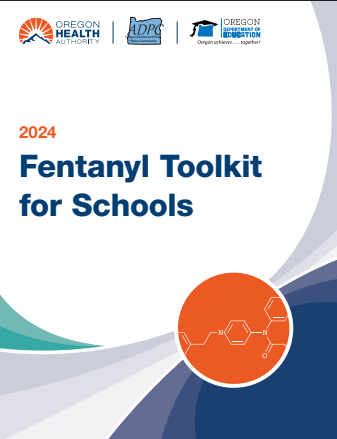
The tools are culturally responsive and aligned to substance use prevention education standards and build on the resources released last year, including the updated Fentanyl Toolkit for Schools.

Naloxone is a proven opioid overdose reversal medication that can restore breathing while waiting for emergency medical services to arrive. Quick access to naloxone is necessary for school staff to respond quickly to an opioid overdose on or near a school campus. Learn how to give naloxone here.

Each participating school received three metal boxes for easy access to naloxone, each containing 24 doses and face shields.

The kits reached:

  • 137 public school districts, or about 70% of Oregon districts.
  • 31 private schools and 47 charter schools.
  • 10 universities and 5 community colleges.

More than 8 in 10 participating schools placed the kits prominently on walls in publicly accessible areas.

Schools used the kits to respond to seven separate overdose events involving high school, middle school and community members, according to a survey of participating schools.

Both agencies shared the success of their partnership to prevent substance use and overdose deaths among youth and young adults as the U.S. recognized October as National Substance Use & Misuse Prevention Month.

Overall, youth substance use has been declining recently.

In Oregon, youth and adult overdoses decreased from 2023 to 2024. Youth – defined as people between ages 10-19 – account for 1% of all overdose deaths in Oregon. However, every life lost to overdose is a tragedy, especially to the families and communities left behind. Even one preventable death is too many.

Having naloxone available and equipping people with the skills to use it is one way to save more lives. Half of youth who died from an overdose had at least one other person present. However, only 24% of those youth were given naloxone.

Overall, the number of unintentional overdose deaths related to fentanyl nearly quadrupled between 2020 and 2022. In 2023, 1,833 Oregonians died of an unintentional drug overdose.

The school program was part of a larger statewide effort to increase supplies of naloxone throughout the state and to equip communities to prevent substance use and reduce overdoses.

Learn more about opioid overdose and prevention resources.


ODE In the News


Stay Up-to-Date on SNAP Benefits

The Supplemental Nutrition Assistance Program (SNAP) that provides help buying groceries for more than 750,000 Oregonians every month has been affected by the ongoing federal government shutdown. We understand the concern this is causing around the state and want to make sure you have the most up-to-date information.

The Oregon Department of Human Services (ODHS) administers the program and has a page on its website dedicated to SNAP benefits and the federal shutdown. That page will have the most current information available. You can also follow the ODHS Facebook page and ODHS Instagram account where they are frequently posting updates.

On October 29, Governor Tina Kotek outlined a coordinated state response that includes three actions: declaring a 60-day food security emergency, directing $5 million to Oregon’s statewide food bank network, and calling on all Oregonians to support their neighbors in need. On November 6, she directed ODHS to distribute $1 million in emergency assistance to Oregon’s nine federally recognized Tribes to help address the food security emergency across the state.

A Call to Action: Help Your Neighbors

Governor Kotek issued a statewide call to action for all Oregonians to help neighbors from going hungry and help their communities weather this crisis:

  • Donate.Donate today here or visit: OregonFoodBank.org/SNAP-Gap. Host a fund drive (the Oregon Food Bank has a guide on how to do this). Support the Regional Food Banks in the OFB Network. Oregon’s food bank network buys in bulk and can stretch your dollar further. If you would like to donate food, like canned goods, check in with your local food pantry to see if they are accepting food donations.
  • Share when you shop. Oregon Beverage Recycling Cooperative (OBRC) is stepping up for Oregonians to donate to Emergency Food Assistance Organizations using Oregon's Bottle Bill. OBRC is activating its Emergency Fund Oct. 30th – Nov. 30th to support 12 nonprofit organizations providing vital food assistance to Oregonians in need. To help or learn more visit bottledrop.com/food. Oregon’s grocers are also stepping up as they support hunger relief efforts every day and partner with our local food banks. Consumers will start to see in-store checkout campaigns and food collection points at many grocery stores next week to fund holiday meal programs and pantry essentials. She urges other Oregon private businesses to step up too, and the Governor is prepared to leverage public-private partnerships to put food on tables.
  • Volunteer. Food banks rely on volunteers to package food, stock shelves, and assist shoppers. Visit Oregon Food Bank’s Food Finder (in 19 languages) to access food today or support your local food pantry. If you would like to donate food, like canned goods, check in with your local food pantry to learn if they are accepting food donations and what they need. Check out volunteer opportunities here.

Governor Kotek is also directing the Department of Administrative Services (DAS) to expand its ongoing charitable giving campaign to include statewide non-perishable food donations and run through December 5.

ODHS encourages SNAP participants to:

Sign up for a ONE Online account or download the Oregon ONE Mobile app as the fastest ways to get notifications about your SNAP benefits.

ODE Child Nutrition Programs

ODE does not anticipate any immediate disruptions to Child Nutrition Programs and federally supported sponsors in Oregon. At this time, ODE’s operations remain stable, and sponsors should continue their work as usual. ODE will continue to evaluate the situation and keep schools, districts, Education Service Districts, and all sponsors informed if federal conditions change. More information is available in a recent Q&A document from ODE’s Office of Child Nutrition.


Elevating Education-System Employee Wellness

This month we will lean into the intersections of educator well-being and school-based suicide prevention, continue to explore the mind body connection, and learn about the amazing educator well-being work that North Powder School District is doing.

Mind Body Connection

Last month we learned that the Greek word for body is soma and that somatic means relating to the body. Neuroscience shows that our well-being directly impacts those around us. It’s contagious! When we take a moment to check in with our mind and body, we may realize we’re out of balance. With student success as our north star, let’s explore how supporting educator well-being is essential to creating a culture of belonging and wellbeing for Oregon’s schools.

This month we will learn about the connection between our mind, body and trauma. Learning about trauma can be empowering and transformative. One of the benefits of thinking about the connections between somatics, trauma and learning is that we can begin to think about how a traumatic experience can impact one’s ability to teach and to learn. The Trauma Research Foundation offers a Somatic Library, and this month’s resource is Trauma 101, which addresses how trauma impacts the body and the nervous system. This four-part series is taught by a trauma therapist who specializes in cutting edge brain and body-based modalities for the healing of complex developmental trauma.

School-Based Suicide Prevention: Creating Student and Employee Wellness

Oregon schools are key partners in suicide prevention, supporting students by fostering connection, belonging and access to help. Every district is required by Adi’s Act to adopt a board policy that requires a Student Suicide Prevention Plan. Once that foundation is in place, real impact happens when those plans are put into practice

This includes recognizing that employee wellness is integral to prevention. When educators and staff are supported, they are better equipped to show up for students with empathy and consistency. Supporting students through crises can be emotionally demanding. Recognizing and addressing educator stress, secondary trauma, and compassion fatigue is critical to sustain effective prevention work. Schools that invest in peer connection, reflective practice, and restorative workplace culture not only promote staff well-being but also strengthen their collective capacity to respond to student needs with consistency and care.

District and school leaders are encouraged to:

Together, these steps strengthen both student safety and staff resilience. Schools can access tools and resources for suicide prevention at the ODE Adi’s Act webpage.

Employee Wellness Spotlight: North Powder School District’s Wellness Focus

North Powder School District knows a simple truth: "We must nourish to flourish." Our commitment to staff wellness isn't just a poster on the wall—it's the foundation of everything we do. We believe that a staff member who feels cared for is a staff member ready to tackle any obstacle and bring their best selves into the school, ensuring that well-being trickles down to our students. This dedication shines through in our creative initiatives, developed directly from staff feedback on needs like mental health, sleep, and movement.

We start each in-service focusing on wellness and partnering with area businesses to support us in this venture. This year, we enjoyed a variety of wellness activities together — from bowling, to yoga, to an opportunity to try a sound-healing session, to creating our own desk-buddy plants. We also purchased walking shoes for each staff member and treated everyone to a refreshing, healthy smoothie.

Throughout the year, we have a variety of wellness opportunities, including Wellness Mondays—a sacred, meeting-free space for yoga, fitness, healthy meals, and goal setting, to name a few, and the legendary Woot Woot Wagon delivering healthy, surprise snacks; we make care a daily practice. Best of all, staff can recharge in our dedicated Staff Wellness Room, complete with a relaxing massage chair, exercise gear, or even check out paddleboards and kayaks! By investing in our educators' health, we ensure they are fully equipped and energized to do the most important work: supporting our students in their learning continuum. We appreciate the grant opportunities through Oregon Well-Being Trust!

How are you Elevating Education-System Employee Wellness?

We’d love to hear from you to acknowledge the creative ways school districts, ESDs and communities are elevating employee wellness in their districts. If you are interested in being featured in future communications, please reach out to Nat Jacobs at ode.healthyschools@ode.oregon.gov.


Student Spotlight