
Oregon State Flag An official website of the State of Oregon »

Oregon.gov Homepage

May 2025 Education Update

Oregon Achieves... Together!

A Message from Oregon Department of Education Director Dr. Charlene Williams

ODE Director Dr. Charlene Williams 

Dear Education Community,

Teachers: More than Appreciation

This month we celebrate Teacher Appreciation, but as we all know, one month is not enough for this worthy recognition. Oregon’s educators show up each and every day with extraordinary dedication, resilience and heart. They are the pulse of our schools and they do more than teach.

To our Oregon teachers: You inspire, nurture, advocate and empower. You meet students where they are, lift them up and help shape their knowledge and experiences; you contribute to their understanding of the world around them and dreams for the future. The impact you have on lives—often quiet and unseen—is both profound and lasting.

In a world full of change and challenges, you remain a constant source of hope and guidance. For every lesson planned, every late night grading, every word of encouragement—you deserve our deepest gratitude.

On behalf of all of us at the Oregon Department of Education: thank you for everything you do for Oregon students.

Early Literacy Visit: Harney and Lake Counties

I had the pleasure this month of visiting Harney and Lake Counties to connect with educators, families, and community partners who are deeply committed to early literacy. It is always great to be in these spaces because context matters - the needs of our schools in rural Oregon are different than the needs of those in other parts of the state. These visits help reinforce how our agency can support individual districts and are a powerful reminder of the impact that dedicated, local efforts have in shaping a strong foundation for our youngest learners.

Left photo: Dr. Williams & Deborah Watts, regional teacher of the year, Arthur D. Hay Elementary, Lakeview School District.
Right photo: Dr. Williams reading with a student at Double O Elementary in Harney County.

Educator Wellness

To support education-system employee wellness, we will begin featuring a monthly article in the Education Update newsletter. We know that creating a culture of belonging and holistic wellness for the education workforce leads to higher levels of professional satisfaction and promotes employee retention and well-being, which creates a ripple effect and impacts students’ success and positive outcomes. Their first article is included below, in the body of this month’s newsletter - we hope you will take the time to review.

In Love and Justice,

Dr. Charlene Williams


Elevating Education-System Employee Wellness

Breathe deep, find your feet, smile, eyes on the horizon
Welcome to the Employee Wellness monthly news section, brought to you by the ODE Health in Education Unit. This unit works to advance concepts and resources for health, mental health and well-being in Oregon’s education system.

In a 2023 guide for developing systems and structures that support educator well-being, the authors describe how “an ecological systems lens (Bronfenbrenner, 1979) supports leaders in understanding how culture and various experiences, relationships, environments and systems influence an individual, a group and/or a system.” The three levels of this ecological system can be described as follows:

  • Personal/Individual refers to what is going on within individual people (biologically, psychologically).
  • Interpersonal/Collective refers to individuals’ interactions with each other; it includes relationships, community and the collective experience.
  • Structural/Systems refers to infrastructure, processes, organizational aspects, resources and policies that establish the conditions for the ways people think and act.

In order to effectively address education-level employee well-being, efforts need to be made on all three levels of this ecological system. We look forward to sharing monthly information and resources to support school communities in these efforts. We’re all in this together!

In the meantime, we’d also like to hear from you to acknowledge the creative ways school districts, ESDs and communities are elevating employee wellness in their districts. If you are interested in being featured in future communications, please reach out to Bhagavati Mullock at ode.healthyschools@ode.oregon.gov.

In addition, if you’re planning to attend the Annual COSA Seaside Conference this year, please consider attending the pre-conference session entitled, Oregon Education Workforce Wellness Initiative: A Collaboration Between ODE, TSPC, and EAC. This interactive, experiential session will explore ways to tend to wellness at the personal/individual, interpersonal collective, and structural systems levels. Registration is available online.


Subscribe to the Wellness Wire Newsletter
Our team at Oregon Healthy Schools is excited to announce the launch of The Wellness Wire, our brand new newsletter focused on all things health and well-being for schools, districts, and beyond! This monthly publication will provide valuable insights, articles, and resources to support a healthier, happier school environment for students, staff, and families alike.

Stay tuned for upcoming issues focused on nutrition, physical activity, social and emotional well-being, staff-wellness and more. Together, let's foster a community where everyone thrives!

Read the first article here, and enter your email to subscribe to future issues. Questions or feedback? Please reach out to us any time by completing this form. We also encourage you to stop by during our new weekly office hours on Wednesdays from 1:30 - 2:00 p.m. We would love to connect!


Apply to join the 2025 Social Science Instructional Materials Evaluation Committee!

The Oregon Department of Education invites applications for the 2025 Social Science Instructional Materials Evaluation Committee. We are seeking passionate K-12 teachers, curriculum specialists, and education professionals with Social Science expertise to help shape Oregon's educational future. As a committee member, you will evaluate and recommend high-quality instructional materials for adoption by the Oregon State Board of Education. This valuable professional development opportunity takes place during the summer of 2025 and includes an honorarium ranging from $900-$1,990, depending on committee assignment.

Detailed participation requirements are included in the application form. Apply now to share your expertise and make a lasting impact on education across our state. The application is open through May 16, 2025. For more information, please contact the Instructional Materials team at ODE.InstructionalMaterials@ode.oregon.gov or (503) 551-3123.


May is Asian American Pacific Islander Heritage Month
May is Asian American and Pacific Islander (AAPI) Heritage Month (also acknowledged as Asian Pacific Islander Desi American (APIDA)), a time to honor the rich histories, vibrant cultures, and significant contributions of AAPI communities throughout the United States. The 2025 theme, "A Legacy of Leadership and Resilience," celebrates the enduring spirit of AAPI leaders who have established a foundation for future generations to thrive amid change and adversity.

As educators, this month provides an excellent opportunity to incorporate AAPI perspectives, histories, and cultural contributions into your curriculum. Below are valuable resources for both elementary and secondary educators:

Resources for K-5 Educators

AAPI History Hub
A comprehensive collection of K-12 resources, including lesson plans, books, and films, ready to integrate into your teaching.

Japanese American National Museum
Free education resources including lesson plans on Japanese internment, origami videos, and activities encouraging critical reflection on neighborhoods and communities.

PBS LearningMedia: Asian Americans Collection
Over thirty lesson plans based on the Asian American PBS series, including age-appropriate materials for elementary students on topics like immigration, civil rights, and cultural contributions.

Resources for 6-12 Educators

Teach Asian American Stories
Offers frameworks and guides for incorporating Asian American histories into Grades 6-12 Social Studies curriculum with sample resources and texts.

The Asian American Education Project
Provides thorough lessons and activities about Asian Americans from the 1890s through today, including resources on early Asian Americans and post-9/11 experiences.

OCA National Center: K-12 Curriculum Project
Led by experts in education, policy, and ethnic studies research, this project develops and vets AANHPI lesson plans and materials to push for nationwide adoption.

Committee of 100
Offers five free lesson plans on Chinese American history specially designed for Grades 6-9, examining multi-faceted Chinese American contributions to U.S. society.

Teaching AAPI histories and perspectives throughout the year—not just during heritage months—helps create more inclusive learning environments where all students feel represented and valued.

For more information about local AAPI Heritage Month events and additional educational opportunities, please visit asianpacificheritage.gov.


May Is Wildfire Awareness Month
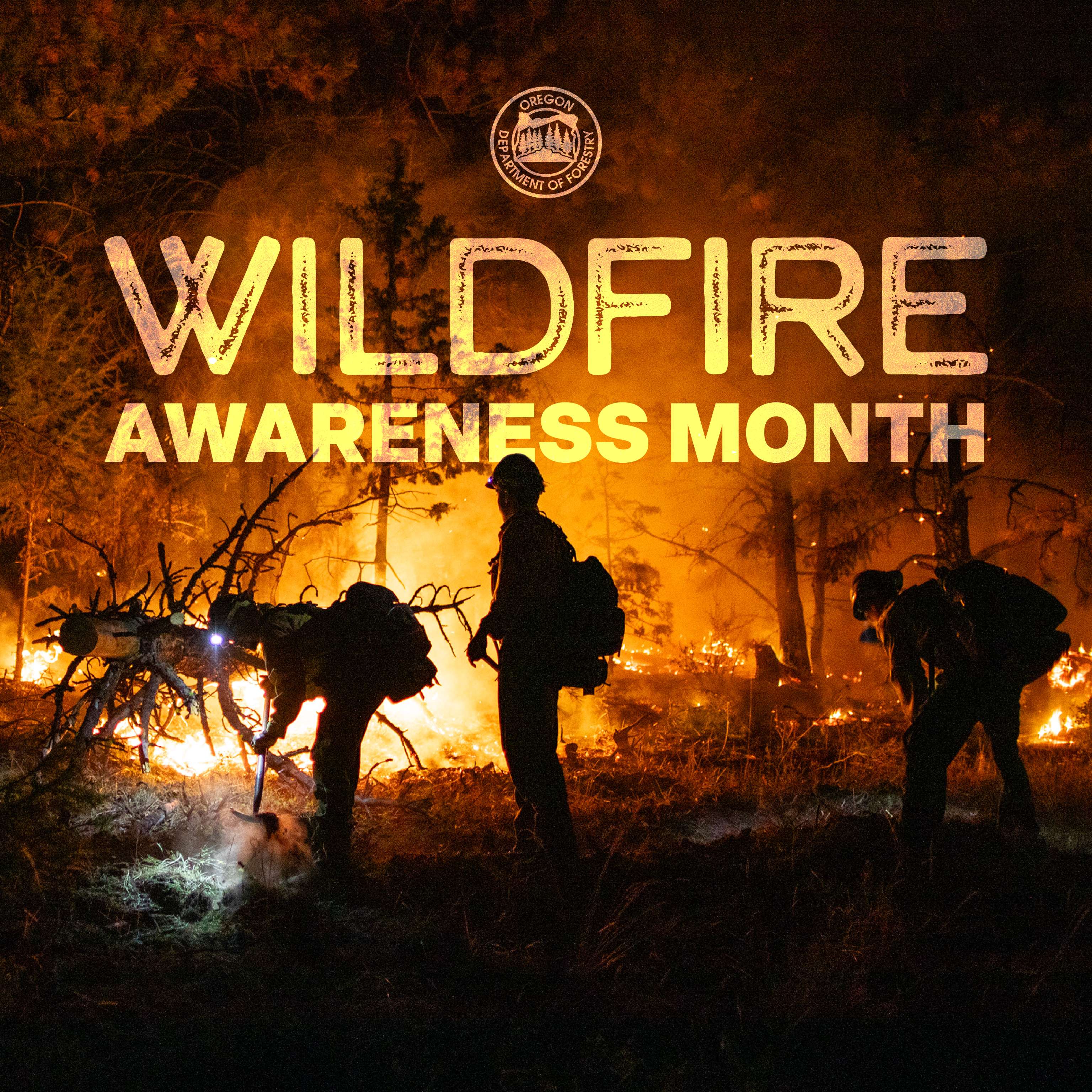
Every year, wildfires impact Oregon communities. May is designated as Wildfire Awareness Month to make sure everyone has preparedness in mind for the upcoming fire season.

This year, Governor Kotek signed a Memorandum of Understanding between the Department of the Oregon State Fire Marshal and the Insurance Institute for Business & Home Safety (IBHS), launching a partnership to explore ways to build resilience within Oregon communities, encouraging adoption and implementation at the neighborhood scale. IBHS, an independent, 501(c)(3) nonprofit scientific research and communications organization supported by property insurers, reinsurers, and affiliated companies, has translated years of wildfire research into Wildfire Prepared, the first-ever wildfire mitigation designation program. Read more about the announcement on Governor Kotek’s website.

Check out these additional resources for ways you can prevent and prepare for wildfires:


May is Military Appreciation Month
Military Appreciation Month takes place every year throughout the entire month of May. Check out these resources to learn more:


ODE In the News


Competitive Comprehensive Literacy State Development (CLSD) Application Released

On May 5, ODE launched the Competitive Comprehensive Literacy State Development (CLSD) Request For Application (RFA) for Oregon school districts! The application window closes June 30, 2025.

The competitive CLSD grant provides $55 million in federal grant-in-aid over four years to support districts in improving literacy outcomes for Oregon’s most underserved children, from birth through 12th grade. Approximately $11 million per year will be distributed to school districts via a competitive process, with up to $22 million available in year 1 of the grant.

ODE anticipates awarding 30-50 districts out of the 100 eligible grantees, with annual allocations ranging from approximately $150,000 to $1,100,000. Grant awards will be determined through a competitive process available to eligible public school districts that apply. Eligibility is based on specific indicators outlined by federal requirements. Districts can check their eligibility status by consulting the Oregon CLSD Eligibility Ranking and Preliminary Allocation Tool.

To learn more and apply, please visit the CLSD Website. For additional questions, please email K12.Literacy@ode.oregon.gov.


Summer grocery help is back!

Healthy eating throughout the summer helps students grow strong and do well in school. That’s why we’re happy to share that the Oregon Summer EBT program is back for summer 2025! This program gives families money to help buy groceries when school is out. Each eligible student can get $120 for food over the summer. Benefits begin issuing on May 22.

Who can get this help?

A child may automatically qualify if they:

  • Are in a family that gets SNAP, TANF, or Oregon Health Plan (Medicaid) and meets income rules.
  • Get free or reduced-price school meals and meet income rules.
  • Are in foster care, part of a migrant education program, homeless, in a qualified Head Start program or part of the Food Program on Indian Reservations.

A child may be eligible by application if:

  • Their family meets the income requirements for free or reduced-price meals at school, and
  • They attend a school that participates in the National School Lunch Program (NSLP) or School Breakfast Program (SBP).

What else should families know?

  • If a family got Summer EBT in 2024 through an approved application, they don’t need to apply again. They will get the benefits on May 22, 2025.
  • If they’re new to the program, they must apply by Sept. 3, 2025. Paper applications are being accepted now. An online application is available after May 30, 2025. Go to sebt.oregon.gov for details.
  • They will get the money on an Oregon EBT card, which can be used at most grocery stores, farmers markets and other places that accept EBT.

Need help or want to apply?


Comprehensive School Counseling Survey Now Open

The Oregon Department of Education is seeking feedback on Oregon's Framework for Comprehensive School Counseling Programs. The survey is now open and closes on May 18 at 11:59 p.m. The main section of the survey takes approximately 10 minutes to complete, with optional questions for those with additional time to provide more in-depth responses on implementation.

ODE will share the results of the survey with an advisory panel during the 2025-26 school year who will use the recommendations to make updates to the Framework that will be presented to the State Board of Education by June 2026.

Please take the survey and/or share with colleagues who can provide valuable feedback. If you have any questions, please reach out to beth.wigham@ode.oregon.gov.


May Is Jewish American Heritage Month

Honoring Contributions and Resilience

May is Jewish American Heritage Month (JAHM), a time to celebrate the contributions of Jewish Americans to our nation's culture, history, and society. Established by Presidential proclamation in 2006, this commemorative month recognizes the more than 350-year history of Jewish Americans who have enriched every aspect of American life—from science and arts to law, politics, business, and social justice.

As educators, this month provides an excellent opportunity to explore Jewish American contributions, experiences, and histories with students. Below are valuable resources for both elementary and secondary educators:

Resources for K-5 Educators

Jewish American Heritage Month Website
Access lesson plans, teaching ideas, reading lists, and downloadable posters with companion resources featuring notable Jewish Americans.

ADL Education Resources
Find K-12 educational and family resources, including children's literature guides, lessons on Jewish history and culture, and materials addressing antisemitism.

Share My Lesson: Jewish American Heritage
Explore free PreK-5 resources that help young learners understand Jewish American contributions through age-appropriate activities and lessons.

Resources for 6-12 Educators

The Jewish Museum Education Resources
Access downloadable lesson plans focused on art, culture, and identity, with resources organized by topic for middle and high school students.

UnPacked for Educators
Videos, articles, and additional classroom resources on Jewish Americans.

Library of Congress Resources
Explore primary sources, multimedia materials, and teacher resources from the Library of Congress and partner institutions.

ADL's "9 Ideas for Teaching Jewish American Heritage Month"
Engage students with critical thinking activities exploring Jewish experience in all its diversity and complexity. Teaching Jewish American history and heritage throughout the year, not just during May, builds cultural understanding and helps create a more inclusive learning environment.

Please contact Rachel Nelson at the Jewish Federation of Greater Portland for additional information and resources celebrating Jewish American History Month.


May is National Mental Health Awareness Month

Positive mental health supports are crucial for building safe, welcoming school communities where all students, families, and staff can thrive. To understand what we mean when we say mental health, we recommend learning more about Mental Health Literacy to familiarize yourself with mental health terms, diagnoses, understanding stigma, and more.

ODE has many resources you can use to promote belonging, wellness, and well-being in your school community. You can find resources on the ODE website sorted specifically for students (Youth Resources), families (Family Resources), educators/school staff (Educator Resources), and administrators, school counselors, and other mental health professionals (Mental Health Professionals Resources). School staff could promote these resources at an all-staff meeting, or review them with PE teachers and school counselors, to determine how to bring youth resources into school days or instruction. We encourage schools to consider a Mental Health Month message, to promote mental health awareness for all in the community.

To go more in-depth on how your school community can address mental health concerns, we offer these tools for your systems-thinkers. The Student Sense of Belonging in Schools: Predictive Factors focuses on student responses to the Student Educational Equity Development Survey as it pertains to their sense of belonging. You can couple this learning with the School Health Assessment and Performance Evaluation system, which contains free and low-cost tools for schools improving mental health. Additionally, the Community Care Implementation Blueprint is a resource developed by ODE for strengthening school mental health systems by optimizing local resources and bringing together neighboring partners. For questions or implementation of the blueprint, reach out to us at our ODE mental health email address to learn more.

Suicide prevention, intervention, and postvention efforts can also support mental health awareness in your community. Take time to review your district’s Adi’s Act Plan for suicide prevention, intervention, and postvention. Encourage your staff to review the plan as well so they know what to do if they are concerned about a student’s safety. Suicide prevention can also include introducing or re-emphasizing strategies for building safe and supportive environments where students feel they belong.

Thank you for all that you do each day to ensure that Oregon’s schools are places of belonging, connection and wellbeing for students and staff.

Other resources we would recommend include:


Student Spotlight