
Oregon State Flag An official website of the State of Oregon »

Oregon.gov Homepage

August 2026 Education Update

Oregon Achieves... Together!

A Message from Oregon Department of Education Director Dr. Charlene Williams

ODE Director Dr. Charlene Williams 

I hope that you all have had some time over the past few months to rest, relax and recharge as we again find ourselves on the cusp of a new school year!

Coming Together in a Time of Need

Unfortunately, some have again had their summer interrupted by wildfires and navigating their impacts – smoke, poor air quality, evacuations, transportation challenges and more. This is a time when we see Oregonians coming together to help each other, and our schools are stepping up to provide locations for community meetings, shelter for those displaced by fires and staging areas for the brave men and women working around the clock to keep their communities safe.

Please check out the wildfire resources we posted in the May edition of Education Update to help stay on top of the changing conditions and know what to do should your community be threatened by fires.

Summer Is Another Season for Learning

This is a very busy time of year for educators as we prepare for the coming school year. But let’s not forget to remember the hard work we have put in over the summer as well. Around 35,000 students participated this year in summer learning programs thanks to investments provided by the Legislature and Governor Tina Kotek this biennium ($70 million over two summers).

Summer learning is the perfect example of state leadership meeting local innovation: HB 2007 set the vision and ODE set the parameters, but local communities were given the flexibility to shape the experience, reflecting student voice, cultural relevance and regional needs in their literacy-focused summer learning programming. Effective programs reflect so much more than what you see happening during the brief window of time in the summer. There is planning, hard work and follow through.

We had the chance to witness the model at PPS where scholars end up not just maintaining learning but growing and entering the school year better than they left. With a clear focus on literacy, partnership and equity, Oregon is building a high-quality, student-centered summer learning ecosystem.


Evidence shows that investments in summer learning support students to develop critical thinking skills, promote social-emotional well-being and inspire future leaders in the community. And you can just ask the students like we did. In the 2025 Student Voice Summer Survey Report conducted last year, students consistently reported feeling safe, welcomed, supported and engaged in their summer programs – conditions that research shows are essential for meaningful learning and participation. ODE remains committed to working with districts, the Governor’s Office and the legislature to expand access to these opportunities in the future.

A Season of Learning for Educators

Several districts capitalize on summer time to continue professional learning. I had the opportunity to join Salem-Keizer educators who gathered at Western Oregon University to engage in the important work of aligning instruction in reading and mathematics. Teachers, administrators, teacher leaders and special education staff worked alongside classroom teachers, strengthening their collective capacity to support student success. This was the whole educational ecosystem coming together.


Preparing for 2026-27

With the first day of school fast approaching, it’s the best time to plan your efforts to support regular attendance throughout the year. ODE has a number of tools available for schools to build relationships with families and help families establish routines from day one that can last all year long. Those resources include:

Scholars need to be in the classroom to learn and, while we’ve seen progress in the percentage of students attending school at least 90% of the time, there is a continued need to address attendance barriers, especially for Oregon’s students of color and those experiencing houselessness. Let’s make a concerted effort to make our schools safe and welcoming for all and reach out with support before bad habits can develop.

Getting Session Ready

While our immediate focus is on the start of the school year, the 2027 Legislative Session will be here before we know it. ODE staff are already busy preparing for what we expect will be another important year for education, and the work starts long before the first day of session in January. As an executive agency, our role is to work closely with the Governor’s office and to provide quality information to the legislature so our elected officials can make good decisions about resources.

When we are asked, “What would happen if…?” and “What would it take to do…?,” our teams have to have the answers and provide the data to back them up. Those questions are already coming in and we expect the flow will only increase as the year goes on. It’s always an exciting time at ODE!


New ELA Standards

The Oregon Department of Education (ODE) is excited to announce the release of the revised K-12 English Language Arts (ELA) and Literacy Standards. Over the past several months, a statewide panel of educators has been reviewing and updating the standards, which are the foundation of ELA education in Oregon public schools. The new standards were adopted by the State Board of Education in June and will be implemented beginning in the 2028-29 school year.

What’s New

The updated standards reflect new national research on the importance of extending foundational reading skills into grades 6-8, as well as expectations for rigorous learning in ELA and literacy instruction. The standards have also been restructured to be more user-friendly and accessible for teachers and leaders. This document shows a side-by-side comparison of ELA and literacy standards for a high-level overview of the changes.

What's Next

ODE will begin the review and adoption of ELA high-quality instructional materials, beginning with instructional materials evaluation criteria development. Additionally, ODE will be developing a series of resources in the coming months, including webinars and guidance documents to support implementation of the revised ELA standards.

Contact Us


Elevating Education-System Employee Wellness

Oregon’s educators are the foundation of the public education system, yet too often they are asked to sustain others while their own needs remain unmet. The wellness of adults in the K-12 system is not peripheral; it is the north star that guides transformational and equity-centered change. Oregon deserves this. As we approach the 2026-27 school year, to support education-system employee wellness, the ODE School Wellness, Inclusion Safety & Health Unit will continue to feature a monthly article in the Education Update.

This month’s column features a free four-part series on strategies to support nervous system regulation, an ODE white paper on Best Practices for Educator Workforce Well-being and Belonging, and a spotlight on wellness work happening in Willamette Education Service District.

Collective Care: Supporting Ourselves and Each Other

In case you missed it...last May, Peace in Schools offered a free weekly offering to share simple and powerful practices to support your nervous system and help you reconnect – with yourself and each other. The recordings from those four sessions are available online.

Best Practices for Educator Workforce Well-Being and Belonging: Quality Education Commission Best Practices White Paper

When Oregon’s educators feel supported, students benefit too. Schools are strongest when educators, students, and communities experience a sense of belonging, safety, and opportunity to grow.

Creating supportive workplaces for educators requires more than individual self-care. High levels of stress, fatigue, and burnout continue to affect many people working in Oregon’s K-12 schools. Addressing these challenges takes a coordinated effort across the education system to improve working conditions and foster a culture of well-being and belonging.

When educators feel valued and connected, they are more likely to stay in the profession and find satisfaction in their work. Strong workplace cultures also help create positive learning environments for students and strengthen school communities.

The Best Practices for Educator Workforce Well-Being and Belonging White Paper is now available online. The paper looks at the current experiences and needs of Oregon’s K-12 educator workforce and outlines strategies to support educator well-being and belonging. It also highlights how current efforts often rely on individual self-care and explores system-level changes that can better support educators across Oregon.

After reading the white paper, we invite you to share your thoughts and reactions. Your feedback is important. To provide input, please contact Bhagavati.mullock@ode.oregon.gov.

Educator Spotlight: Willamette Education Service District

The Willamette Education Service District (WESD) Wellness Program is designed to support staff well-being through opportunities that promote physical and mental health, resilience, and personal growth. Recognizing that employee well-being contributes to student success, WESD has built a wellness program centered on staff needs and feedback.

Since 2016, the Wellness Squad has developed inclusive wellness activities based on staff surveys, union input, and representation from sites across the district. This approach helps ensure that opportunities are flexible, accessible, and relevant for staff in a variety of roles and locations.

Program offerings include wellness spaces, virtual and in-person events, and self-directed activities such as “Choose Your Own Adventure” wellness challenges. In partnership with the Organizational Culture and Development Department and the Data Analysis team, WESD also uses staff feedback and demographic data to help create wellness opportunities that are responsive to the needs of its workforce.

Through leadership support, ongoing improvement, and a focus on belonging, the program helps reduce burnout, improve morale, and build a healthier, more connected workplace.

20 Minutes of Wellness

WESD offers and supports the use of 20 minutes per week of paid staff time for employees to use towards wellness activities during work hours. Those weekly 20 minutes may be used at one time or split between workdays.

Cooking Up Connection Through Wellness

Before the summer break, Willamette ESD staff gathered for a hands-on cooking class led by Nutrition Services Manager Shiloh Ficek. Participants sampled a warm potato and asparagus salad, a spring grain bowl, and homemade pasta with seasonal vegetables while learning cooking tips and techniques. Superintendent Dr. Joe Morelock joined as the sous chef, creating a relaxed environment where attendees could enjoy the food, ask questions, and connect with colleagues.

The cooking class is one of many activities offered through WESD’s employee well-being program, which was originally supported by a Flourish Grant from Oregon Well-Being Trust. WESD received its first employee well-being grant in 2016 and has continued the program after the grant period ended.

Throughout the year, the wellness team has offered a wide variety of opportunities for staff to build connections, try new activities, and support their well-being. Events have included cooking classes such as Bowls of Comfort: Soups, Stews, & Chowders, chili cook-offs, Popcorn Wednesdays, flu shot clinics, and physical activities like pickleball, rock climbing, snowshoeing, snow tubing, and bowling.

Staff interested in creative pursuits have also enjoyed activities at Board & Brush and Pots & Whatnots, along with a pottery workshop in McMinnville, a kayak tour in Salem, and plant swaps at the Marion and Yamhill Centers. Together, these offerings help foster a culture of well-being, belonging, and connection across the organization.
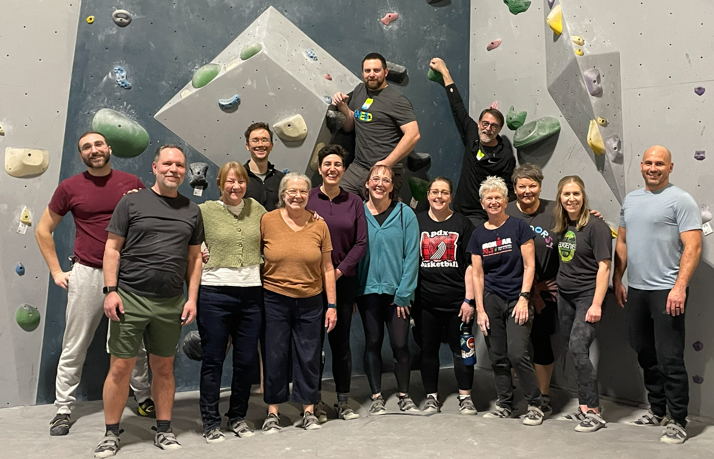
WESD staff at their Rock Boxx event

By using routinely collected staff feedback, the WESD wellness team continues to offer relevant, exciting, and supportive well-being opportunities for employees at their many worksites. Their wellness program maintains and prioritizes a culture of well-being.

How are you Elevating Education-System Employee Wellness?

We’d love to hear how school districts, ESDs, and community partners are supporting employee wellness and fostering a culture of belonging. We are always looking for examples of innovative and effective practices to highlight in future communications.

If you have a story, program, or activity you’d like to share, please email ode.healthyschools@ode.oregon.gov.

Looking for ideas or inspiration? Bhagavati is also available to connect with districts and education partners who are exploring ways to strengthen employee wellness efforts. To start a conversation, email Bhagavati.mullock@ode.oregon.gov.


Adopted 2026 Framework for Comprehensive School Counseling Programs

An updated version of Oregon’s Framework for Comprehensive School Counseling Programs is now in effect. It establishes a shared vision, purpose, structure, and core program components, providing the foundation for high-quality, comprehensive school counseling programs in Oregon public schools. The updated Framework, along with OAR 581-022-2060, was adopted by the State Board of Education in June and will be implemented starting this school year.

Revisions to the Framework

The framework reflects current research, incorporates updates from the American School Counseling Association National Model, aligns with Oregon statute and rules, and integrates feedback from statewide engagement. It strengthens and clarifies a coordinated, student-centered approach within a multi-tiered system of supports by defining expectations for service delivery, providing role clarity for counseling staff, and committing to ensuring every student receives appropriate services and supports. It also focuses on core vision, structure, and program components, with implementation guidance provided separately to support flexibility and usability. Check out this document for a high-level summary of key updates.

What's Next

ODE will develop resources for districts and schools in the coming months, including webinars, guidance documents, templates, examples, professional learning opportunities, and technical assistance to support implementation. Visit ODE’s Comprehensive School Counseling webpage for updates as new resources are released.

Contact Us

If you have questions about the adopted 2026 Oregon’s Framework for Comprehensive School Counseling Programs, please contact ODE.OregonCSC@ode.oregon.gov.


ODE Leadership Update

This school year will start with some new faces on the Oregon Department of Education leadership team compared to last year.

Eric Anderson is the new Assistant Superintendent for the Office of Teaching, Learning, and Assessment. Anderson came to us from the Lane Education Service District where he served as an assistant superintendent, leading work across school improvement, special education and regional service delivery in partnership with districts across Lane County. He has a deep background in school leadership as principal in elementary, middle and high schools, as well as district-level curriculum leadership.

Dr. Andrea Lockard is now the permanent Assistant Superintendent of the Office of Research, Assessment, Data, Accountability, and Reporting (RADAR). She had been in the position in an interim role while also continuing her leadership as Director of Assessment and Student Reporting. Prior to her work at ODE, Dr. Lockard served as a classroom teacher, instructional coach, building principal, and district office director across both small and large districts in Oregon. Her leadership has been instrumental in shaping instructional best practices, guiding K-12 curriculum adoption, and supporting meaningful school transformation efforts.

Lindsay Baker, ODE’s Strategic Initiatives Officer, is serving as Interim Deputy Director of Operations through fall 2026. Since joining the agency last August, Baker has played a key role in implementing Senate Bill 141, building ODE’s Shared Accountability efforts, and advancing and implementing our new 2026-28 Strategic Plan, demonstrating strong leadership, collaboration, and commitment to our mission. Baker previously held various positions in the Oregon Legislative Assembly, the Department of Administrative Services, the Office of the Governor, and ODOT. Later this year ODE will begin a recruitment process for a permanent Deputy Director of Operations.


August Is National Immunization Awareness Month

Submitted by the Oregon Health Authority

National Immunization Awareness Month (NIAM) is an annual observance highlighting the importance of vaccination for people of all ages. In Oregon and around the world, vaccine-preventable diseases are still a threat, from polio to whooping cough to measles. Our state, like many others, has seen an increase in measles, with 35 cases reported in the state as of July 29. Measles can be dangerous, with common complications including ear infection, lung infection, and diarrhea. Swelling of the brain is a rare but much more serious complication, and approximately one to three of every 1,000 measles cases will be fatal.

The MMR vaccine provides excellent protection for most people against measles, with two doses being 97% effective at preventing the disease. When vaccination rates in a community are very high, about 95% for measles, the virus can’t find enough hosts to spread easily, so vulnerable community members like children too young to be vaccinated are better protected.

School staff can help keep schools and communities protected from vaccine-preventable disease by collecting updated immunization records for students and notifying families of missing vaccines. If families are unsure how to access immunizations, refer them to 211, or direct them to the Oregon Health Authority’s (OHA’s) Guide to Getting Vaccines in Oregon.

A large majority of families choose to vaccinate their children in Oregon, with 90.2% of students complete for all school-required vaccines. Find your school’s or childcare provider’s vaccination rate by visiting OHA’s school immunization dashboard. For further learning about school vaccines, visit the Oregon School Immunization website. Let’s continue to work together to keep children healthy and safe in Oregon schools!


ODE In the News


Student Spotlight