 Oregon's natural and working lands — forests, grasslands, rangelands, farmlands, wetlands, developed areas and open spaces — produce many benefits, including opportunities to sequester and store carbon, which would otherwise contribute to climate change. The Oregon Department of Energy supports the implementation of activities that enhance or protect land-based net carbon sequestration on natural and working lands across the state.
 Through the adoption of Oregon House Bill 3409 in 2023, the Oregon Legislature established a policy framework to advance and implement natural climate solutions on natural and working lands to help mitigate future impacts of climate change. The new framework offers an opportunity to develop, track, and support strategies to advance sustainable land management, conservation, and restoration activities that enhance or protect carbon sequestration and storage on natural and working lands.
2025 Land-Based Net Carbon Inventory
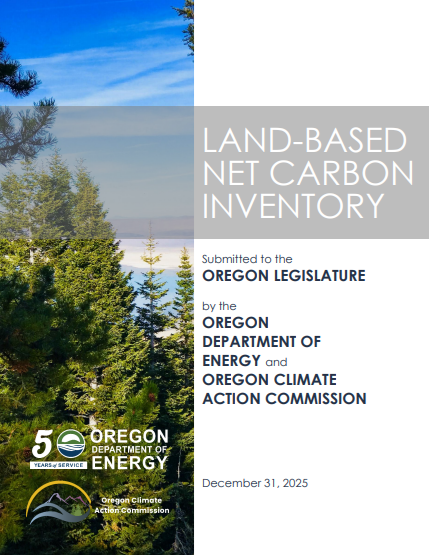 On December 31, 2025, ODOE published Oregon's first Land-Based Net Carbon Inventory.
-
Appendix A – Land Category Definitions for the Land-based Net Carbon Inventory with Oregon-specific Ecosystem or Working Lands Information
-
Appendix B – Land-based Net Carbon Inventory Categories and Methodological Tiers
-
Appendix C – Table Comparing Emissions Sources in the Sector-Based Greenhouse Gas Emissions Inventory and the Land-based Net Car bon Inventory
-
Appendix D – State-specific Datasets Reviewed for Inventory
-
Appendix E – Detailed Inventory Methods
-
Appendix F – Detailed Results
-
Appendix G – List of Contacts from Inventory Development
-
Appendix H – Public Comments
Draft Report and Comment Period
ODOE held a public webinar on December 5, 2025 presenting a draft of Oregon's first Land-Based Net Carbon Inventory.
ODOE also held a public comment period on this document that closed Dec. 19, 2025. Thanks to those who submitted feedback, which informed the final report.
2025 Natural Climate Solutions Workforce Development and Training Programs Needs Study
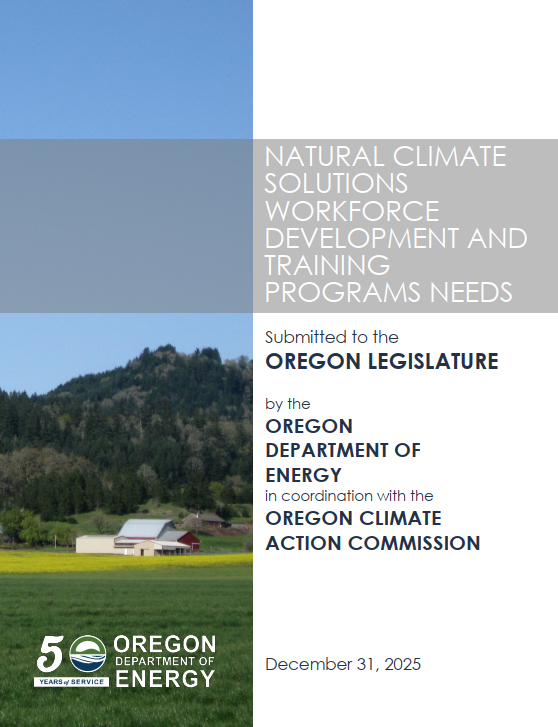 On December 31, 2025, ODOE published a Natural Climate Solutions Workforce Development and Training Programs Needs Study.
ODOE held a public comment period on this document that closed Dec. 22, 2025. Thanks tothose who submitted feedback, which informed the final report.
What are Natural Climate Solutions?
Natural climate solutions are land management practices and other activities that sequester and store carbon from the atmosphere through natural processes while also maintaining or enhancing ecosystem resilience and human well-being.
Some benefits of natural climate solutions include:
- Improving water filtration and storage processes
- Maintaining biodiversity
- Providing pollinator habitat
- Enhancing soil health
- Reducing flood damage
- Mitigating wildfire risk
As the climate changes, these benefits will help strengthen Oregon's resilience to climate disturbances and severe weather events like wildfire, floods, and extreme heat. ODOE is collaborating with the Oregon Climate Action Commission (Commission) and other state agencies to inform and advance strategies that implement natural climate solutions across Oregon's lands.
Advancing Natural Climate Solutions
HB 3409 lists the policy objectives for Oregon to implement strategies that advance natural climate solutions, research the effects and benefits of natural climate solutions, and incentivize investments in natural climate solutions.
To further these objectives, ODOE and the Commission, in collaboration with Oregon's natural resource agencies, aim to:
- Quantify the amount of carbon that is sequestered and stored on Oregon lands.
- Establish goals for increasing carbon sequestration across the landscape and metrics for evaluating progress towards achieving those goals.
- Study the workforce and training programs needed to deploy natural climate solutions on natural and working lands.
The agencies listed in ORS 468A.193 include:
- The Department of Agriculture
- The Department of Fish and Wildlife (view its Natural and Working Lands Program page)
- The Department of Forestry
- The Department of Land Conservation and Development
- The Department of State Lands
- The Oregon Watershed Enhancement Board
- The Parks and Recreation Department
Current Natural Climate Solutions Work
On December 31, 2025, ODOE and the Commission published a
Land-Based Net Carbon Inventory for Oregon’s natural and working lands that quantifies greenhouse gas emissions and removals from land use, land use change, forestry, and disturbance (such as wildfires). The balance of greenhouse gas emissions and removals is known as “net carbon flux.” The inventory will help Oregon land managers, agencies, the Commission, and other groups concerned with climate change understand how certain actions change net carbon flux from the land over time.
ODOE expects to update the Inventory every two years.
ODOE and the Commission are establishing a baseline for net carbon flux on Oregon’s natural and working lands and
will adopt nonbinding goals to increase net carbon sequestration and storage across Oregon’s landscape over time.
In collaboration with the named agencies, ODOE and the Commission are developing several metrics to track progress and outcomes over time. Activity-based metrics will help estimate net carbon flux resulting from natural climate solutions and other land management activities. Community impact metrics will help evaluate the positive and negative effects of natural climate solutions on local communities, economies, and ecosystems.
In addition to providing technical expertise and project management for the work described above, ODOE provides staff support for the Commission’s natural and working lands initiatives in two specific ways:
Natural & Working Lands Fund
In 2023, HB 3409 included a Natural and Working Lands Fund (Fund) to support investments in natural climate solutions. It directed the Commission to determine how the fund is allocated between four of the seven state agencies responsible for implementing natural climate solutions—the Oregon Department of Agriculture, the Oregon Department of Fish & Wildlife, the Oregon Department of Forestry, and the Oregon Watershed Enhancement Board. In consultation with these four agencies, ODOE and the Commission are also responsible for tracking and reporting on the progress of investments made through the Fund.
View the Commission’s 2024 Natural & Working Lands Fund Reports to the Legislature.
Natural & Working Lands Advisory Committee
In 2025, the OCAC convened a Natural & Working Lands Advisory Committee to advise the commission on its work to advance natural climate solutions in Oregon. The make-up of the Advisory Committee is detailed in ORS 468A.197 and members reflect a diversity of expertise, perspectives, and lived experiences centered around Oregon’s natural and working lands and the numerous industries, vocations, and interests that are intrinsically linked to these landscapes. Advisory Committee members have expertise in agriculture, forestry, conservation, ranching, recreation, coastal wetlands, and a multitude of land management practices.
For more information on the Natural & Working Lands Advisory Committee, including meeting schedules and supporting materials, please
visit the Commission’s website.