Oregon School for the Deaf Student Wins State Poetry Out Loud Competition
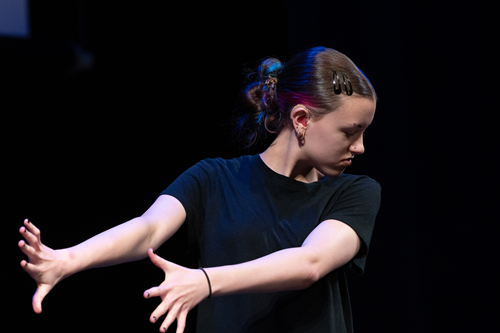 Congratulations to Emma Keen, a high school junior at the Oregon School for the Deaf (OSD), for winning the 2026 Oregon Poetry Out Loud competition in Salem! Keen will represent the state in the national competition in Washington, D.C., next month.
Keen, who is student body president at OSD, performed
“Low-Tide," by Edna St. Vincent Millay,
“From One Who Stays" by Amy Lowell and
“I am Like a Leaf" by Yone Noguchi to capture the title. It’s the third time in the last five years that an OSD student won the competition and the fourth win overall for the school. The runner-up was Bena Rodecap, a senior at Grant High School in Portland who won last year’s competition.
More in this story from I Heart Radio.
OSD’s previous winners are Kari Morgan (2023), Trayshun Holmes-Gournaris (2022) and Tiffany Hinano Hill (2009).
Oregon Summer EBT food benefits are back for 2026!
 Giving families more access to food during the summer means students will show up for the first day of class ready to learn. Last year, more than 361,000 children participated in the Oregon Summer EBT food benefits program. The 2026 Summer EBT program kicks off this June, continuing our commitment to supporting students and families all summer long.
Program basics remain the same in 2026. Families will receive one payment of $120 on an Oregon EBT card for each eligible child. Children ages 6-18 are eligible for benefits.
Who is automatically enrolled in Summer EBT?
- Most families will get Summer EBT automatically if they are receiving other benefits. This includes families who received Summer EBT in 2025 and continue to meet eligibility requirements. These families do not need to apply.
- Automatically enrolled families will receive benefits on their existing Oregon EBT card
starting on June 4, 2026.
- Families who need a new card should call 855-328-6715.
Who needs to apply for Summer EBT?
- Families who meet household income requirements and have children attending a school with the National School Lunch Program or the School Breakfast Program, but who did not participate last year and are not receiving other benefits from the Oregon Department of Human Services (ODHS) need to apply.
Important dates
- The online application
opens on June 5, 2026. The last day to apply is Sept. 1, 2026.
- Paper applications are available on the
Summer EBT website now.
Need more information?
The Summer EBT call center will be open from
June 1 - September 25, 2026, to help with Summer EBT-related questions. Call 1-833-ORE-SEBT (1-833-673-7328). Discover your path to receiving Summer EBT by visiting the
Summer EBT website or the
Spanish language version of the Summer EBT website.
Elevating Education-System Employee Wellness
 Welcome back from Spring Break! The Employee Wellness column is brought to you by
ODE’s School Wellness, Inclusion Safety & Health Team (SWISH). This month we will learn about the great work happening in Glide School District, get a refresher on the interconnectedness of wellness work using the ecological model, and then lighten our mental load with wellness podcasts from The Teaching Well.
Welcome back from Spring Break! The Employee Wellness column is brought to you by
ODE’s School Wellness, Inclusion Safety & Health Team (SWISH). This month we will learn about the great work happening in Glide School District, get a refresher on the interconnectedness of wellness work using the ecological model, and then lighten our mental load with wellness podcasts from The Teaching Well.
District Spotlight
Glide School District has supported over 90% of its employees with its employee well-being programs! The district has partnered with
Thrive Umpqua to maintain a team of three wellness coordinators; this team works with a group of staff members to implement ongoing activities throughout each school year.
Using the Flourish Grant from Oregon Well-Being Trust, the wellness team has provided many wellness opportunities, such as snow tubing, cross-country skiing, on-site chair massage, a Women on Weights club, in-service lunch days, self-defense and art classes, and the very popular soup-and-smoothie delivery during workdays.
The strongest well-being programs work to include all staff, and Glide School District’s wellness team truly embodies this idea. Employees in the Transportation Department, for example, don’t always have the time or availability to participate in on-campus activities, but a member of their team requested a foldable picnic table to use when the weather is nice. This purchase has helped the transportation staff enjoy spending time together outdoors, and it demonstrates that creativity and listening to the needs of employees are a cornerstone of well-being work.
Interconnectedness of Wellness Work
 In
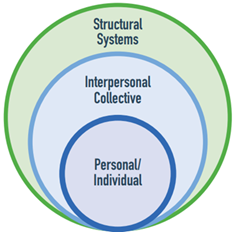
Creating a Culture of Care, the authors describe how “an ecological systems lens supports leaders in understanding how culture and various experiences, relationships, environments and systems influence an individual, a group and/or a system.” The three levels of this ecological system can be described as follows:
In
Creating a Culture of Care, the authors describe how “an ecological systems lens supports leaders in understanding how culture and various experiences, relationships, environments and systems influence an individual, a group and/or a system.” The three levels of this ecological system can be described as follows:
-
Individual refers to what is going on within individual people (biologically, psychologically).
-
Collective refers to individuals’ interactions with each other; it includes relationships, community, and collective experience.
-
Systems refers to infrastructure, processes, organizational aspects, resources and policies that establish conditions for the ways people think and act.
To effectively address education-level employee well-being, efforts need to be made on all three levels of this ecological system.
This four-page summary offers a way of thinking about wellness practices and how they can transform school systems in a way that are inclusive and sustainable.
The Teaching Well is an organization of educators and clinicians that seeks to stabilize schools by equipping educators with the resiliency and social-emotional skills to communicate and collaborate more effectively. The Teaching Well does a beautiful job of weaving all three levels of wellness work into their professional development and support services. If you have some time, why not listen to a podcast on your way to or from school?
Check out their podcasts on topics such as burnout, boundaries, rest and recovery, compassion fatigue and
Holding Fast: Staying Steady When you Need it the Most.
Big shout out and thanks to Oregon Well-Being Trust for sharing the work of districts and ESDs across the state to be featured in this newsletter. If you are interested in being featured in future communications, please
reach out to Nat Jacobs. We would love to hear from you!
Harvest for Schools Award
 The Oregon Harvest for Schools Award honors Oregon's farm to school community – the growers, educators, food service professionals and advocates who bring innovation and dedication to connecting children with Oregon-grown food. These champions cultivate lasting change by enriching student education and strengthening local food systems. This award celebrates their vision and commitment to ensuring that Oregon's next generation grows up with healthy meals, meaningful food education, and a deeper connection to land and people who feed them.
Do you know an Oregon farm to CNP champion whose dedication deserves to be recognized and celebrated?Nominate them for an Oregon Harvest for Schools Award to shine a light on their impact!
If you have questions, please
contact the ODE Farm to CNP Team.
Month of the Military Child
 April marks the Month of the Military Child (MOMC), a time dedicated to recognizing and celebrating the resilience, sacrifices, and contributions of military-connected children. Did you know Oregon’s schools serve approximately 3,100 military-connected students spread across 115 of the 197 school districts? Their impact is felt in nearly all communities in Oregon.
The life of a military child is a unique blend of adventures and challenges. It's important to acknowledge their service to our country as part of a military family. Let's celebrate their bravery, pride, and strength together. Join us in honoring the incredible children who play a vital role in our nation's military families and in Oregon’s school communities, not just during April, but all year long.
Resources
-
Interstate Compact on Educational Opportunity for Military Children was passed by the Oregon Legislature in 2016 and addresses key transition issues encountered by military families related to education. You can find more information for Oregon’s parents, school officials, and public administrators at the link above!
-
Month of the Military Child Toolkit: Download and utilize resources such as:
- Purple Up posters celebrating #PurpleUp day & military kids
- Yard Sign designs for local printing
- Certificates of Recognition for Military-connected Kids
- Templates for stickers
- Activity sheets
- The 2026 MOMC T-shirt design
-
Purple Up Day: Wear purple on April 15th to celebrate military kids. Purple represents the joint environment of the military, combining the colors of all service branches. When we wear purple in their honor, we let them know we support them in all branches of the military - Army, Navy, Marine, Coast Guard, Air Force, and Space Force.
-
Call for the Arts: Encourage military-connected children in your school community to participate in the MCEC Call for the Arts program. This program invites kids from all service branches to share their interpretations of what it means to be a military-connected child through art.
Visit the Call for the Arts page for eligibility and guidelines.
-
Hashtags: Use #MOMC and #BraveHeartsBrightFutures for discussion every April, and #PurpleUp for promotion and celebration of your area’s Purple Up Day. And all year long, please tag #MCEC when you recognize military-connected kids and their stories!
Let's come together to celebrate the unique challenges and triumphs of Oregon’s military-connected children. Your support and recognition mean the world to them and their families.
For more information on how to implement the military compact in your school district please
reach out to Tenneal Wetherell.