The Individuals with Disabilities Education Act (IDEA) requires states to ensure that the requirements of IDEA are carried out. General supervision is how the state meets IDEA requirements, monitors and provides support for IDEA implementation across EI/ECSE service areas, and improves educational results and functional outcomes for infants, toddlers, and children with disabilities.
Overview of General Supervision
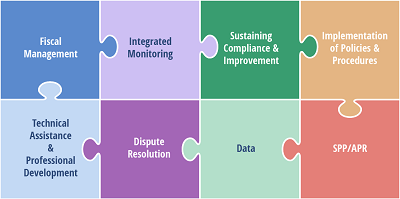
The Office of Enhancing Student Opportunities (OESO) uses each of the eight general supervision components described by the Office of Special Education Programs (OSEP), U.S. Department of Education in its Differentiated Monitoring and Support System to implement the General Supervision Framework. Through this system, OESO monitors, guides, and supports IDEA implementation across EI/ECSE service areas, with the goal of ensuring compliance with IDEA and improving developmental, educational, and functional outcomes for Oregon’s infants, toddlers, and preschool children with disabilities. The core components, illustrated below, represent what all states must do to ensure implementation of IDEA:
The state provides oversight and technical assistance on the allocation, distribution, and use of funds in accordance with federal and state requirements. Strong internal controls are required at both the state and EI/ECSE service area levels to ensure fiscal accountability. As part of general supervision, the state monitors each recipient of IDEA and state funds to ensure compliance with IDEA and other applicable federal and state fiscal requirements.
The Oregon General Supervision Framework integrates effective monitoring strategies across programs and across components. The state uses multiple data sources and monitoring mechanisms to monitor EI/ECSE service areas for both compliance and results. Monitoring activities include on-site and off-site reviews and examine program and personnel practices, as well as the individualized family service plans (IFSPs) for individual children. Monitoring is focused on priority areas identified by the state education agency based on state performance, in addition to areas federally required for reporting in the State Performance Plan and Annual Performance Report (SPP/APR).
EI Priority Standards
ECSE Priority Standards
States and EI/ECSE service areas must have and implement written policies and procedures that are aligned with IDEA and applicable state statutes. As part of general supervision, the state monitors implementation to ensure local practice reflects written policies and procedures. Effective policies and procedures include interagency agreements and memoranda of understanding that clearly define roles and include mechanisms for assessing effectiveness of those agreements.
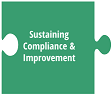
Supporting improvement and ensuring the timely correction of noncompliance are core components of general supervision. This component includes the state’s authority to enforce applicable regulations, policies, and procedures, as well as to provide targeted technical assistance to support correction of noncompliance. Oregon’s framework includes processes for corrective action planning and follow-up to verify correction and sustained improvement. The state promotes program improvement for infants, toddlers, and preschool children with disabilities through improvement planning and by supporting alignment with broader early learning, preschool, and district improvement efforts, as appropriate.
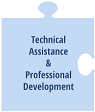
Technical assistance and professional development are essential components of effective general supervision and must be data-informed and evaluated for effectiveness in improving compliance and results. OESO provides EI/ECSE service areas with differentiated technical assistance and capacity-building supports, delivered at varying levels and through multiple methods. These supports may include websites and written documents; coaching and mentoring; training of trainers models; local, regional, and statewide meetings and conferences; and direct training or support from state staff or regional technical assistance providers.
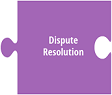
IDEA requires the timely resolution of complaints, mediations, and due process actions, as well as follow-up to ensure noncompliance is corrected. As part of effective general supervision, the state tracks issues identified through dispute resolution processes to determine whether patterns or trends exist at the state education agency or across EI/ECSE service areas. Data from dispute resolution systems are used to inform monitoring priorities, technical assistance and professional development.
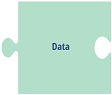
The state collects, verifies, and reports data to the Office of Special Education Programs (OSEP) and the public on compliance and results for Oregon’s infants, toddlers, and preschool children with disabilities. OESO uses child and program-level data across EI/ECSE service areas to inform accountability, monitoring, and and support activities, and to measure progress over time. Through multiple data collection and verification processes, the state ensures that data used for reporting, decision-making, and program improvement are complete, accurate, and timely.
ecWeb To support cohesive implementation of EI/ECSE statewide, ODE and EI/ECSE service providers use a shared data management system called ecWeb. This web-based system supports comprehensive case management, including management of IFSPs, tracking evaluations and services, and processing Medicaid billing. ecWeb also serves as a primary reporting tool, capturing federally required child count and child outcome data, and providing ODE with longitudinal data needed to report on enrollment growth and other program trends to the state legislature and community partners.
The State Performance Plan/Annual Performance Report (SPP/APR) is the primary accountability tool for states under IDEA Part C and Part B-619. The SPP/APR indicators are designed to provide measurable information on the state’s performance in key statutory priority areas for early intervention and early childhood special education. Parents, families, and community partners are actively engaged in the development and review of the SPP/APR. The state uses the SPP/APR process to guide continuous improvement and enhance developmental, educational, and functional outcomes for infants, toddlers, and preschool children with disabilities and their families. Serving as a blueprint for systems change, the SPP/APR also ensures transparency and accountability through public reporting.